Cursive Sentences and Paragraphs - Copywork Worksheets
Cursive sentences and paragraphs
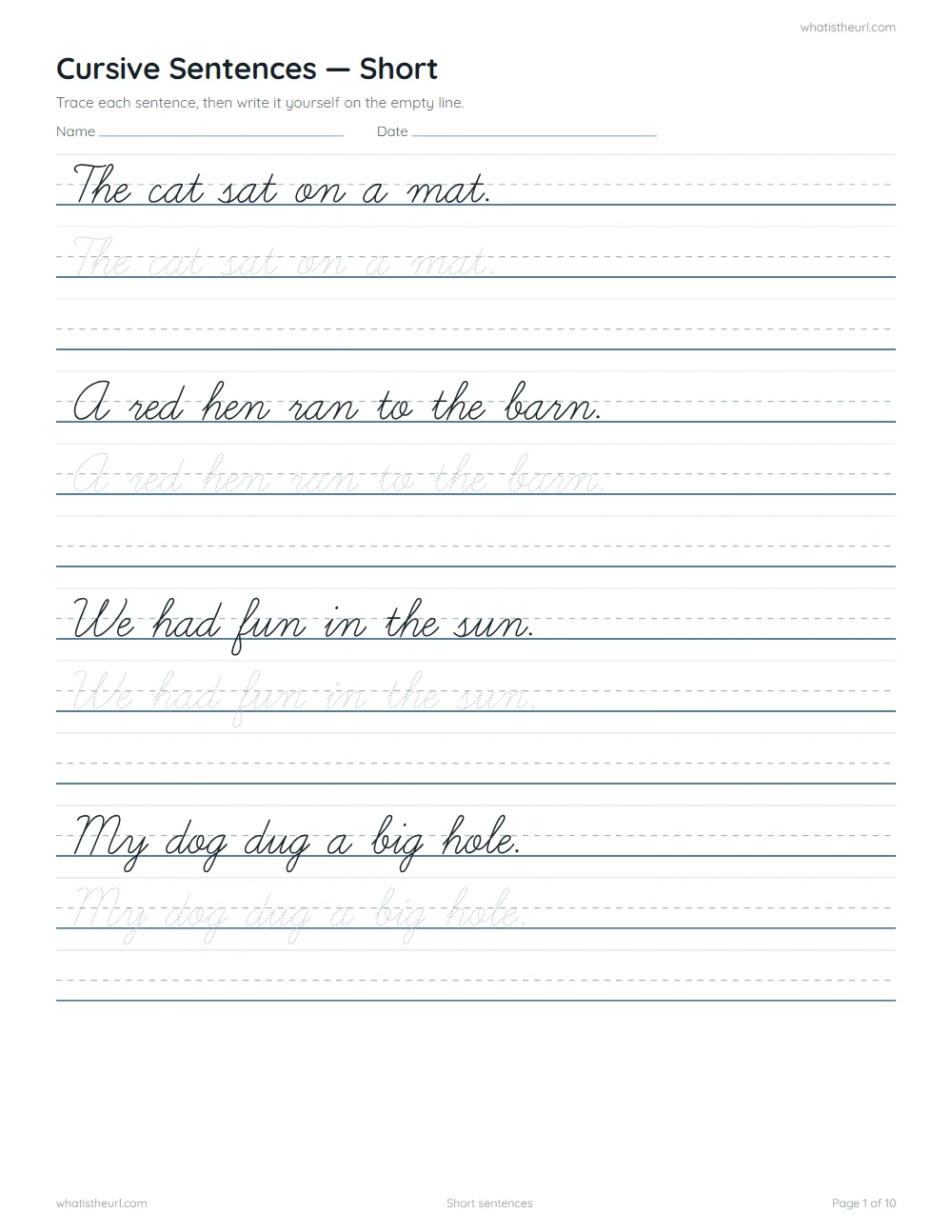
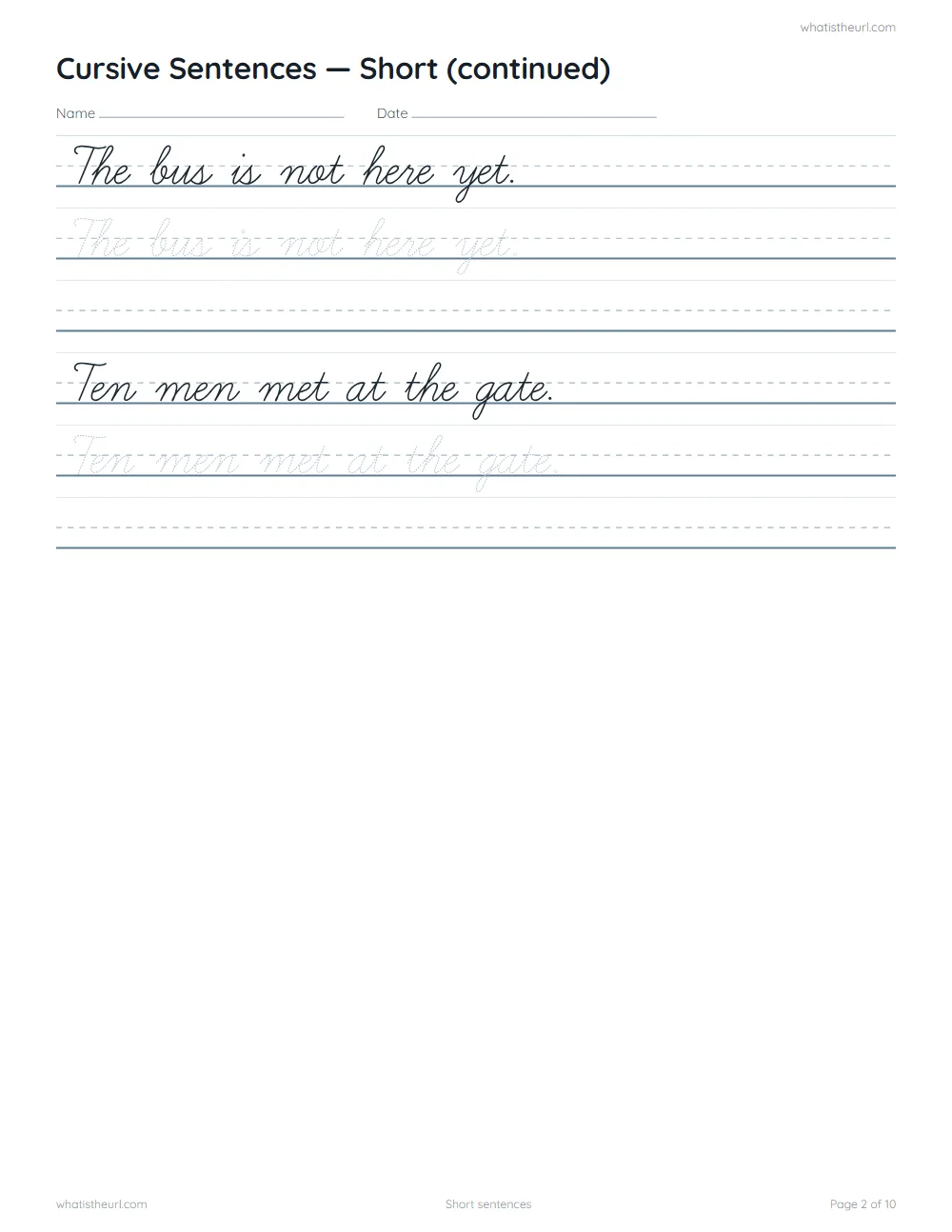
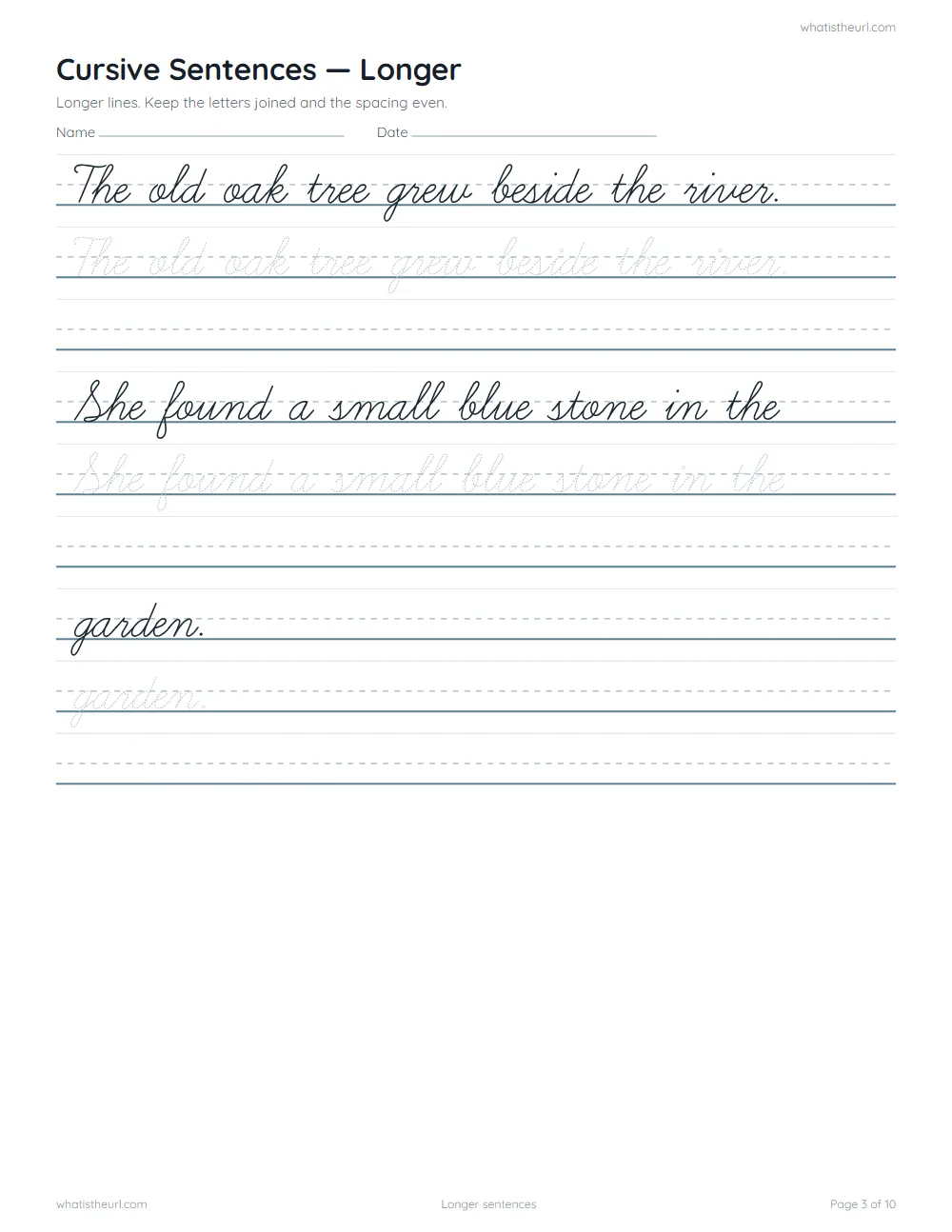
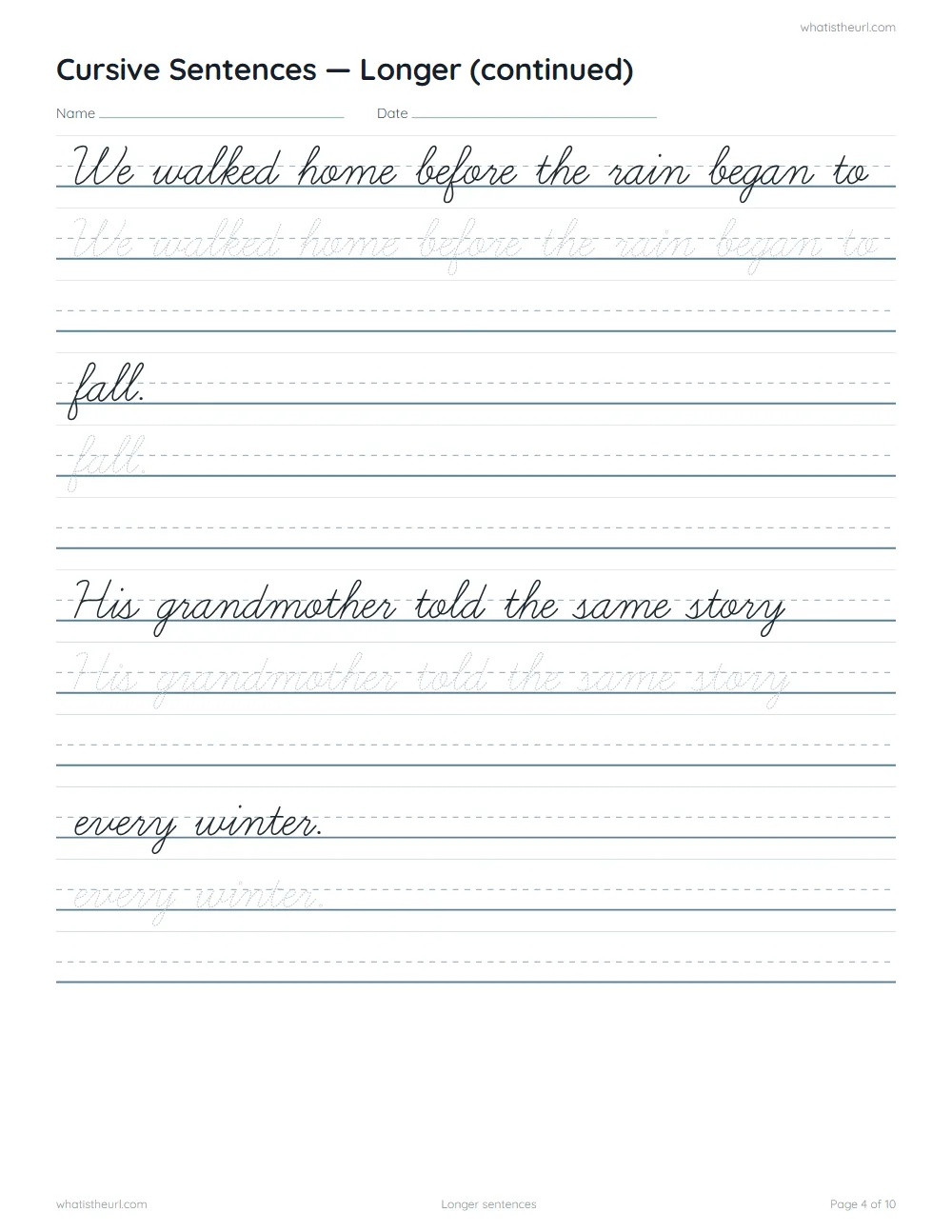
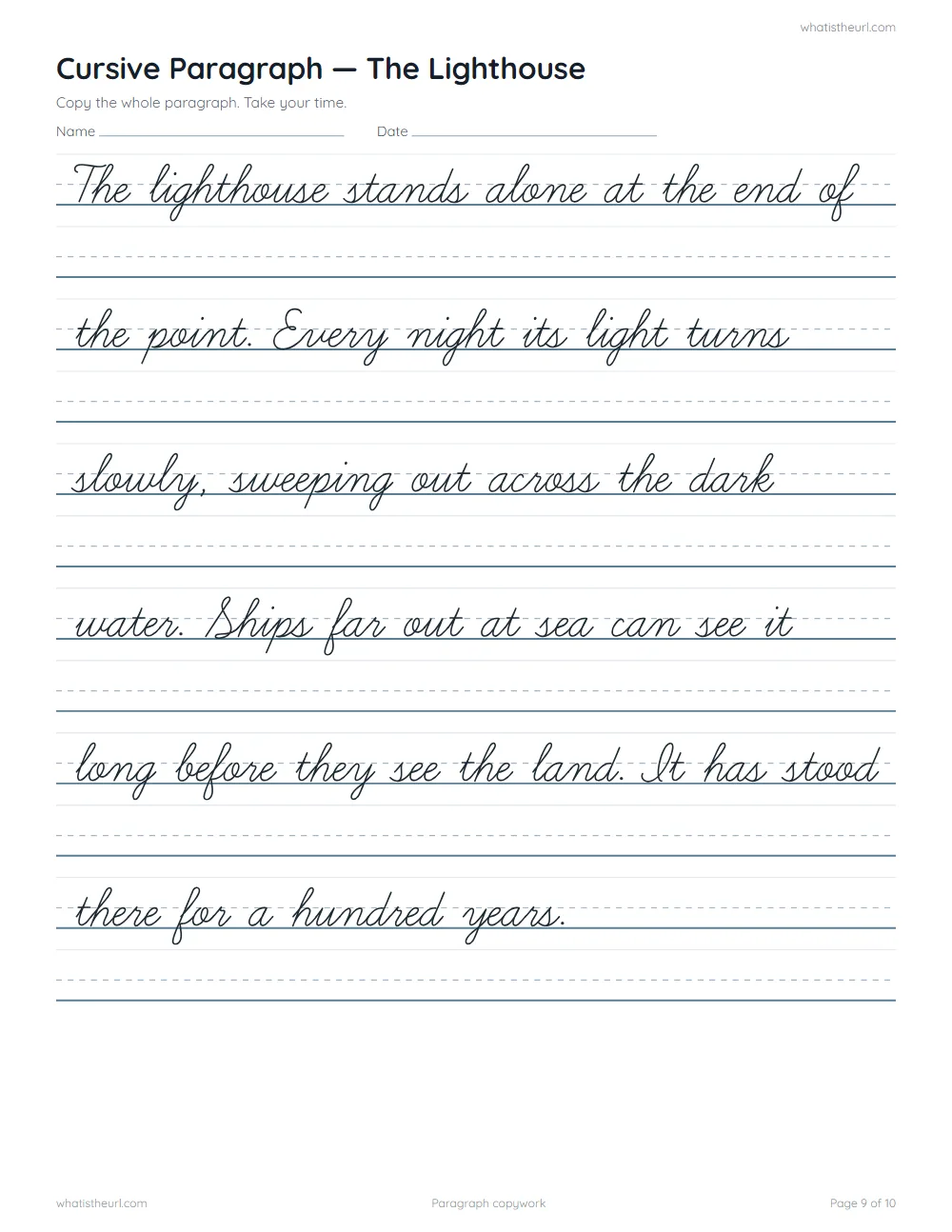
Ten printable pages of cursive copywork: short sentences, longer ones, pangrams, proverbs, two paragraphs, and a blank ruled page. Each line has a model to read, a dashed line to trace, and an empty line to write on.
Free PDF, no sign-up.
Why copywork, and not more letter drills
A child who can form all twenty-six letters still cannot write. Joining is a separate skill, and so is keeping letters the same size across a whole line, and so is spacing words evenly. None of those show up on a single-letter sheet, because there is nothing to join to and nothing to line up with.
Copying a real sentence is where those problems appear — and it is also the point at which handwriting stops being an exercise and starts being writing.
Work in this order
- Short sentences. Six of them, built from common words. Every word is decodable, so the child can spend attention on the writing rather than the reading.
- Longer sentences. The first real test of staying even across a full line.
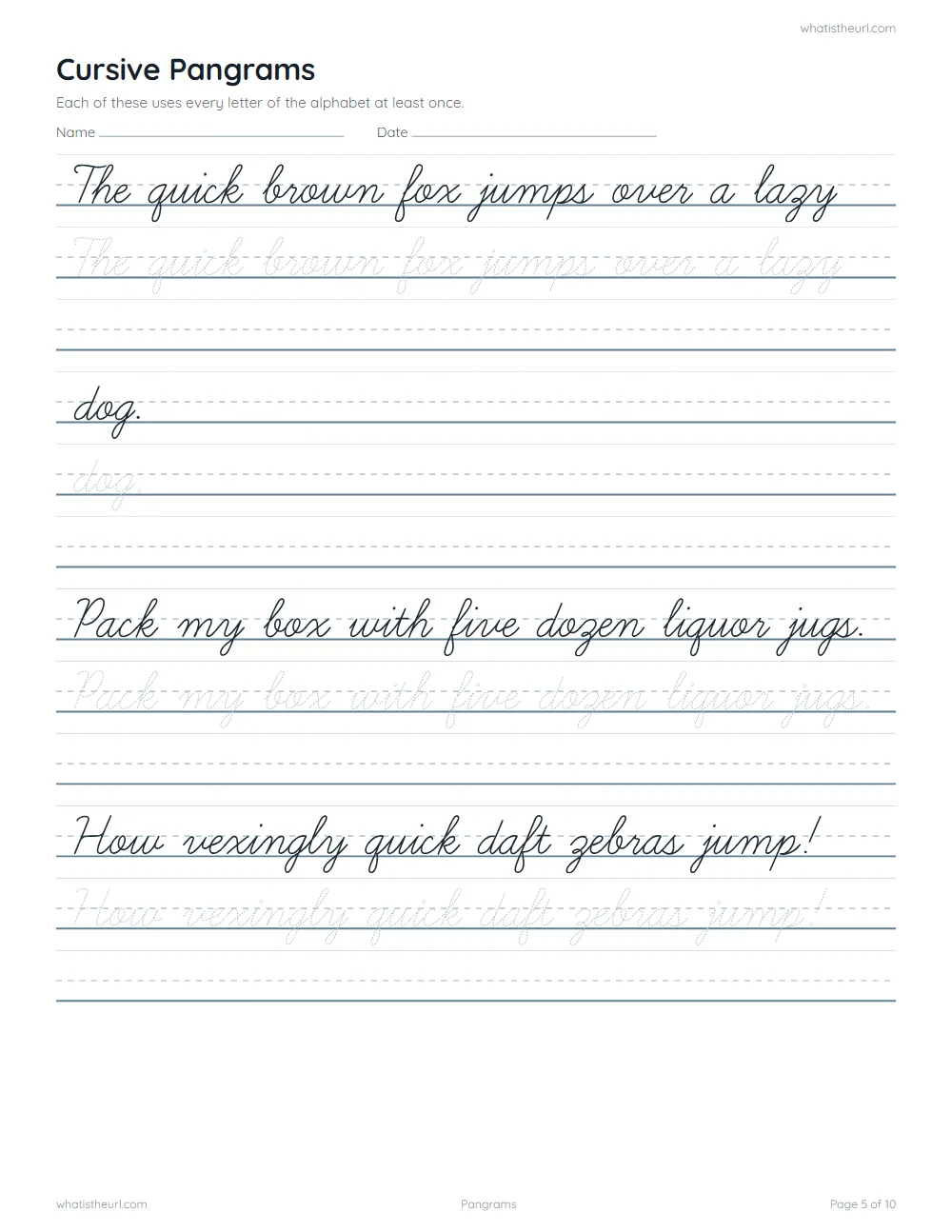
- Pangrams. Three sentences that each use every letter of the alphabet. Writing one out is a complete alphabet practice that does not feel like one.
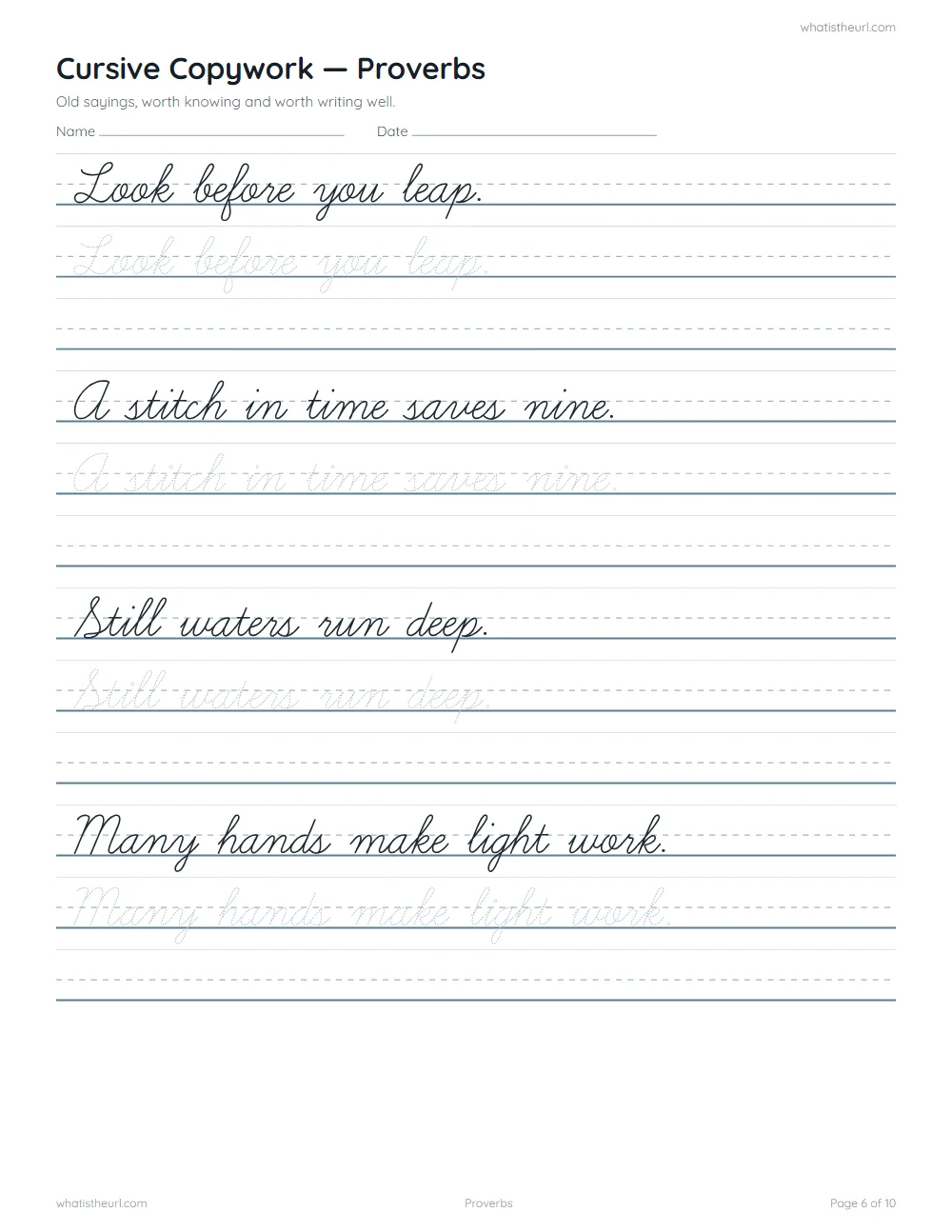
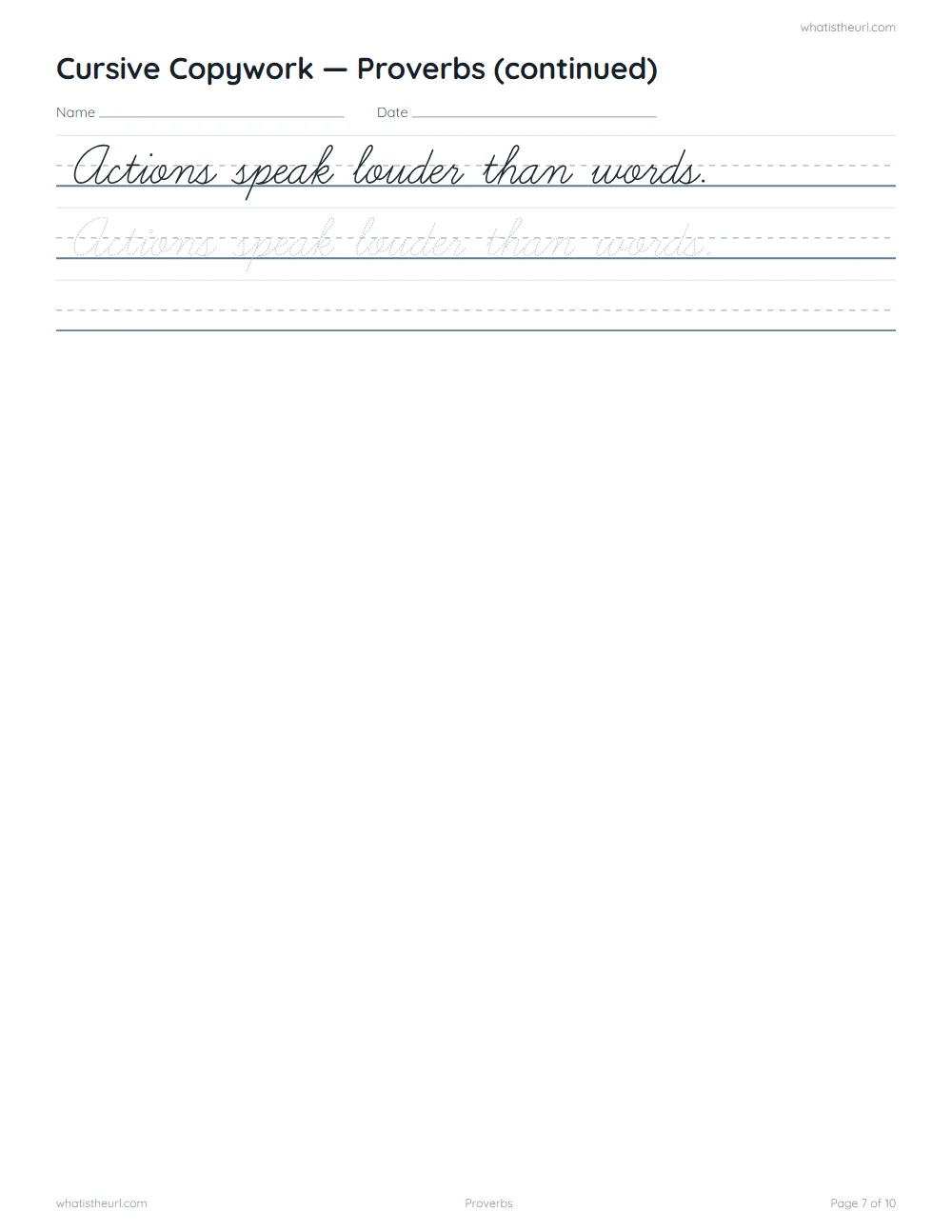
- Proverbs. Short, memorable, and worth knowing.
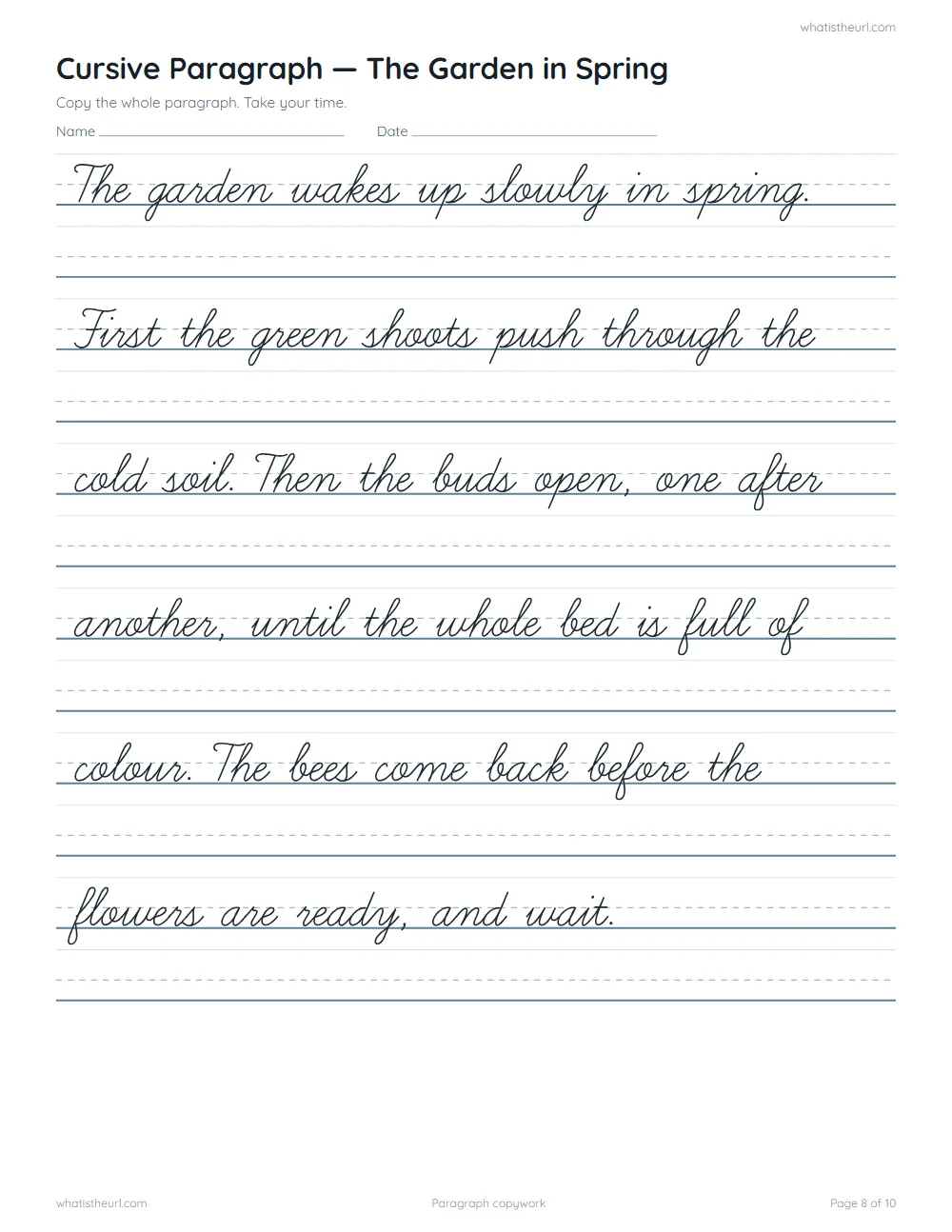
- Paragraphs. Two of them, to copy in full.
- A blank ruled page, for anything else.
The three lines
Every sheet is ruled with three lines rather than one: a top line that tall letters reach, a dashed middle line that most letters reach, and a baseline that every letter sits on. Letters with tails — g, j, p, q, y, z — hang below the baseline.
On a sentence sheet the middle line does most of the work. It is what makes an uneven line visible: if the letters wander above and below it, the writing looks untidy for a reason a child can actually see and correct.
What to watch for
- Even spacing between words. The commonest fault in early cursive, and the easiest to fix — a finger's width is enough.
- Letters that stay joined. Lifting the pencil mid-word is the habit that undoes cursive. The join is the point of it.
- Consistent height. Not perfect height — consistent. A line of slightly-too-large letters reads better than a line of mixed ones.
- Slowing down. Speed arrives on its own with practice. Accuracy does not.
About the text
The sentences and paragraphs here were written for these sheets. The proverbs are traditional sayings that have been in common use for centuries. Nothing is copied from a copyrighted source, and the vocabulary is deliberately kept simple — a copywork line is no use if the child cannot read what they are copying.
A note on letterforms
These sheets use a traditional cursive hand. Letterforms vary between handwriting programs, so if your school teaches D'Nealian or Zaner-Bloser a few letters will look slightly different. Capitals appear here only where a sentence needs one, which is where they read most naturally.
Cursive Sentences and Paragraphs - Copywork Practice