Kindergarten Sight Words - All 40 Dolch Pre-Primer Words
Kindergarten sight words
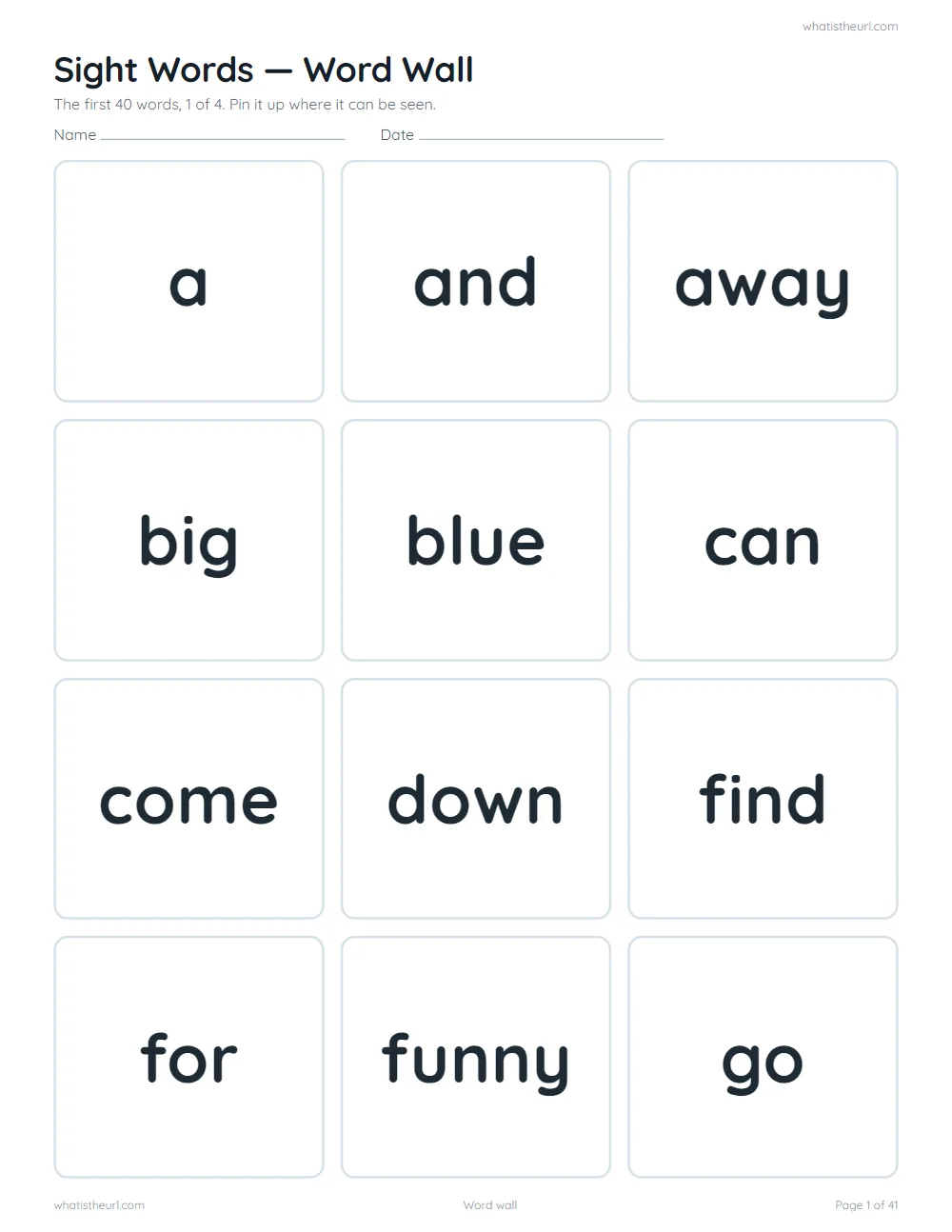
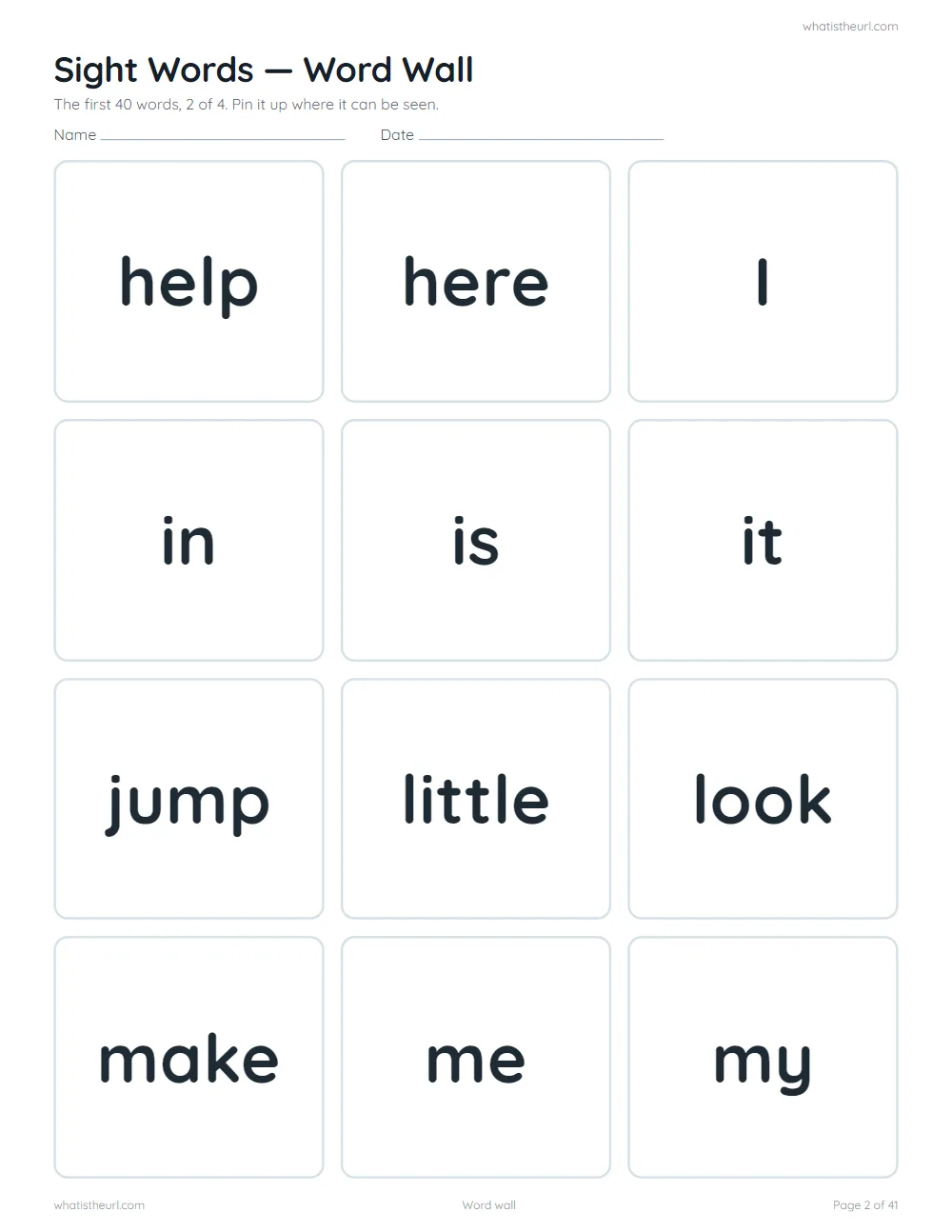
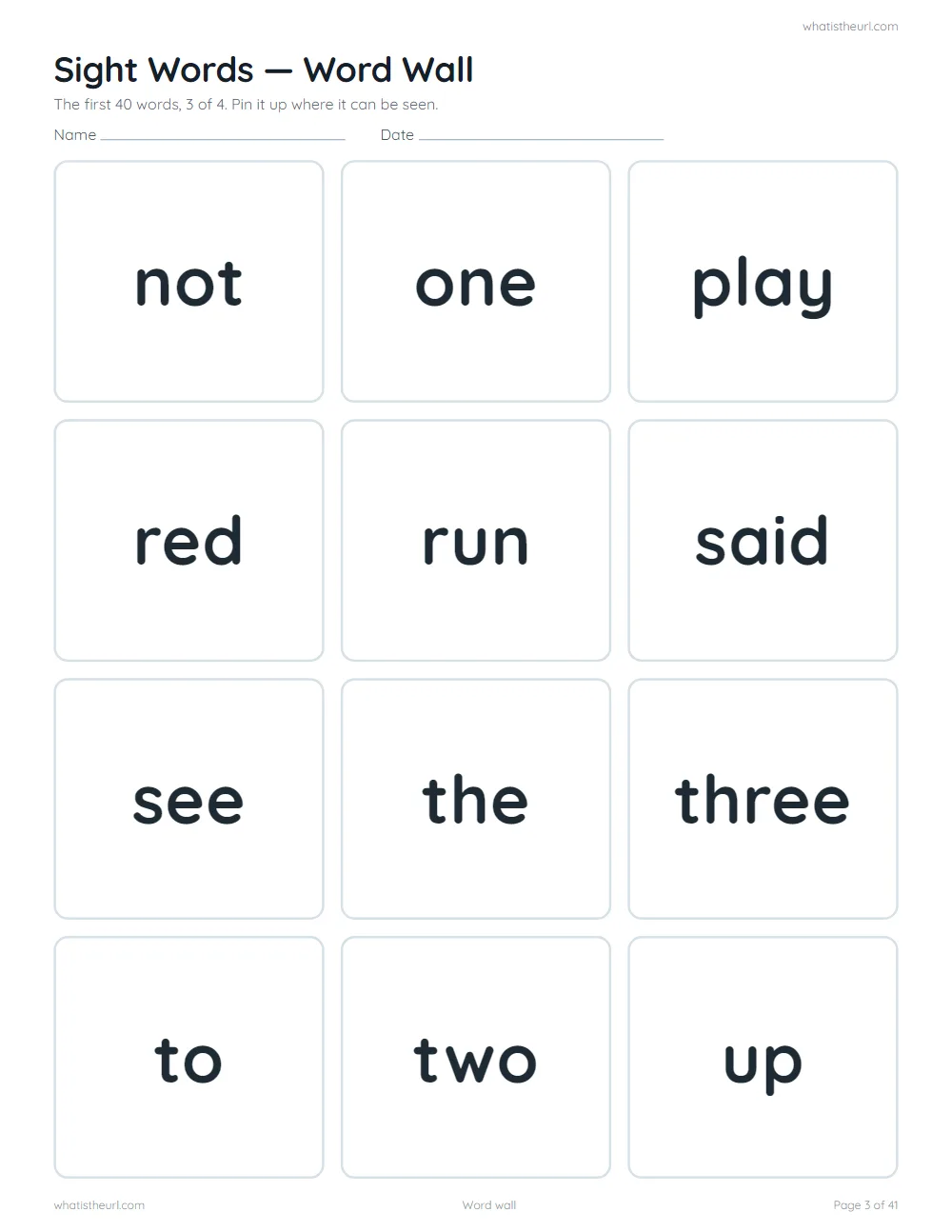
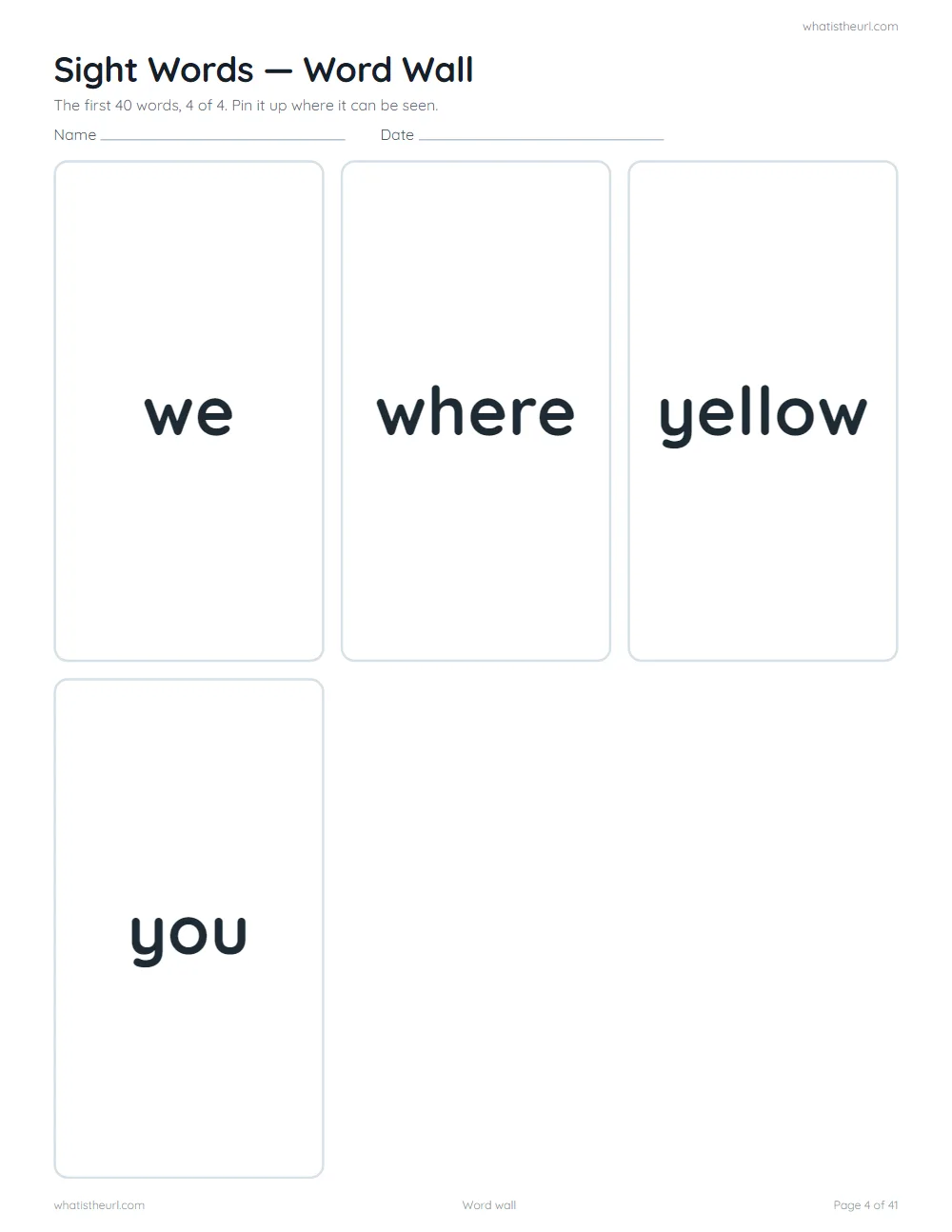
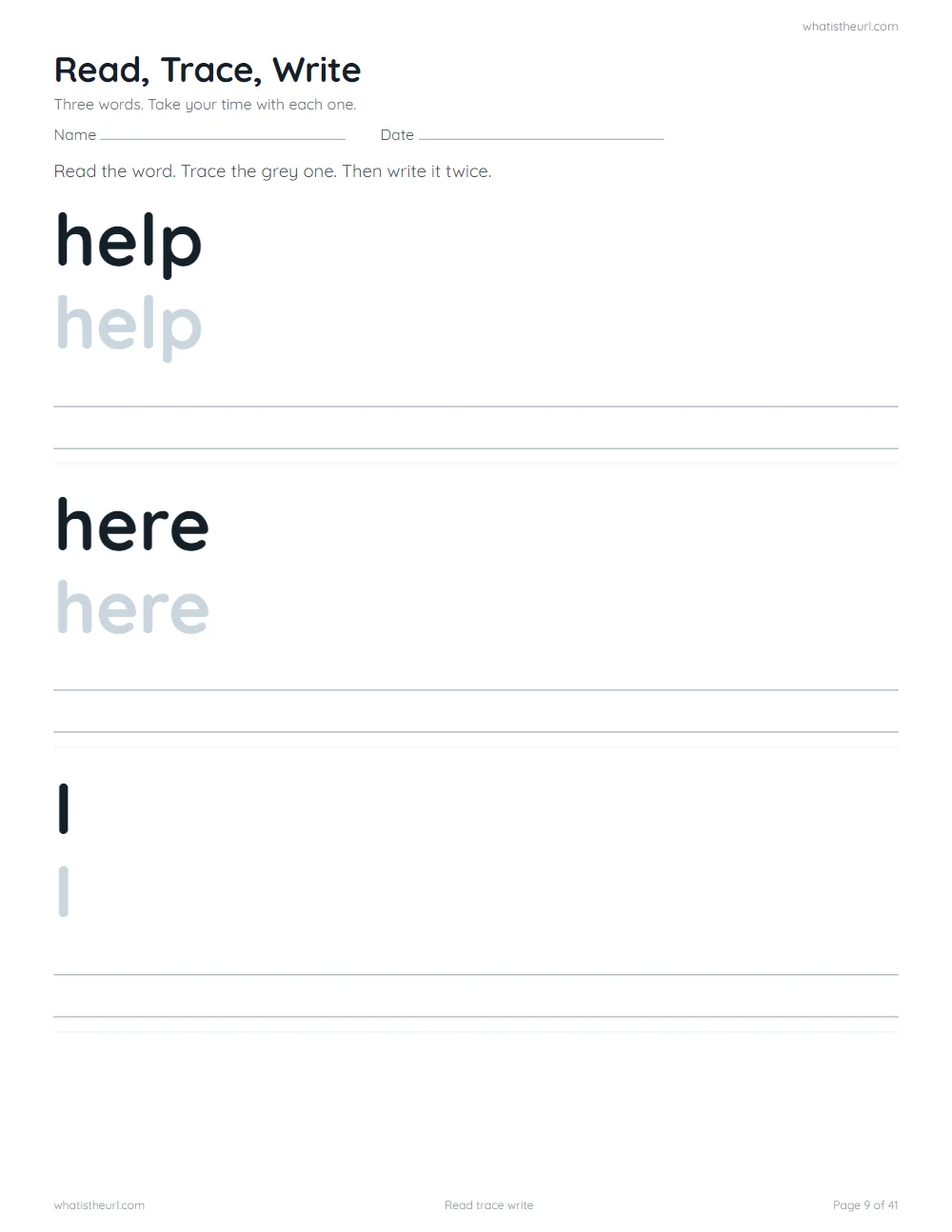
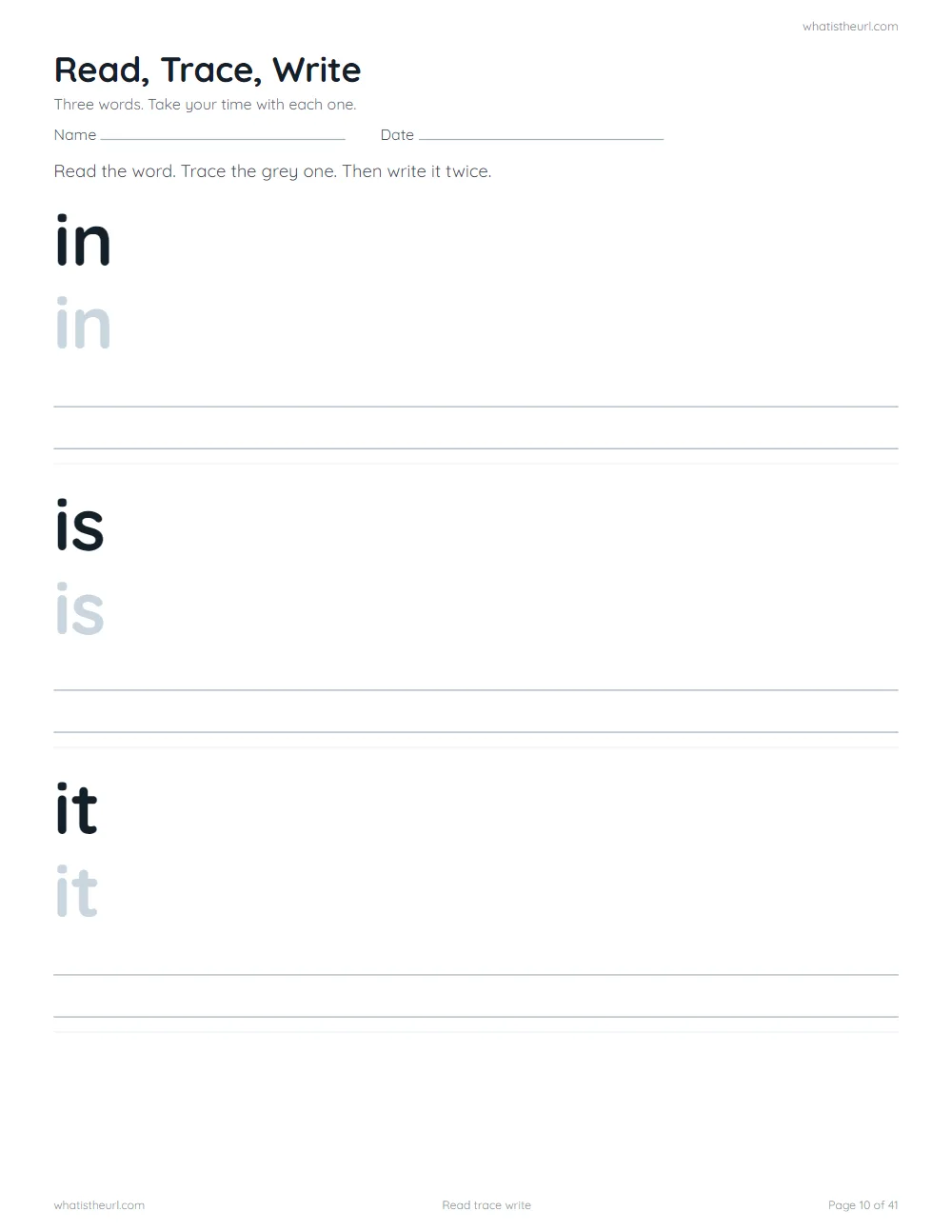
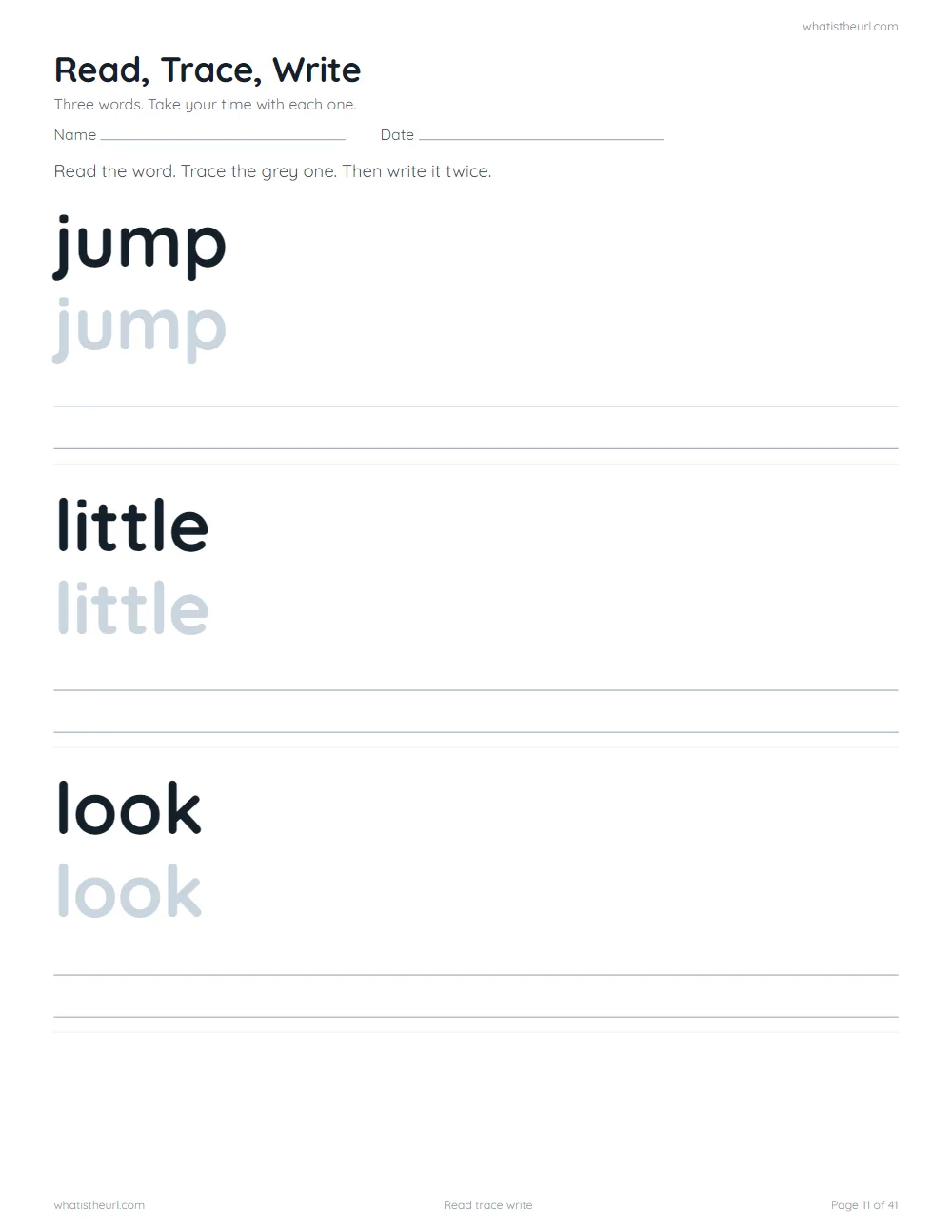
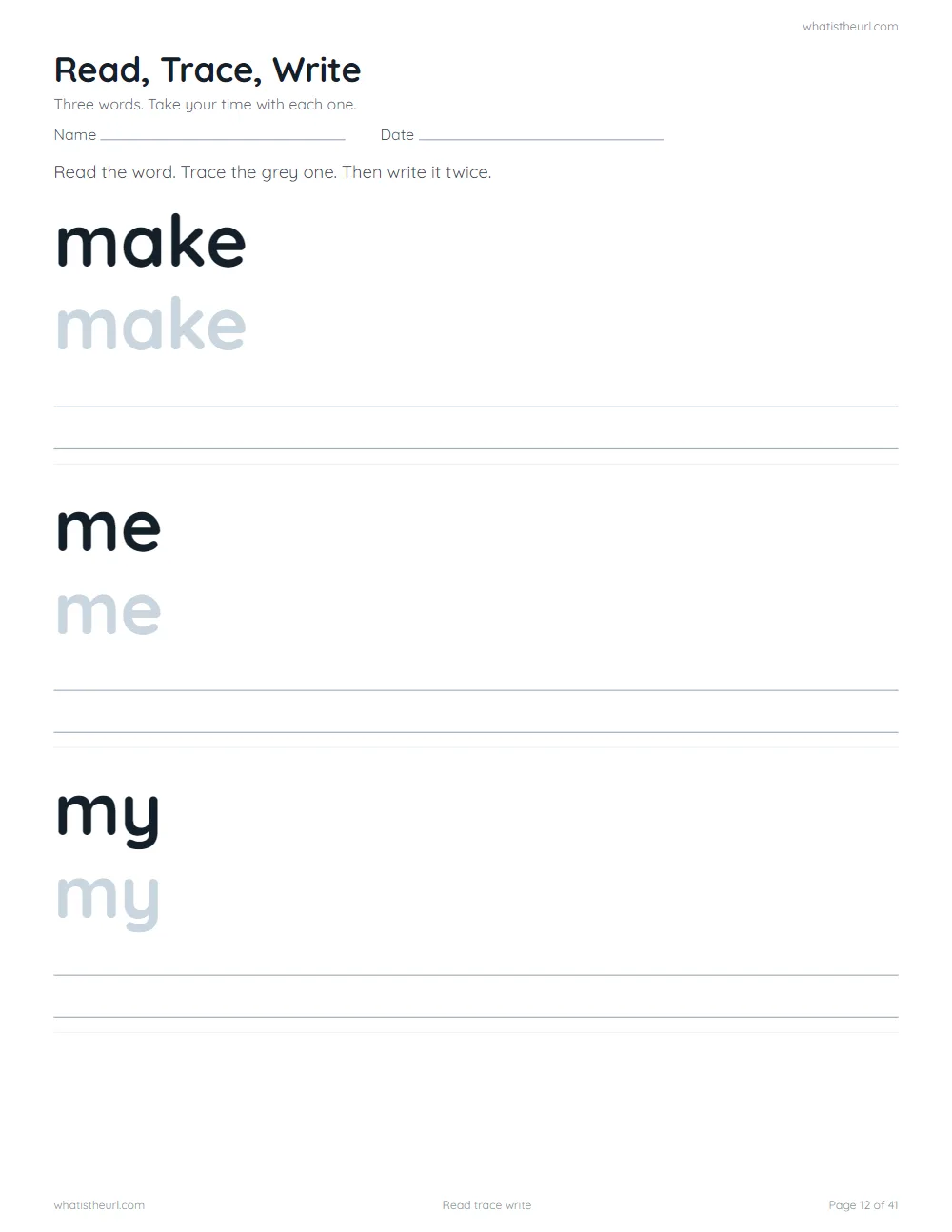
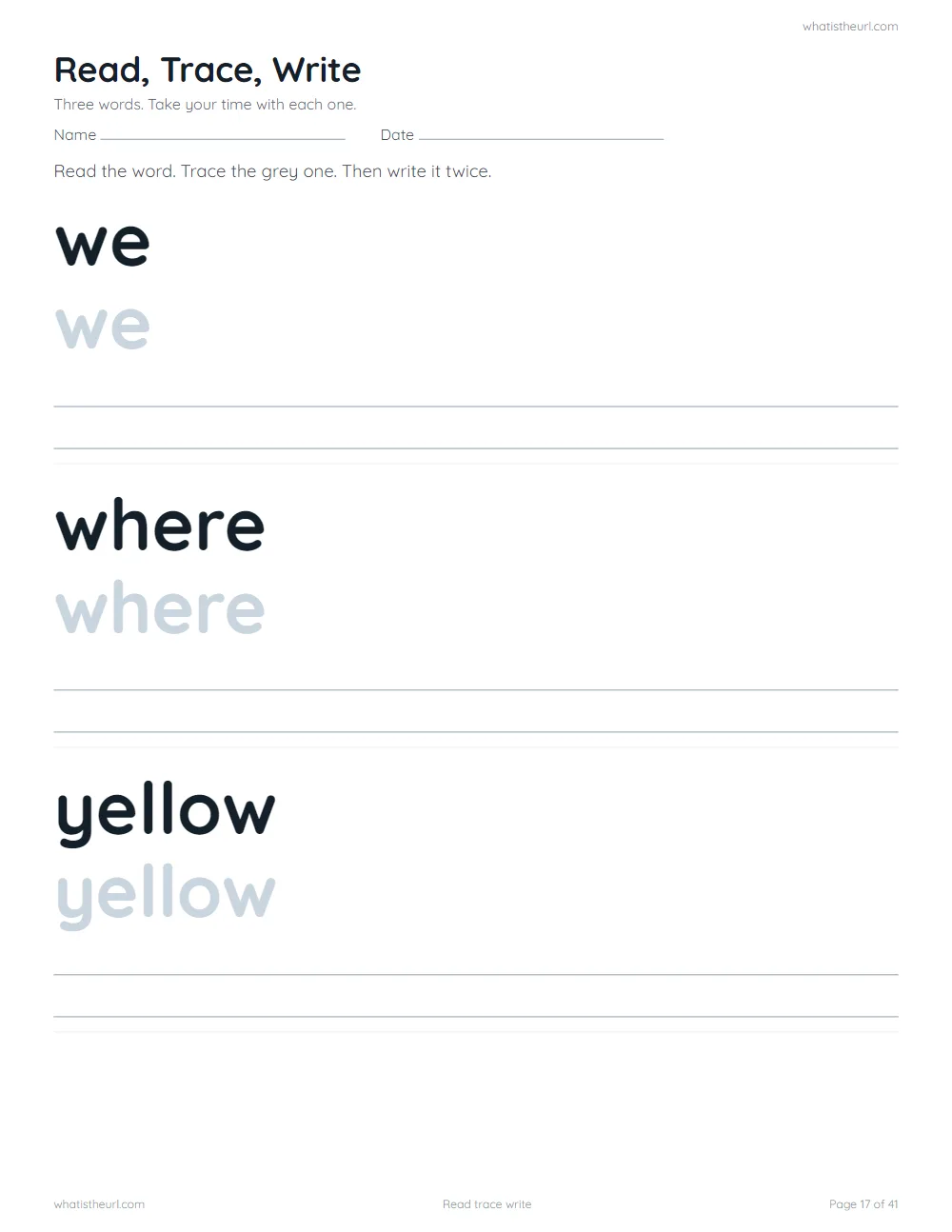
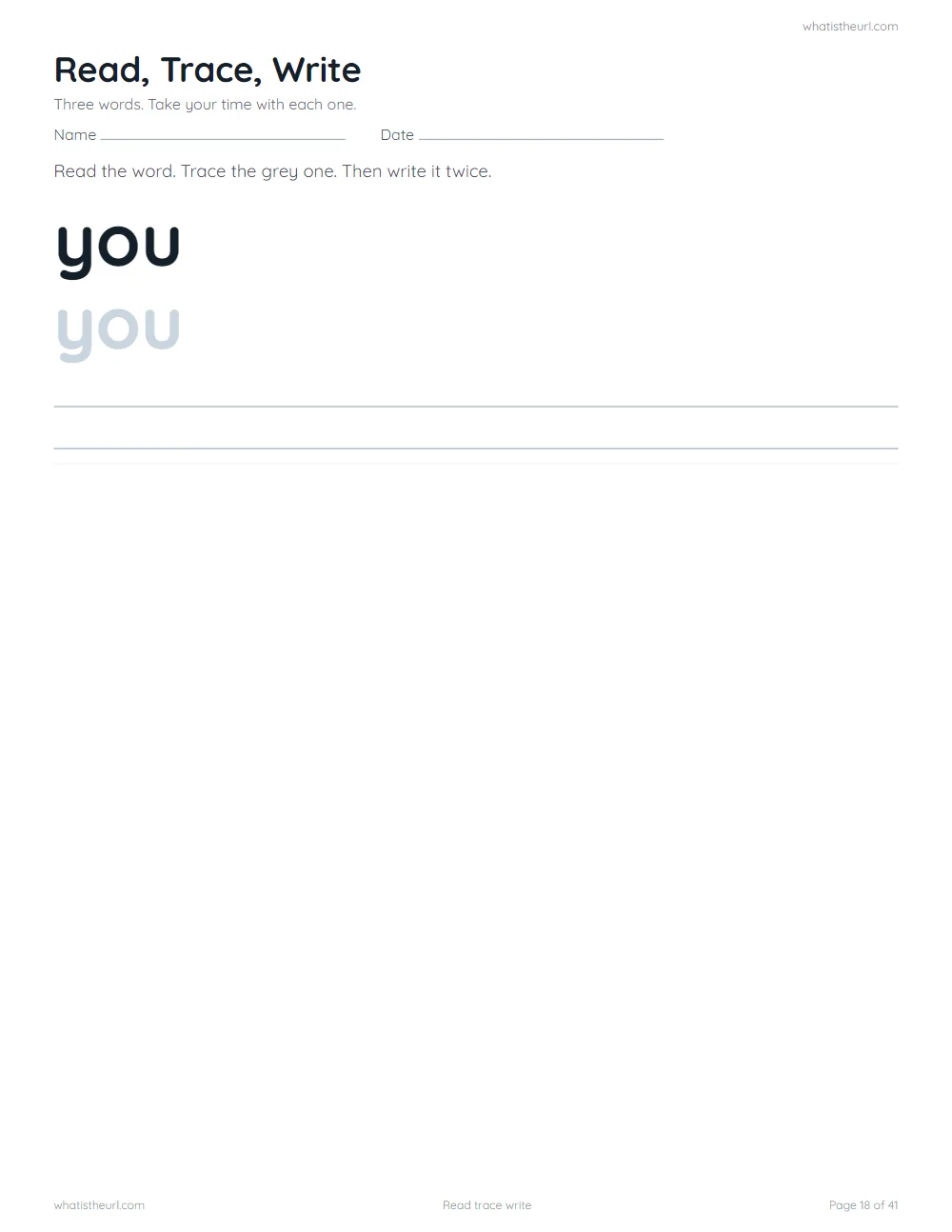
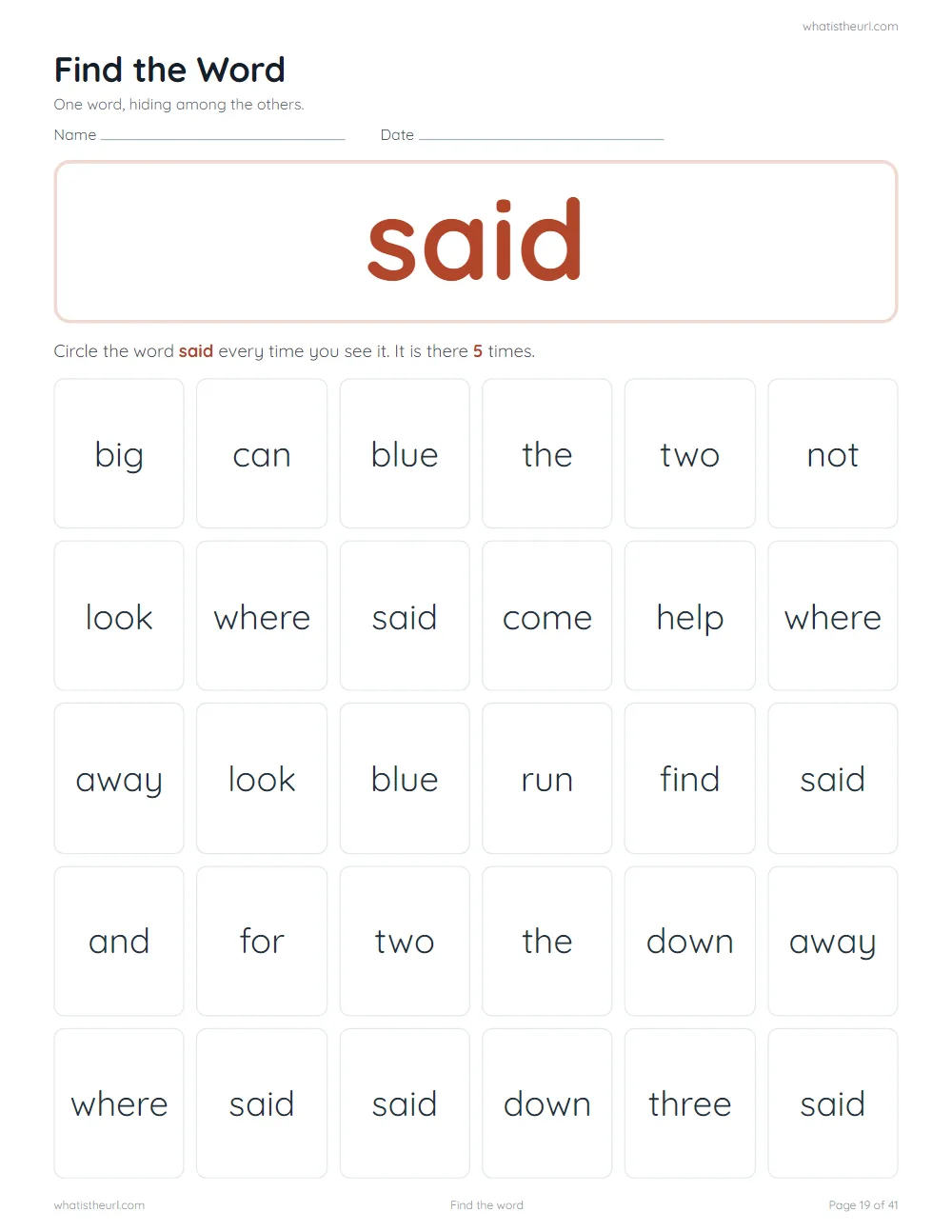
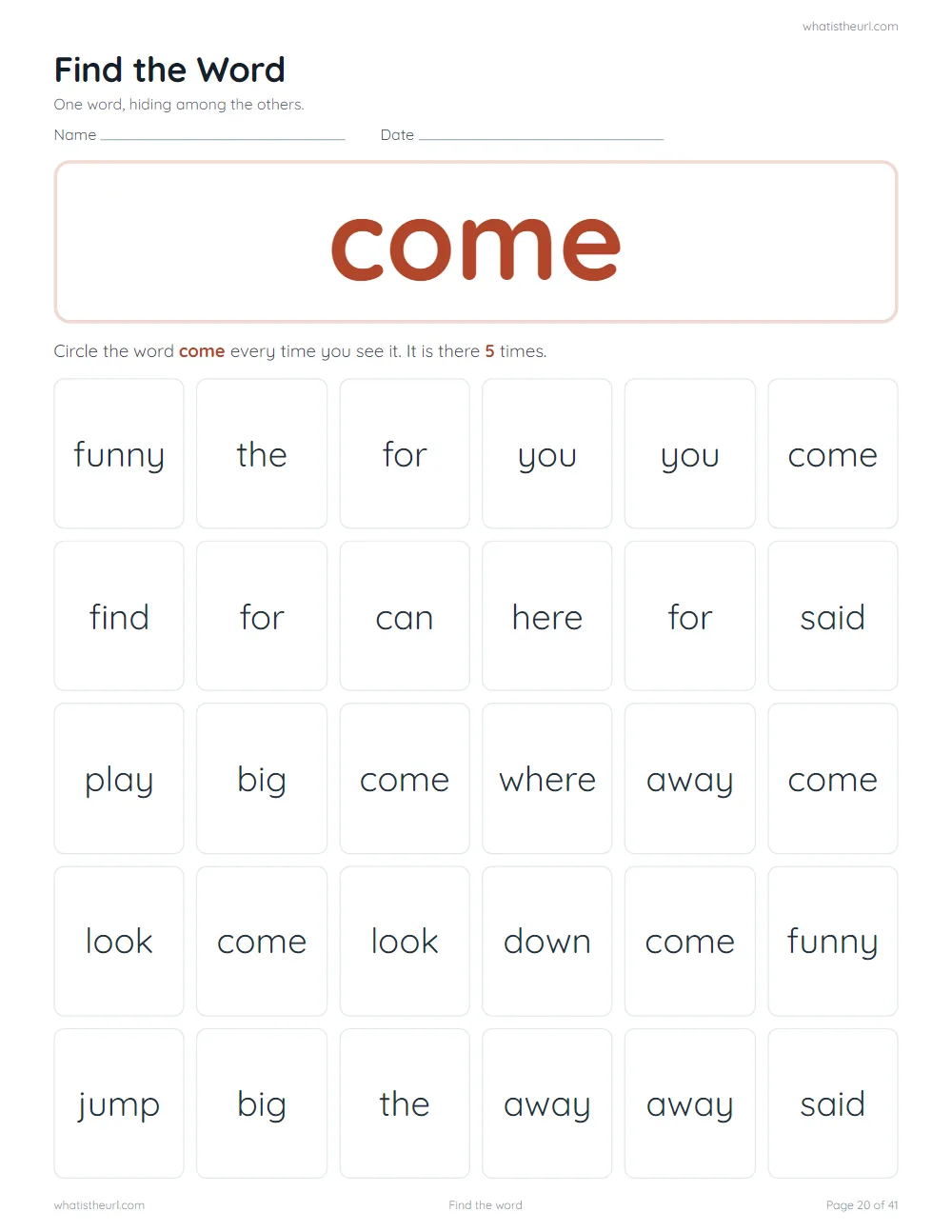
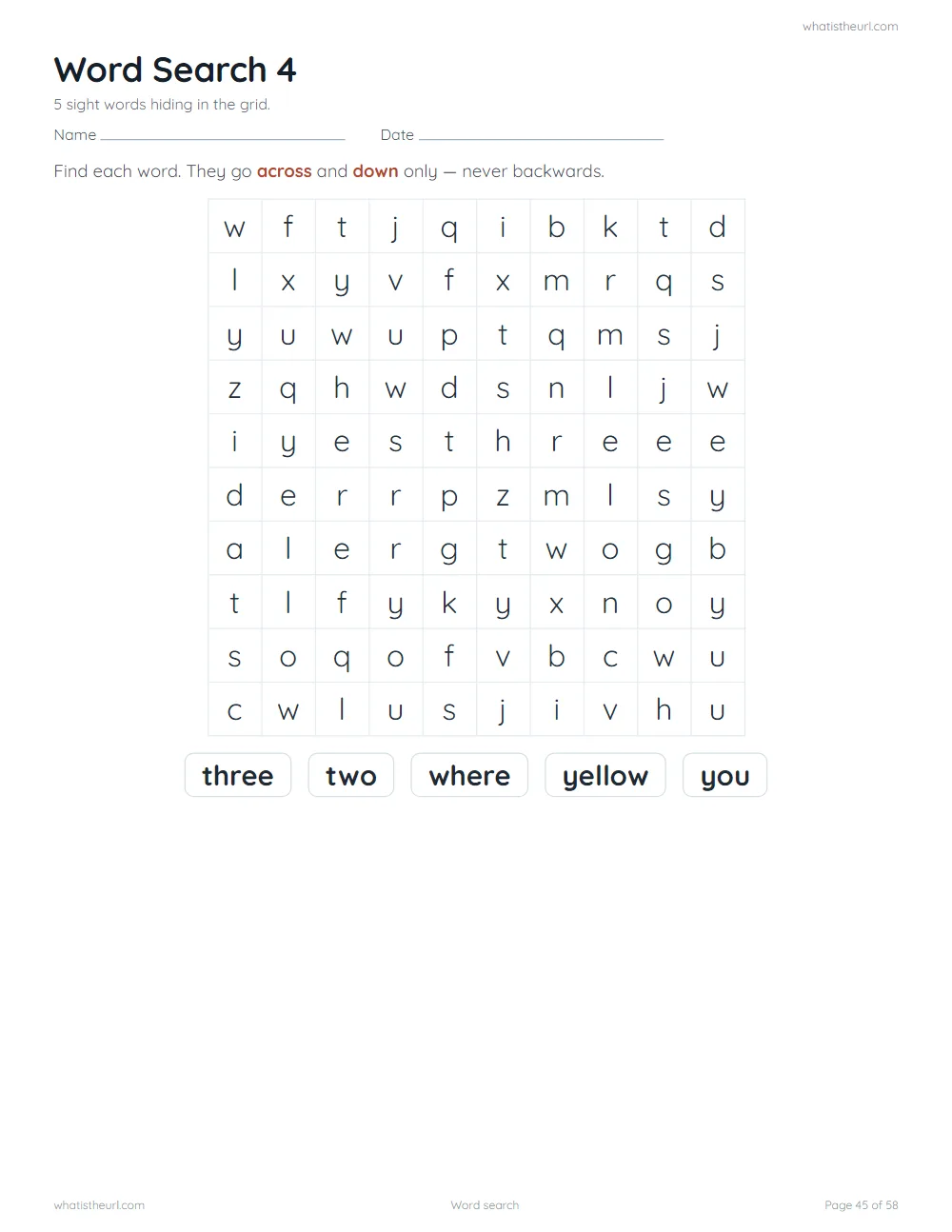
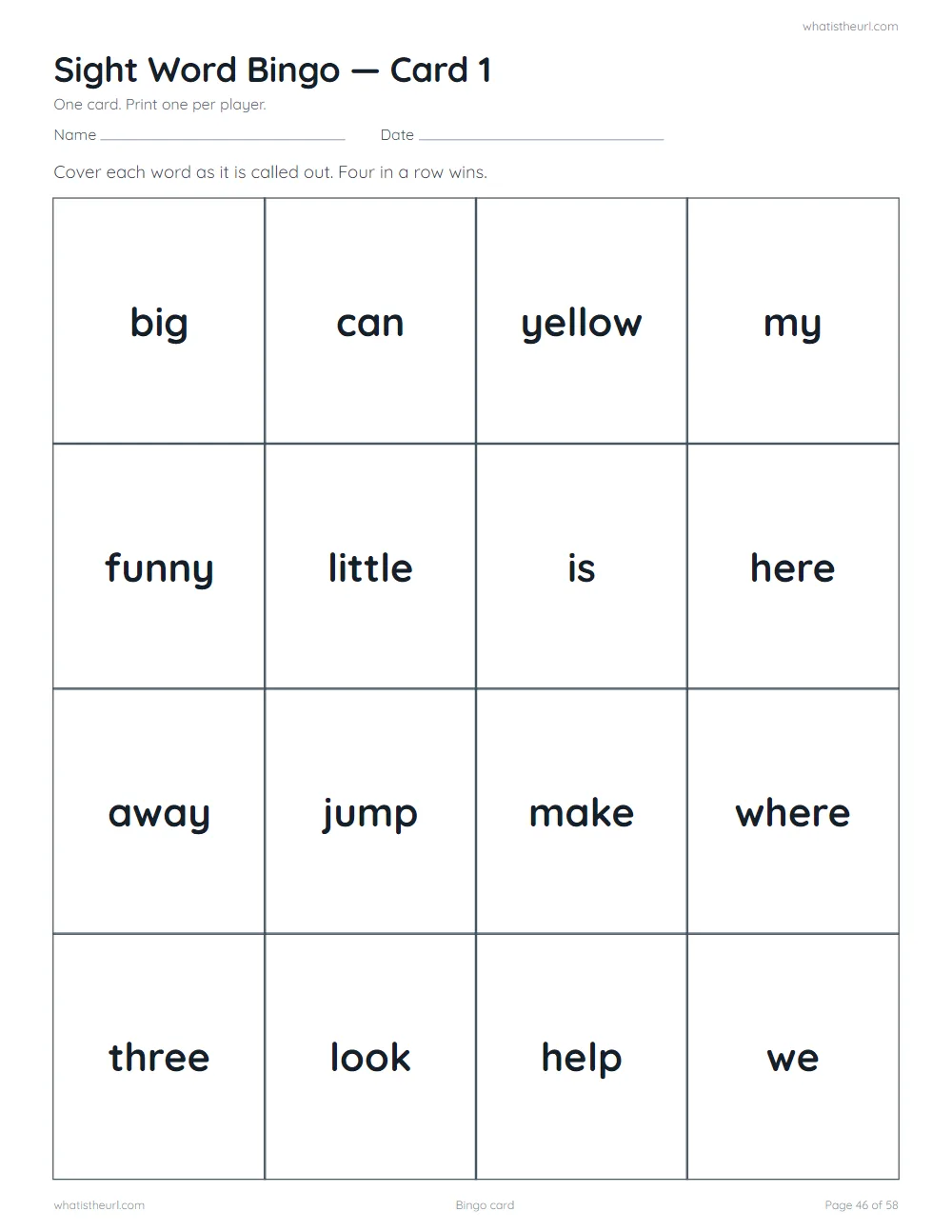
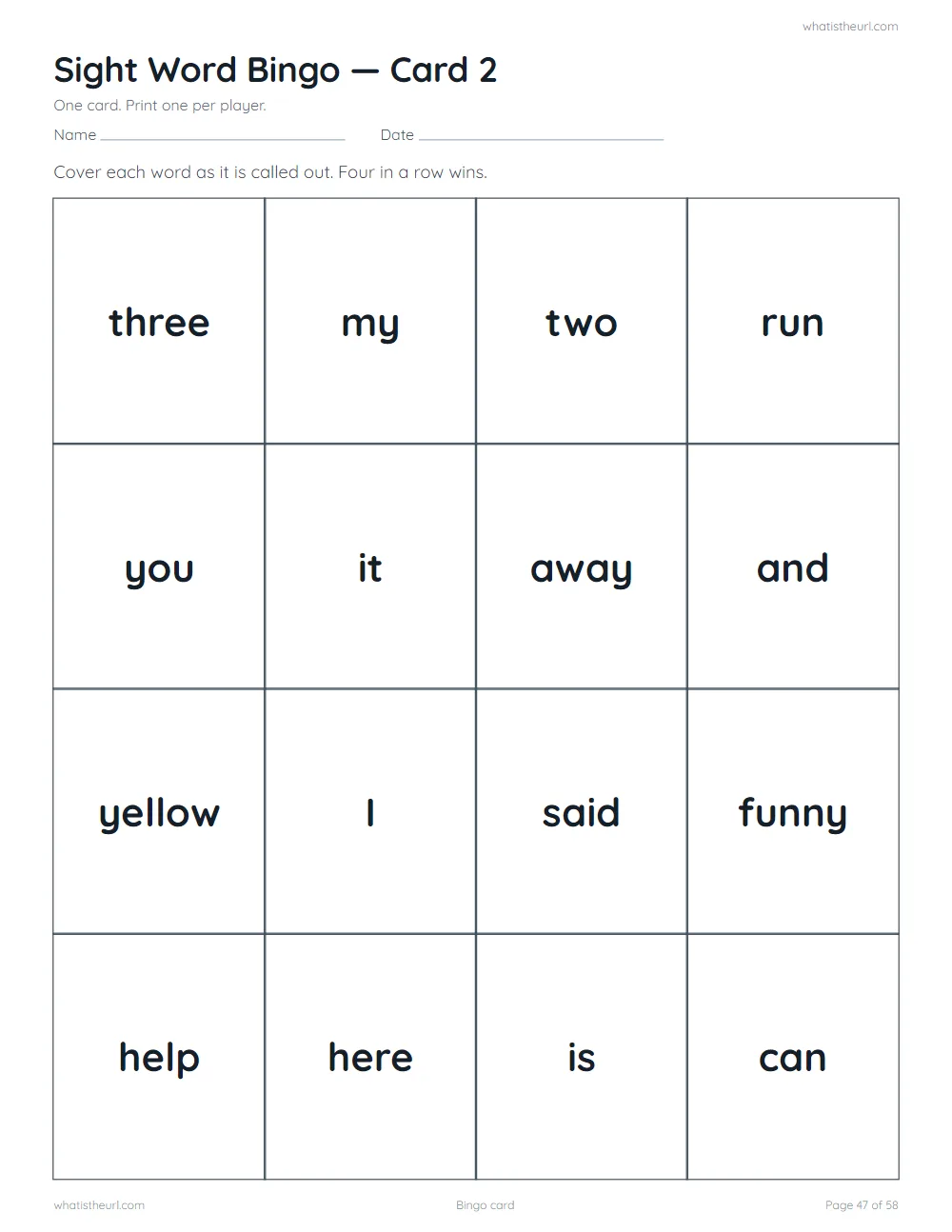
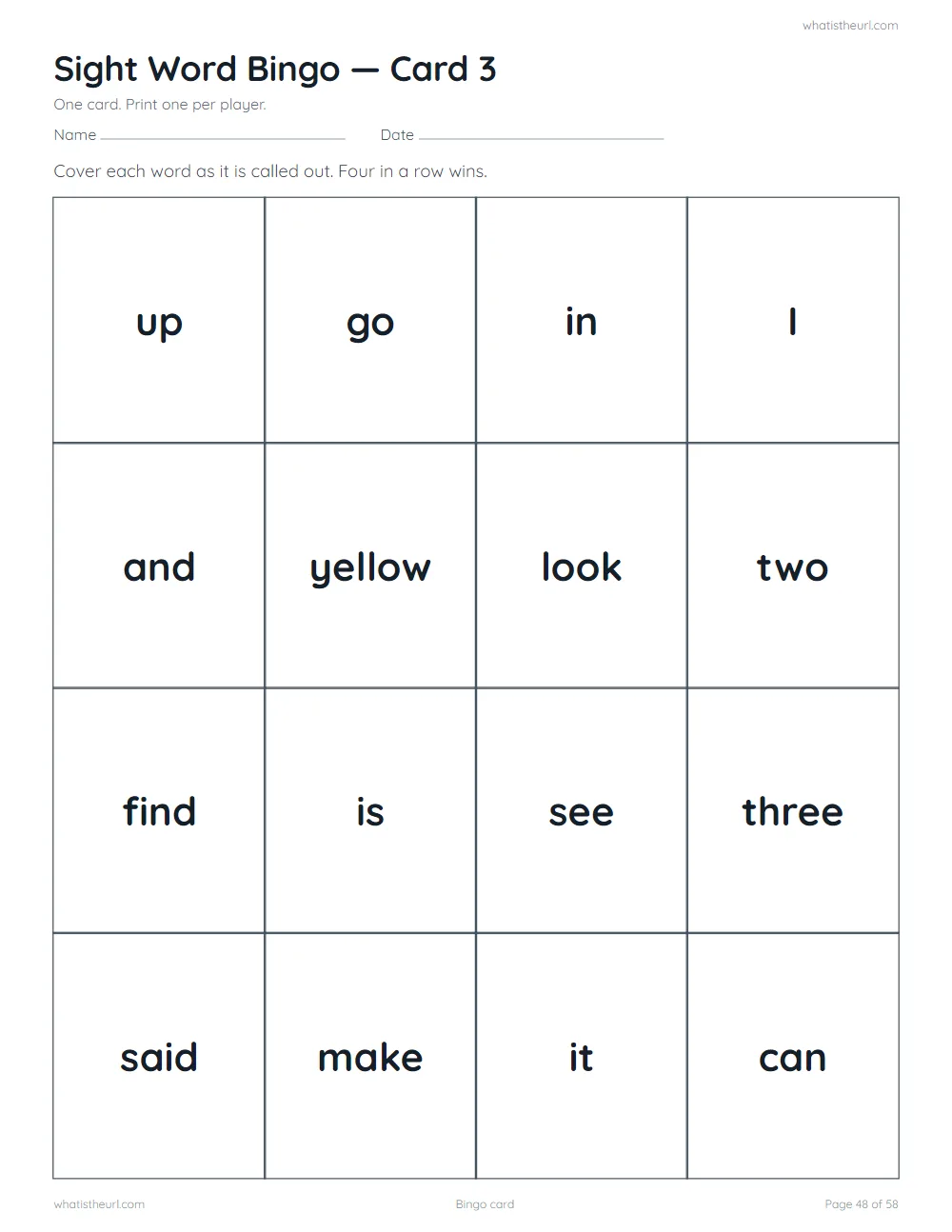
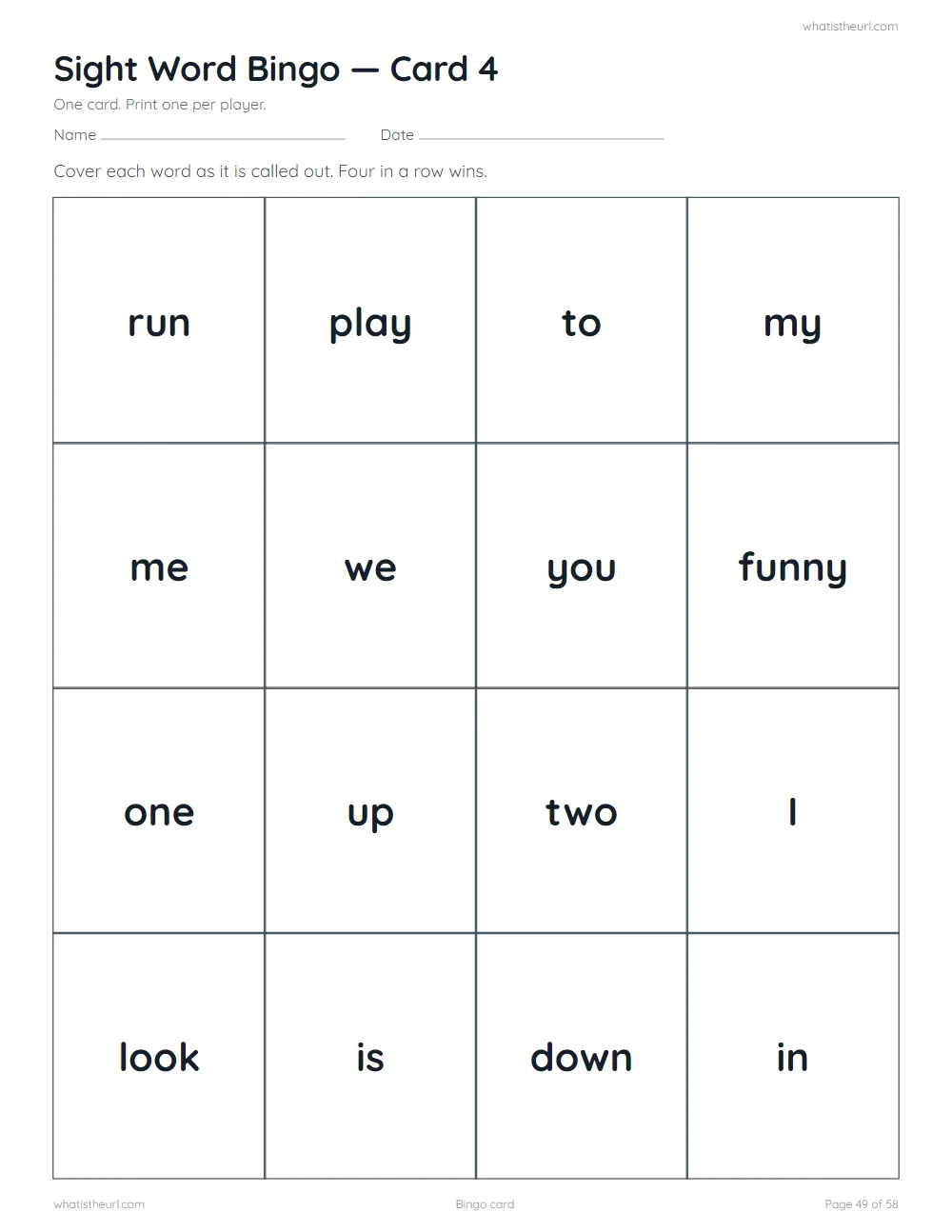
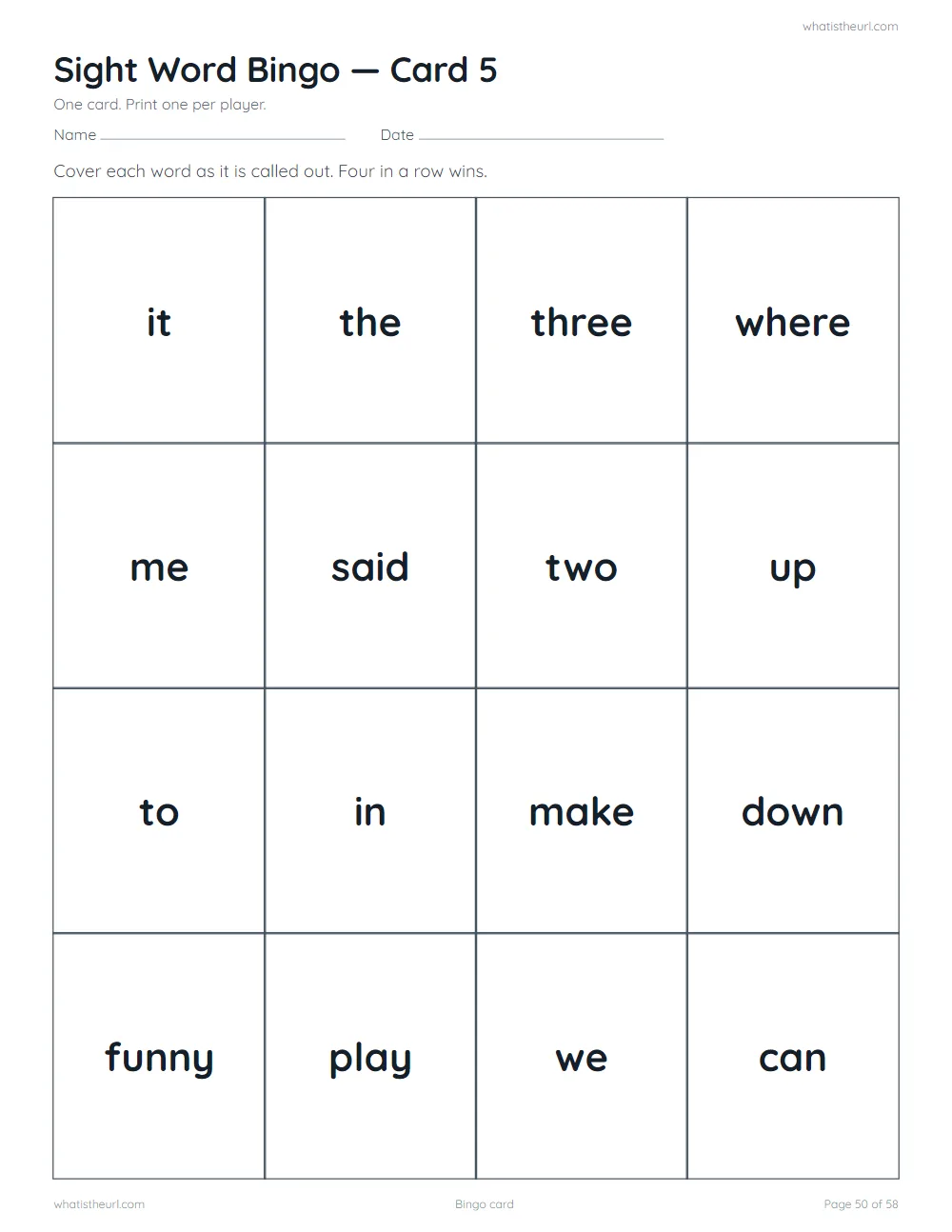
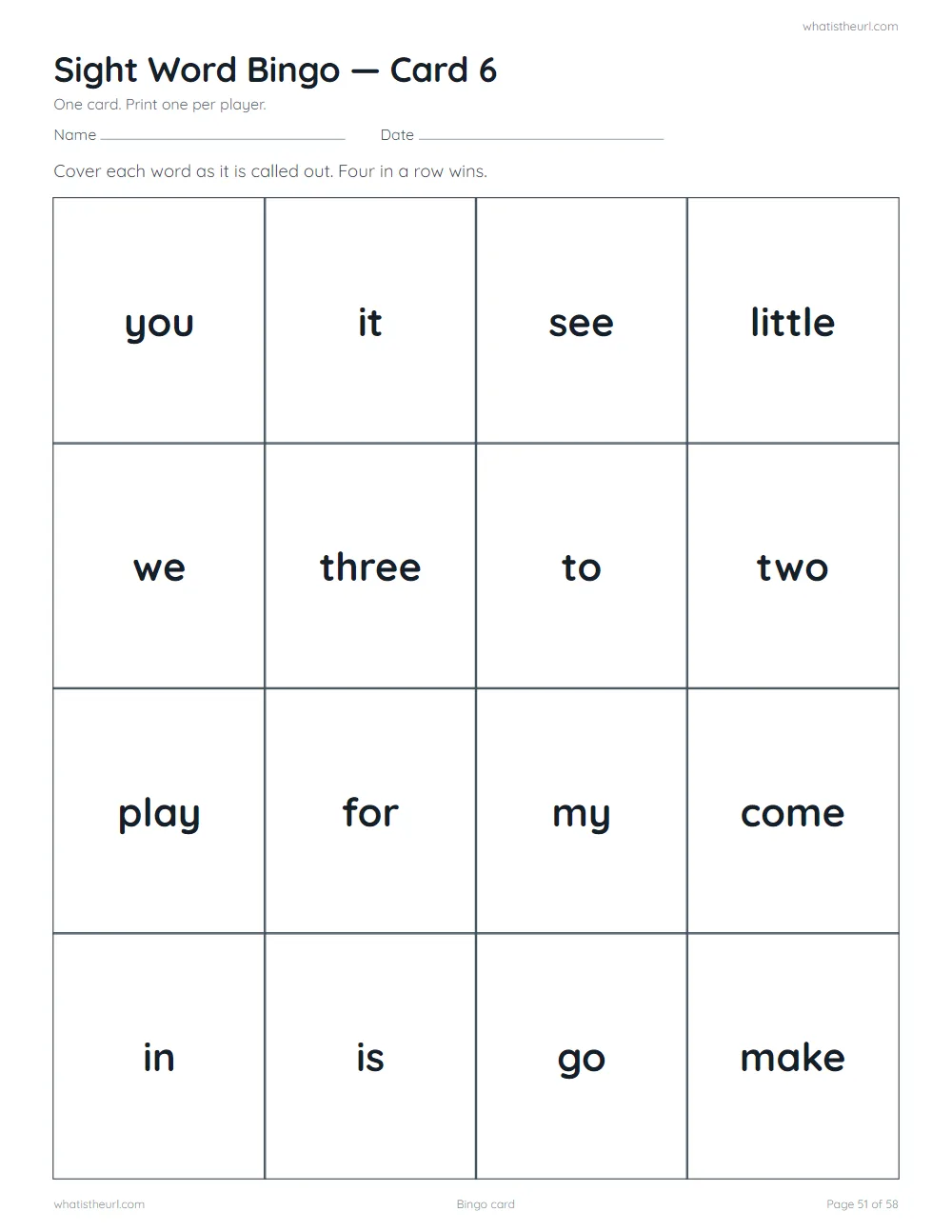
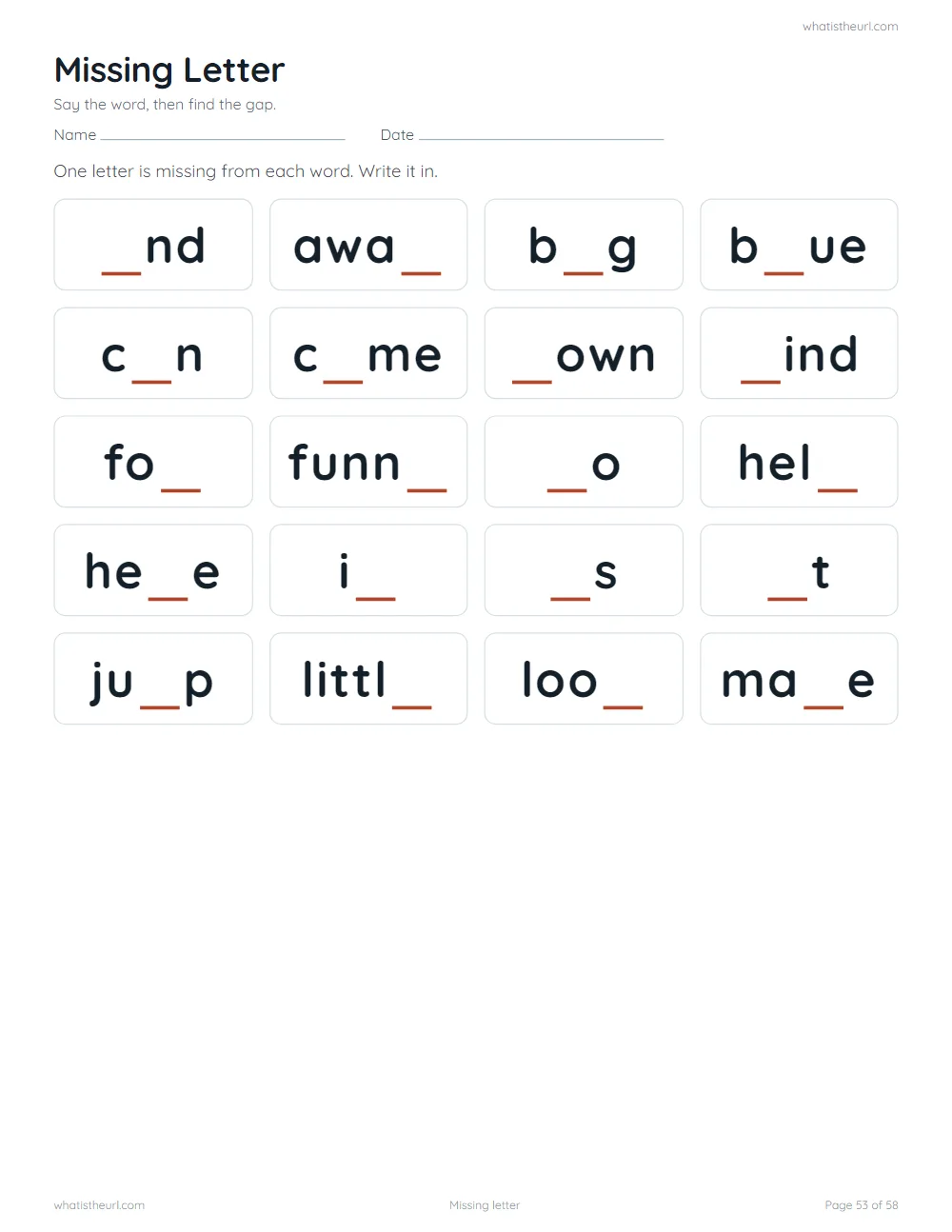
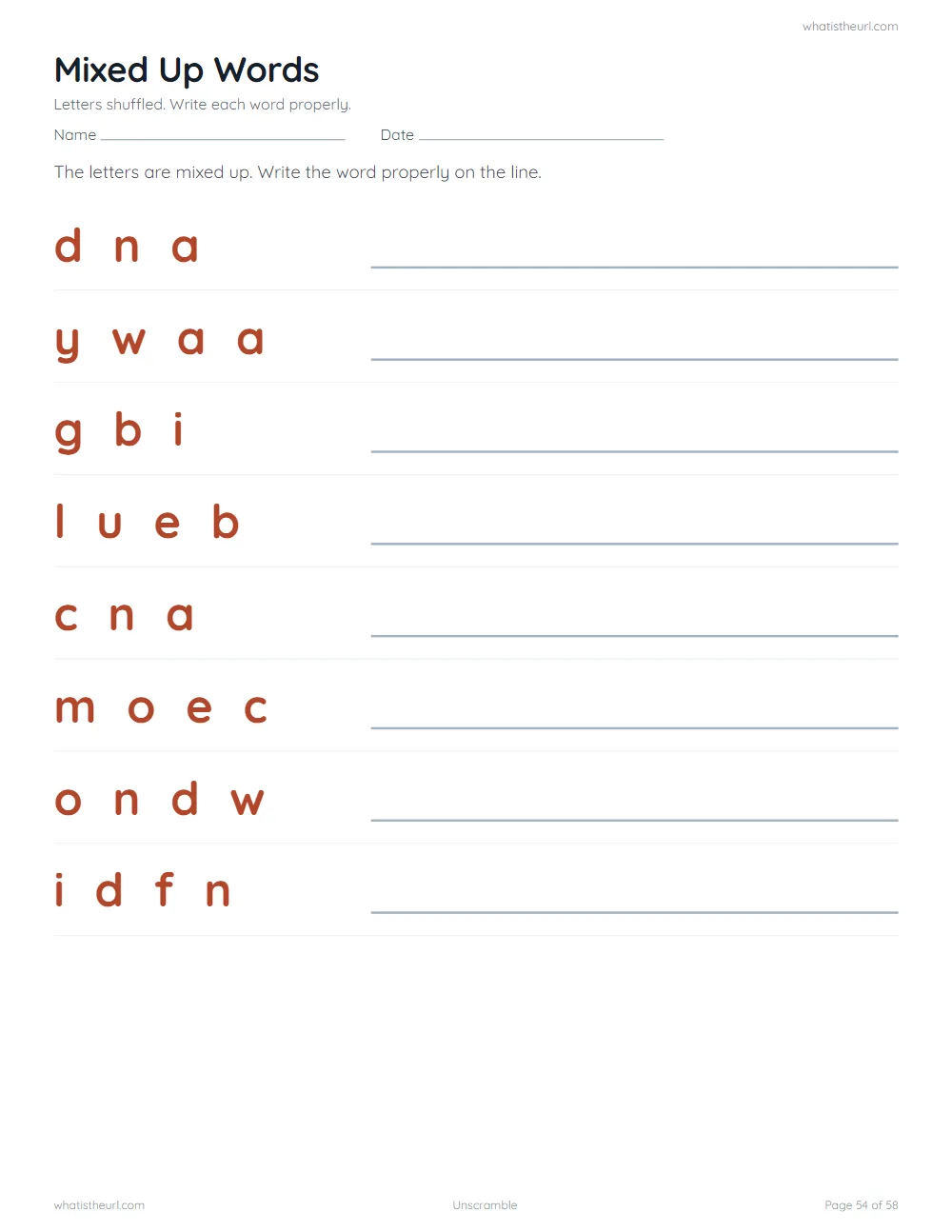
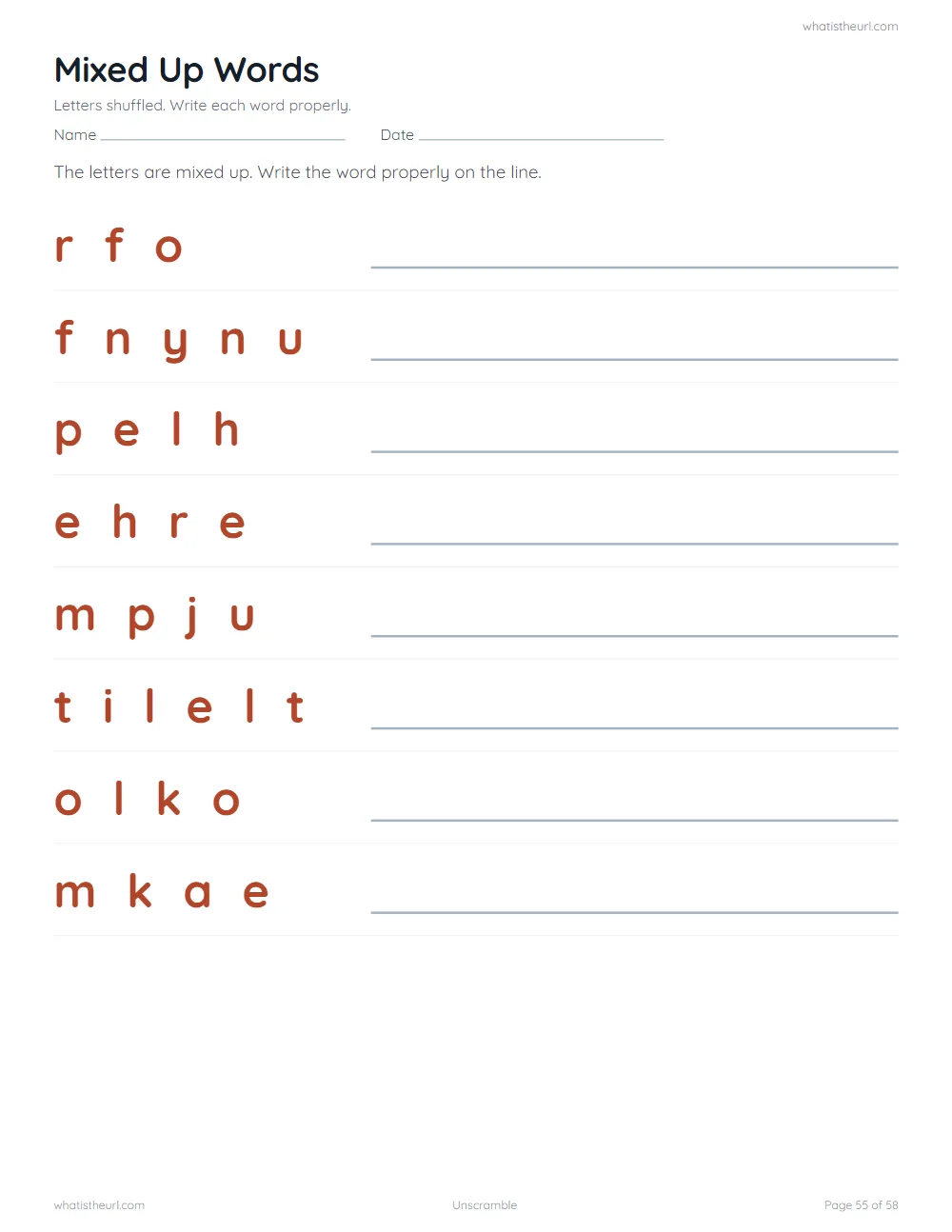
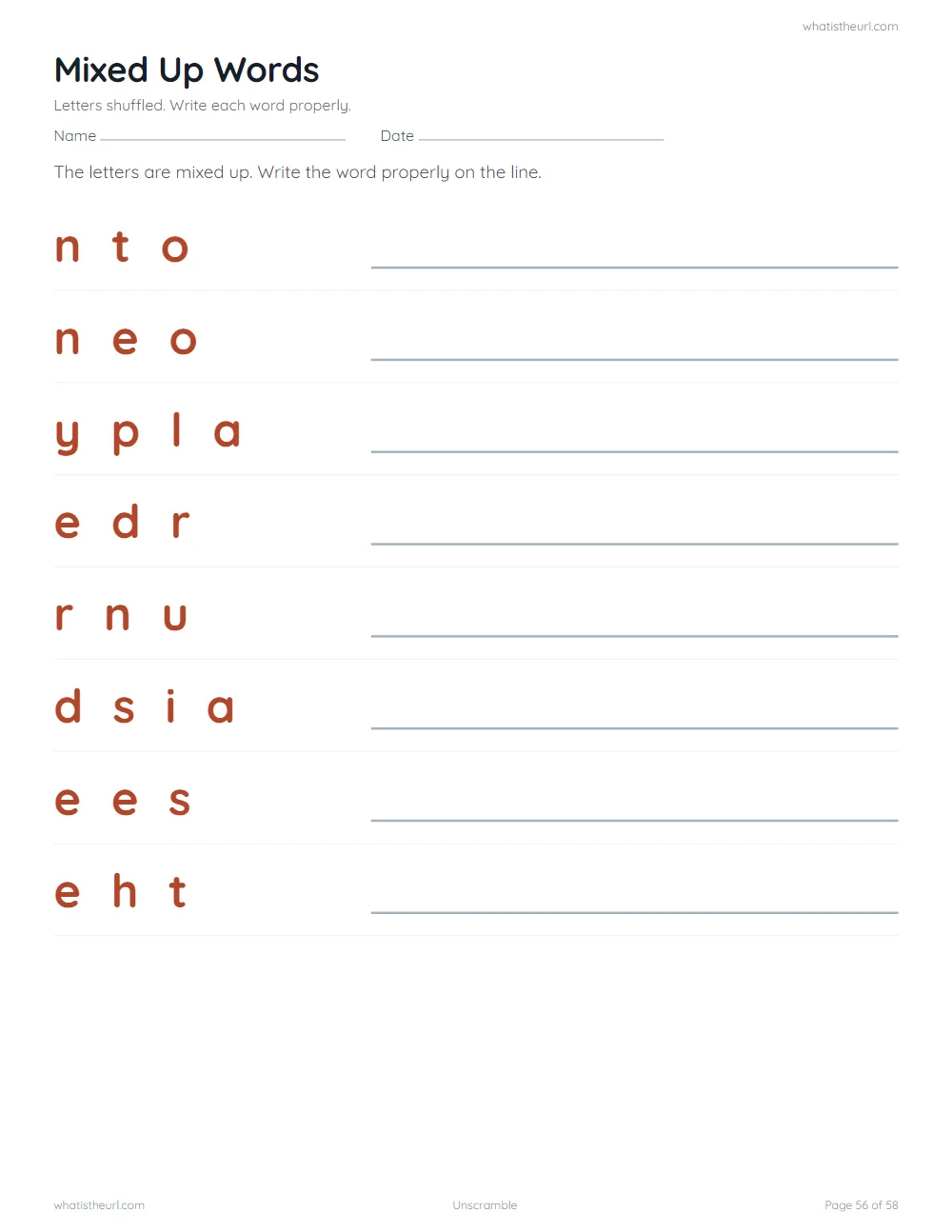
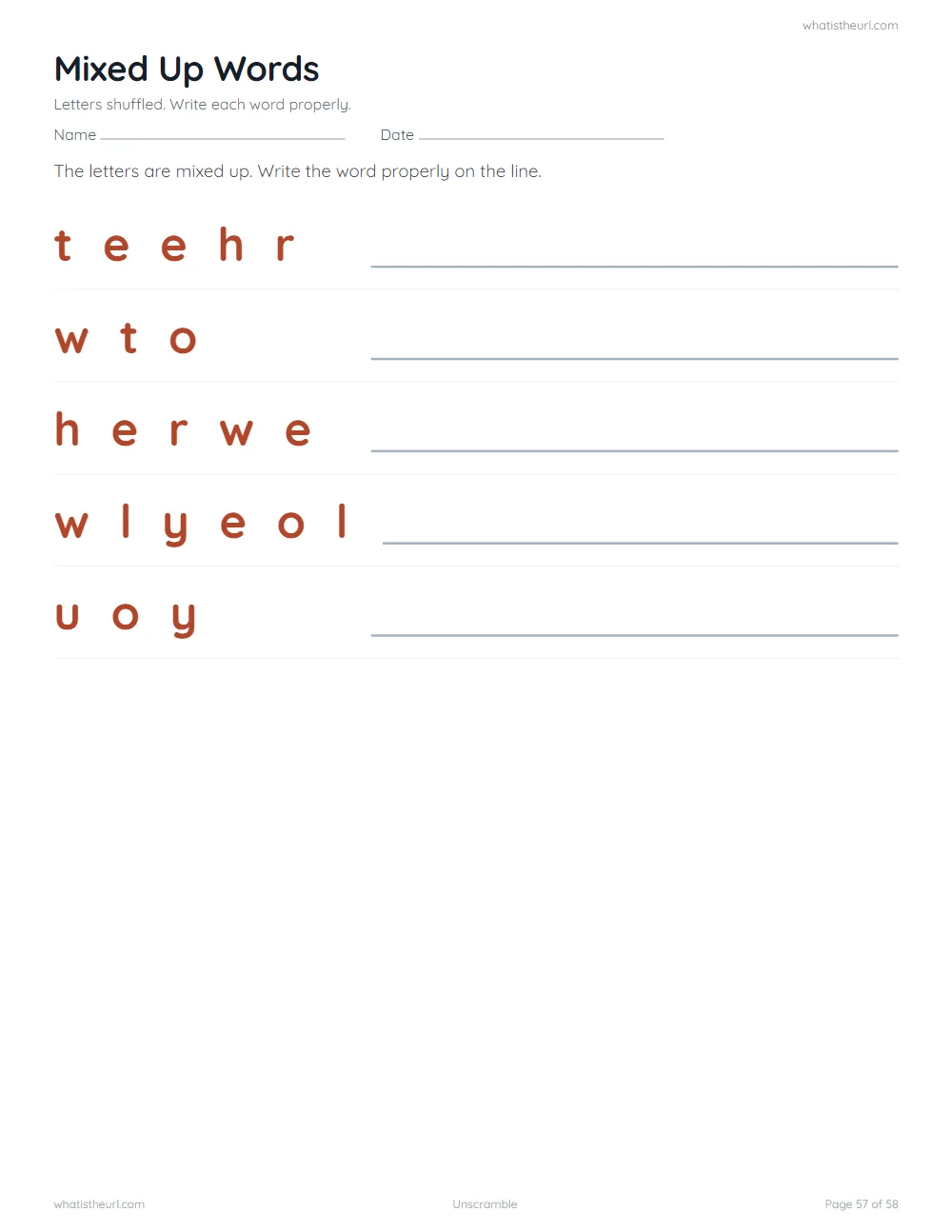
All 40 Dolch pre-primer sight words across 41 printable pages, in large print: word walls, read-trace-write practice, find-the-word puzzles, sentences and cut-out cards.
Free PDF, no sign-up.
Why these words are different
Most early reading advice is sound it out. For these words that advice is wrong, and telling a child to use it will confuse them.
Look at said. Sounded out it is "sa-id". Come should rhyme with home. One ought to start with an o sound, and two has a w in it doing nothing at all.
These are the words that break the rules a child has just been taught — which is exactly why they are learned by sight instead. A child who recognises them instantly can read a sentence; a child still decoding them loses the meaning before they reach the end.
They are also everywhere. The pre-primer list alone accounts for a large share of the words on any early reading page, which is why twenty minutes on them buys more fluency than twenty minutes on almost anything else.
The 40 words
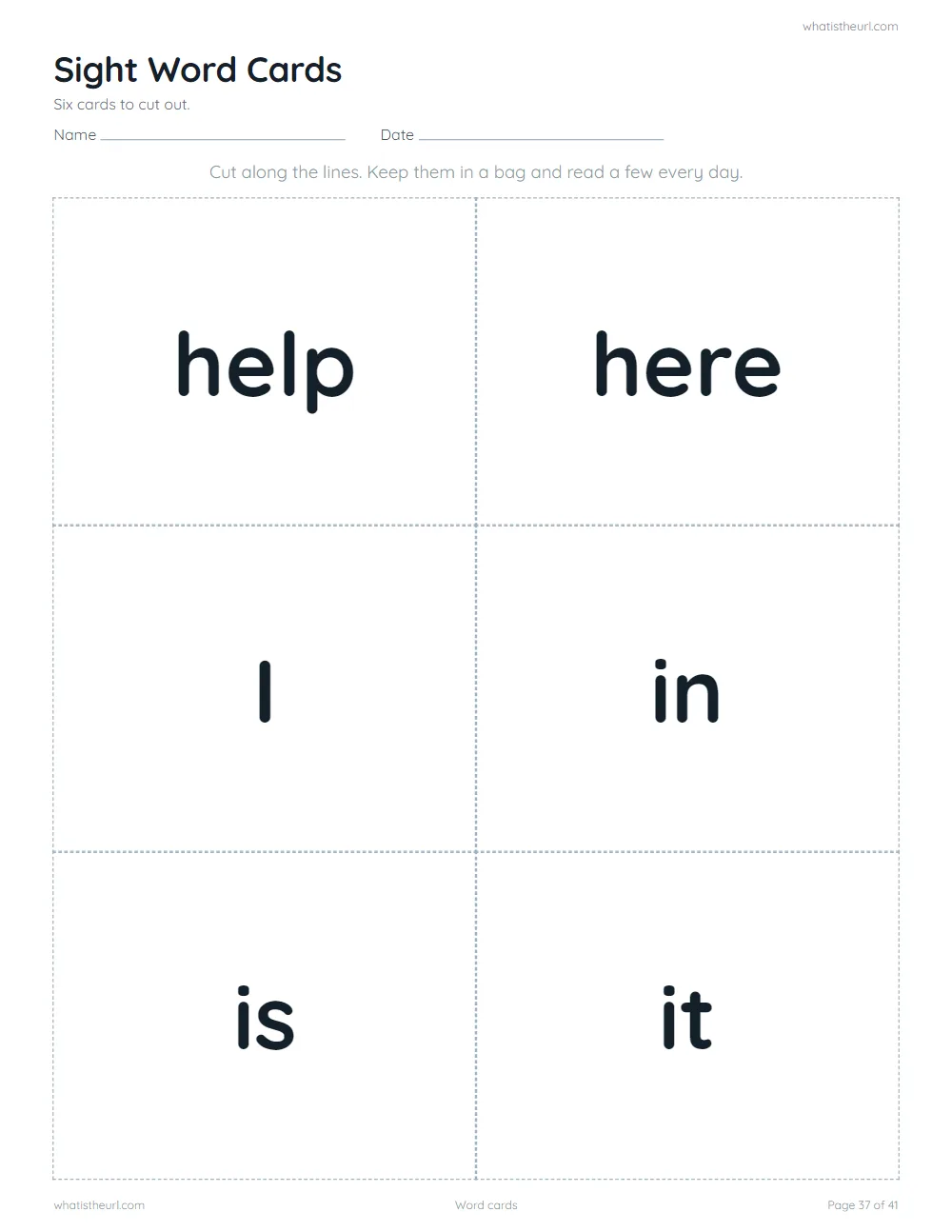
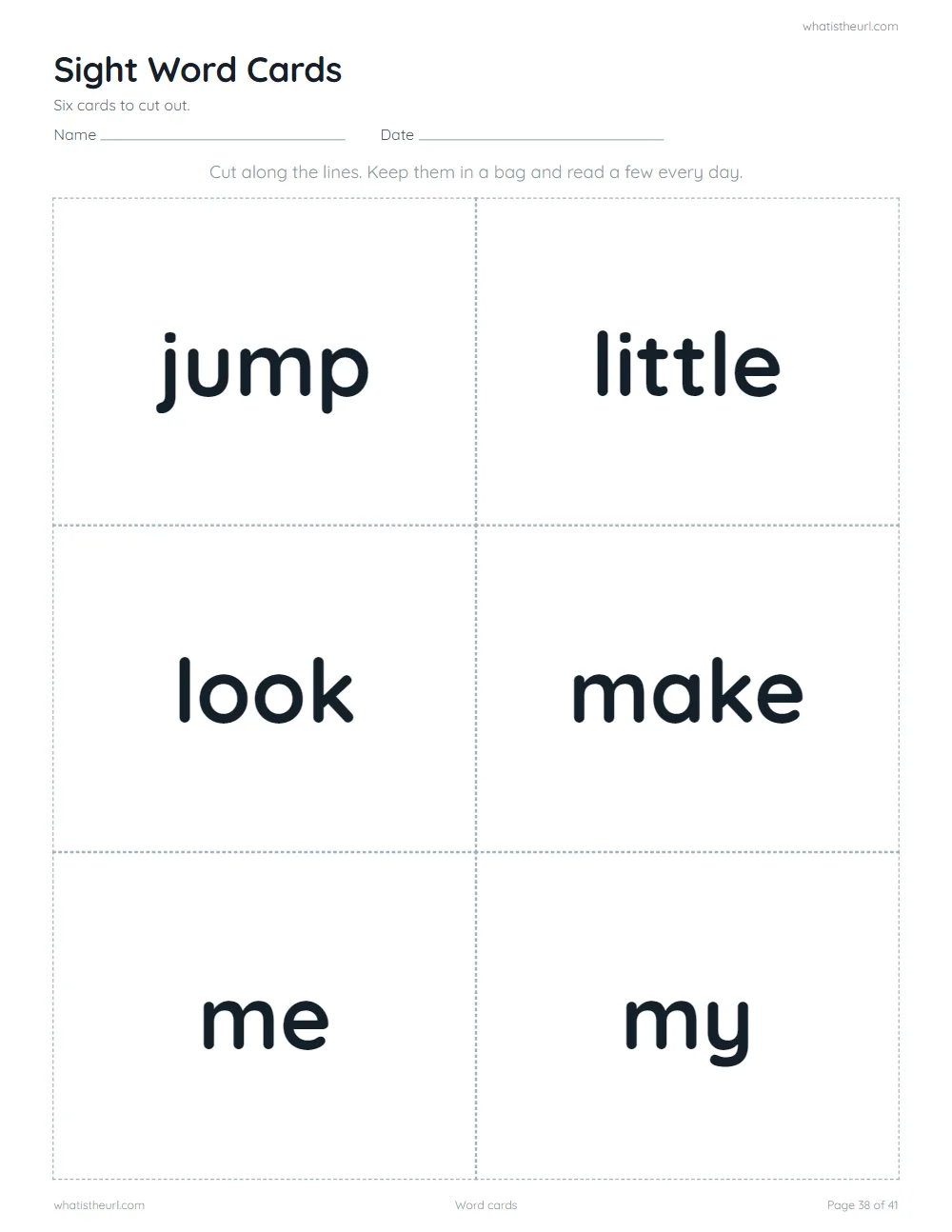
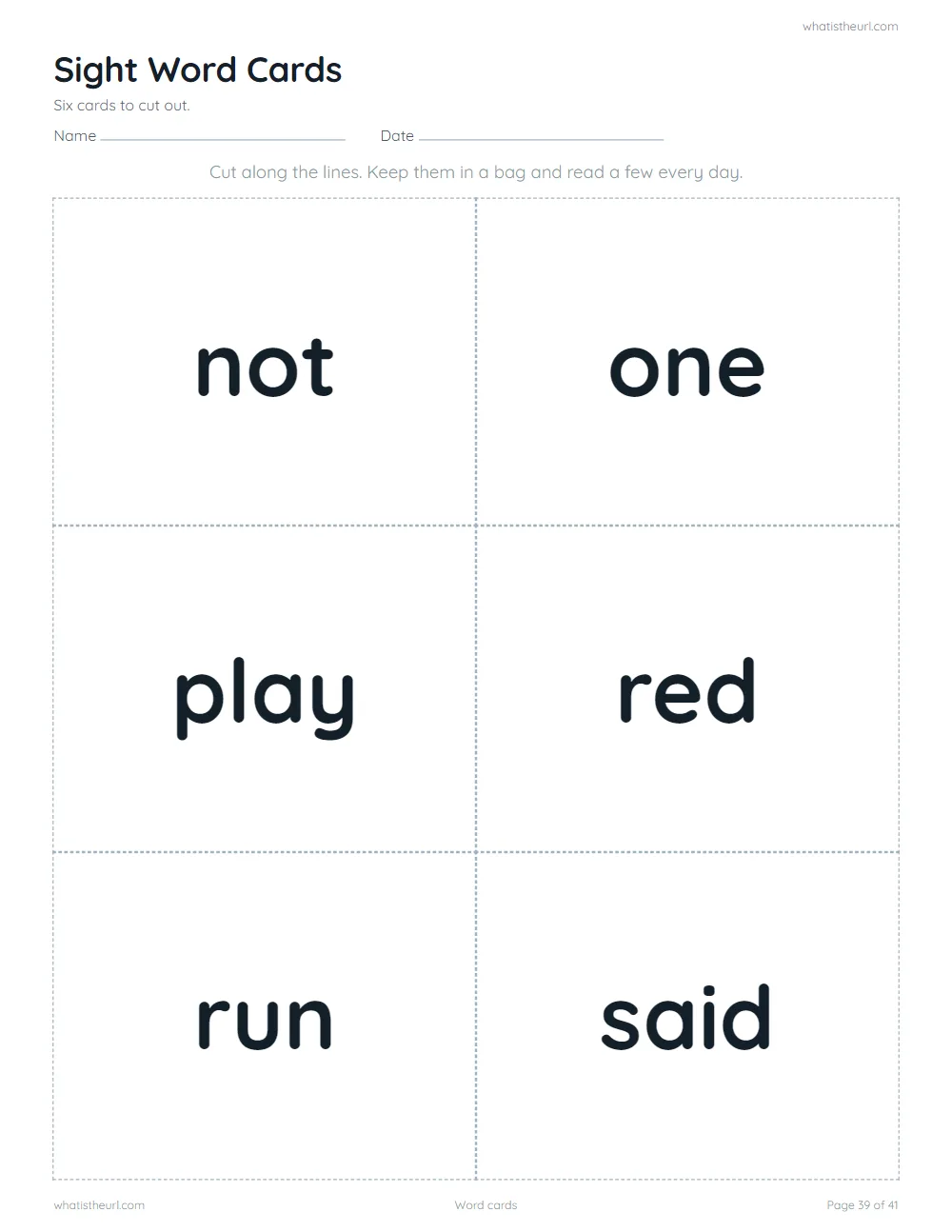
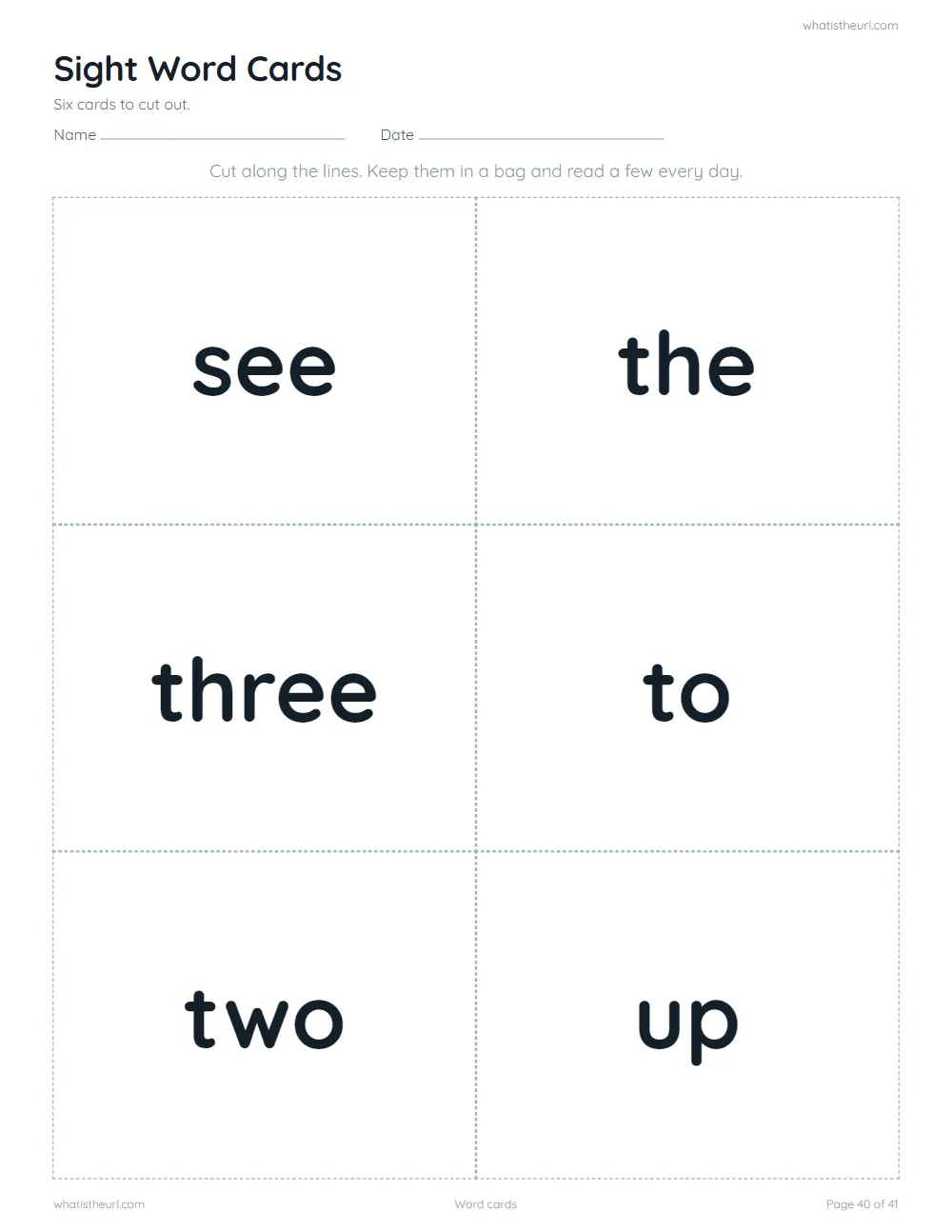
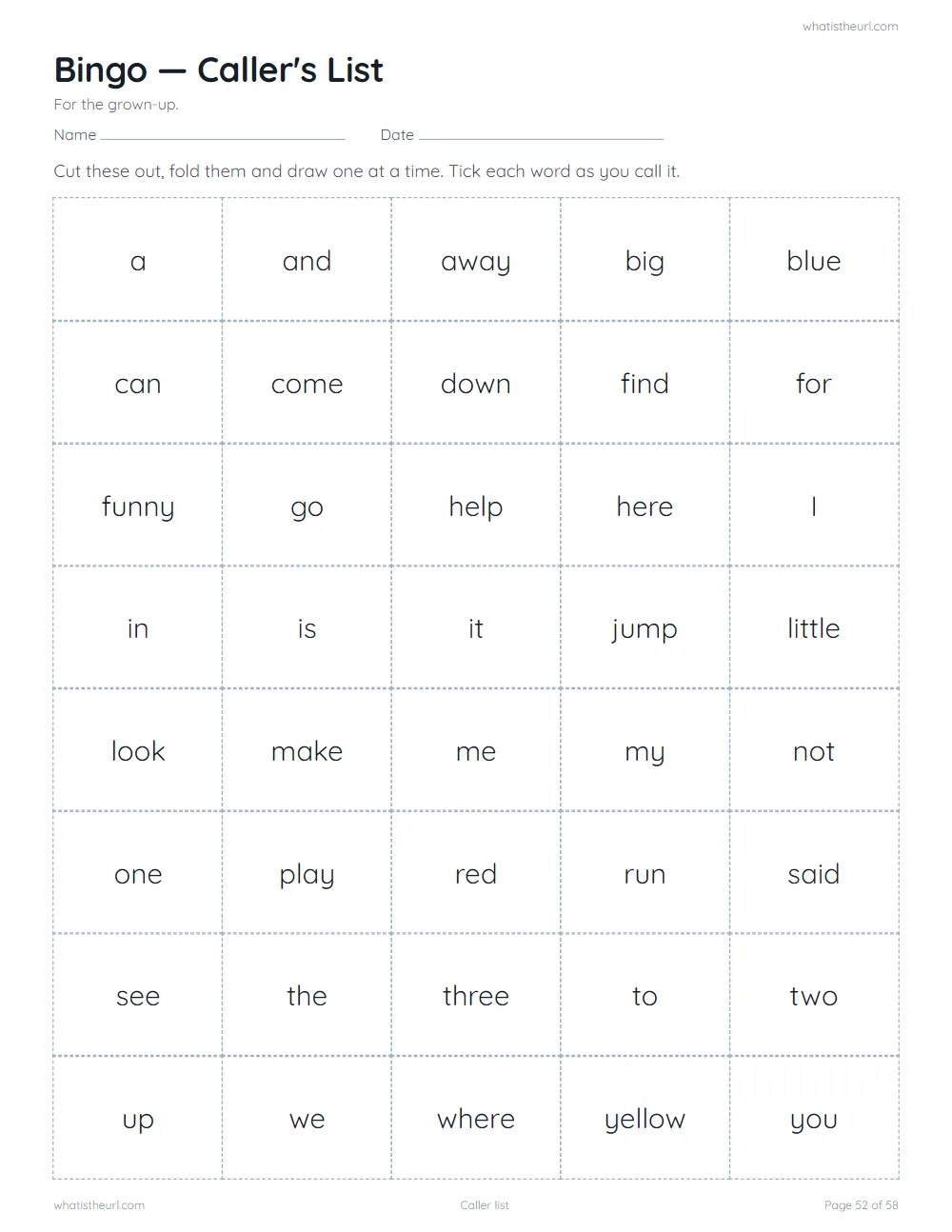
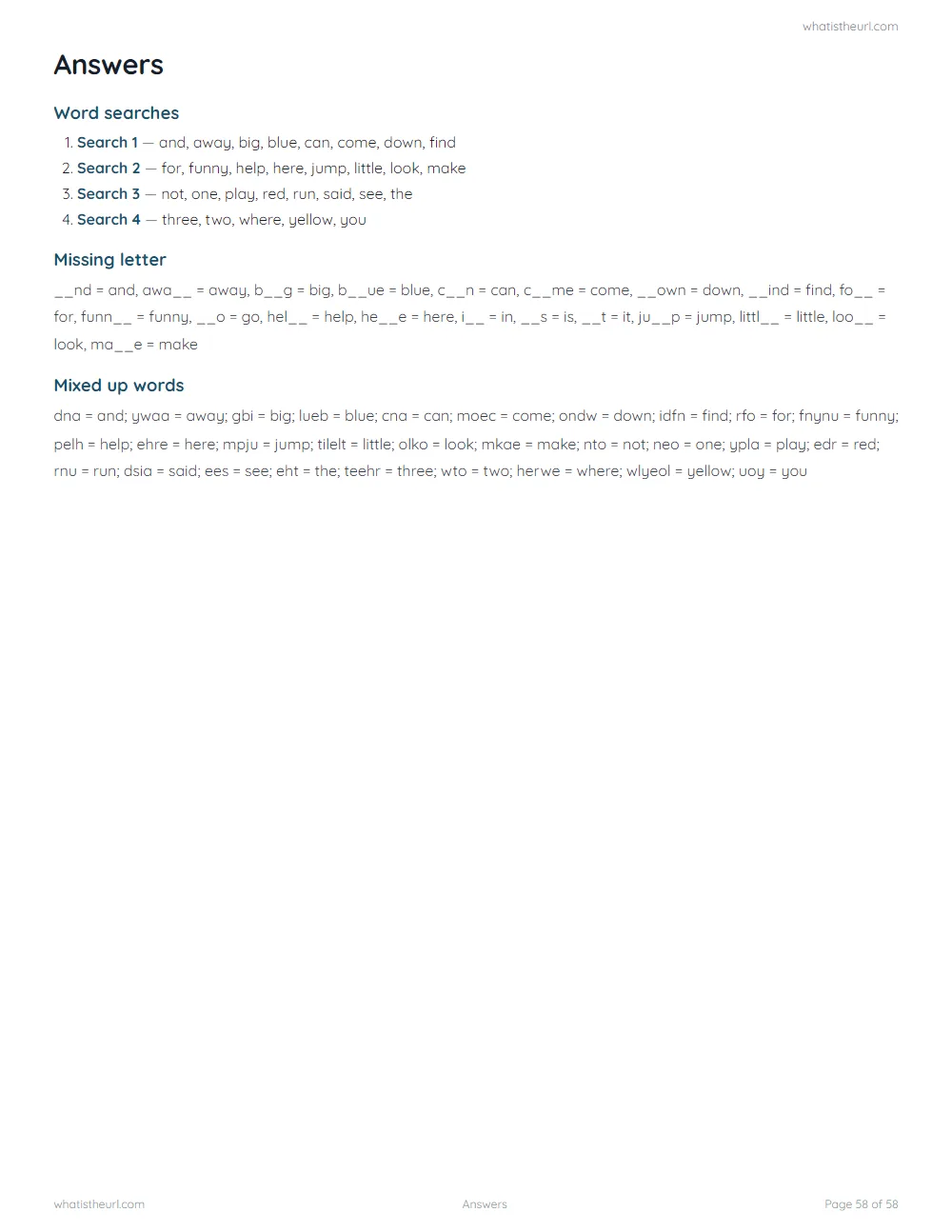
a, and, away, big, blue, can, come, down, find, for, funny, go, help, here, I, in, is, it, jump, little, look, make, me, my, not, one, play, red, run, said, see, the, three, to, two, up, we, where, yellow, you
This is Edward Dolch's pre-primer list, published in 1936 and still the list American schools use.
Printed big, on purpose
The reader is four to six years old. Every word a child reads on these sheets is set large — the practice words at around half an inch tall, the focus words on the find-the-word pages nearly an inch.
That means fewer items on each page, and more pages overall. It is a deliberate trade. Three words a child can see clearly are worth more than ten crammed in, and a young child who has to squint gives up before they have learned anything.
What is in the download
- Word walls — twelve words a page, big enough to pin up and read across a room.
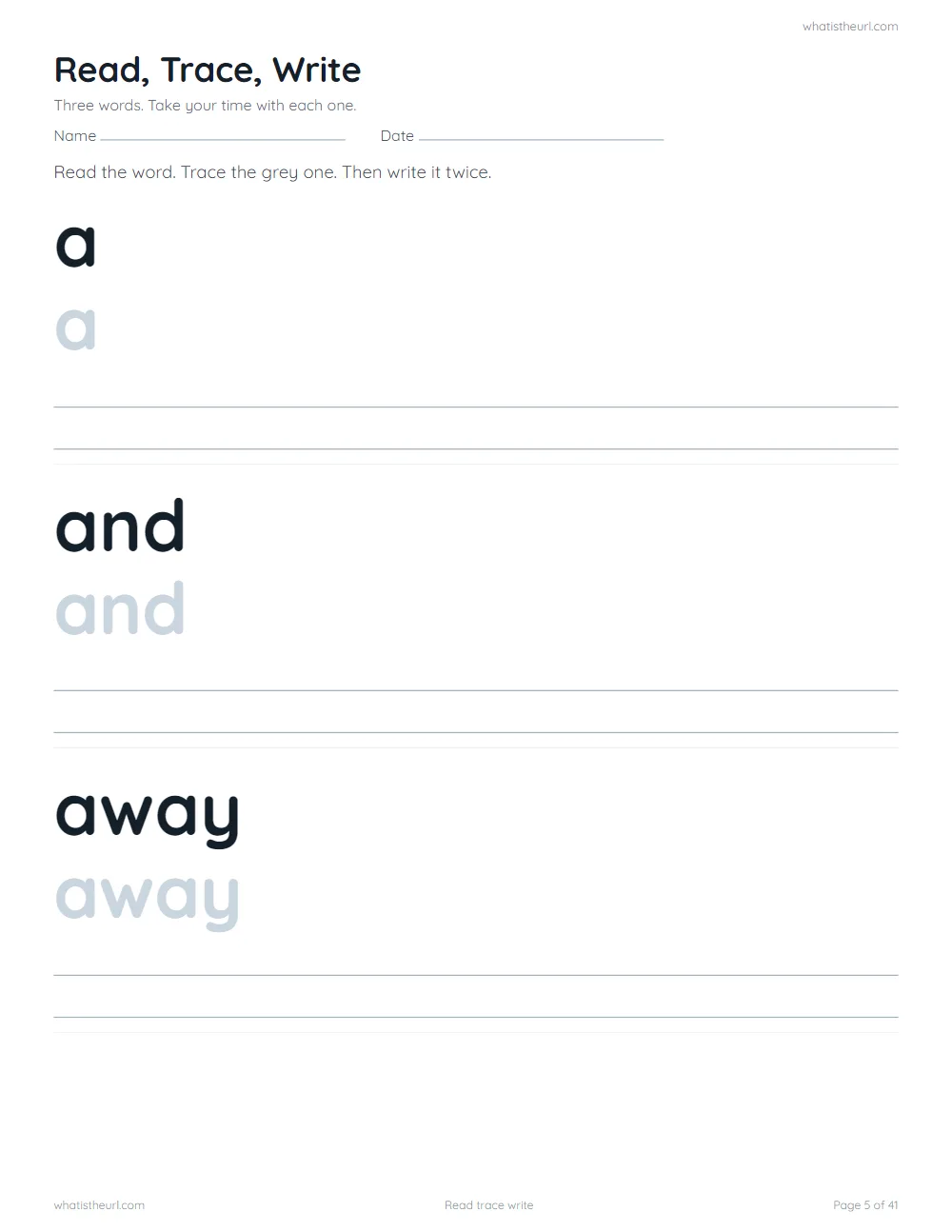
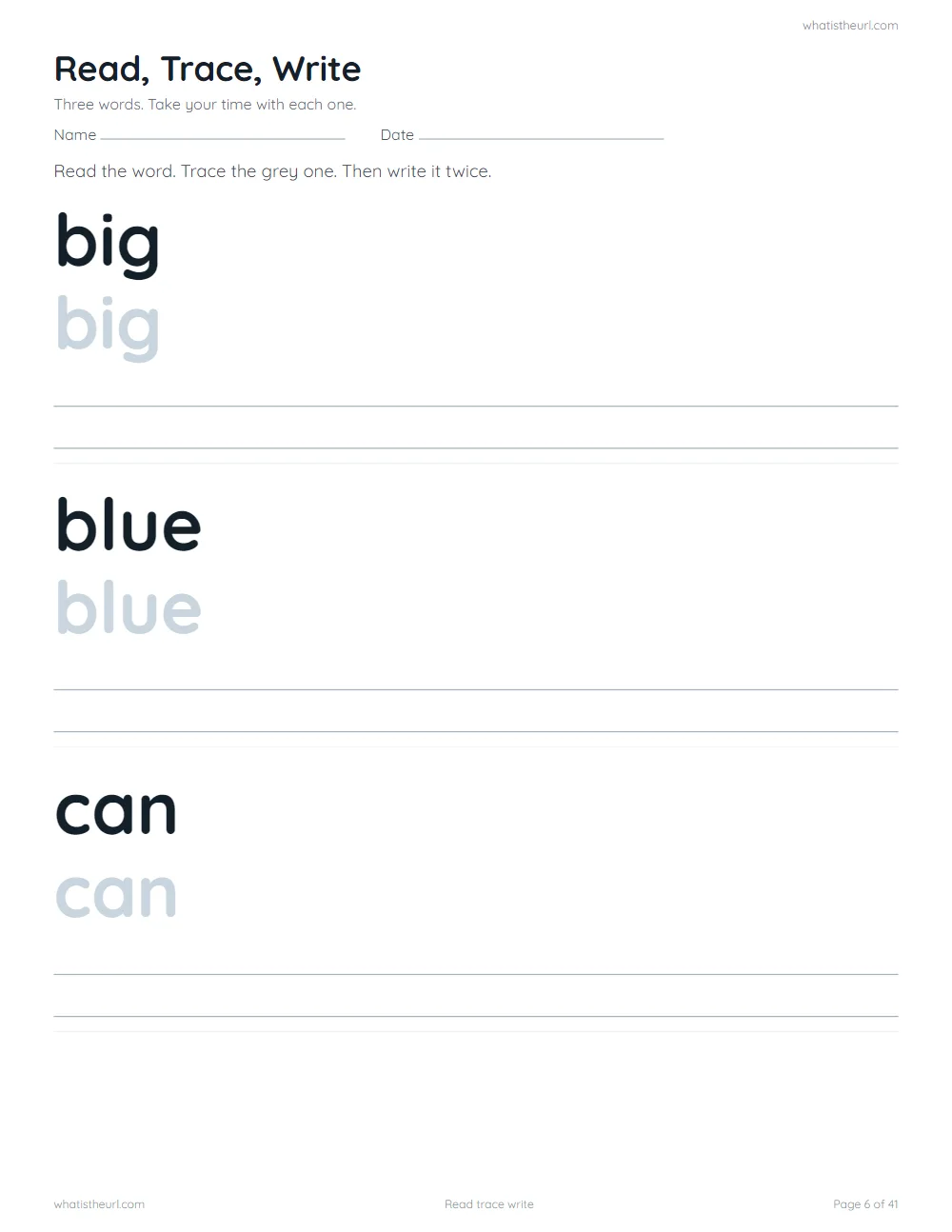
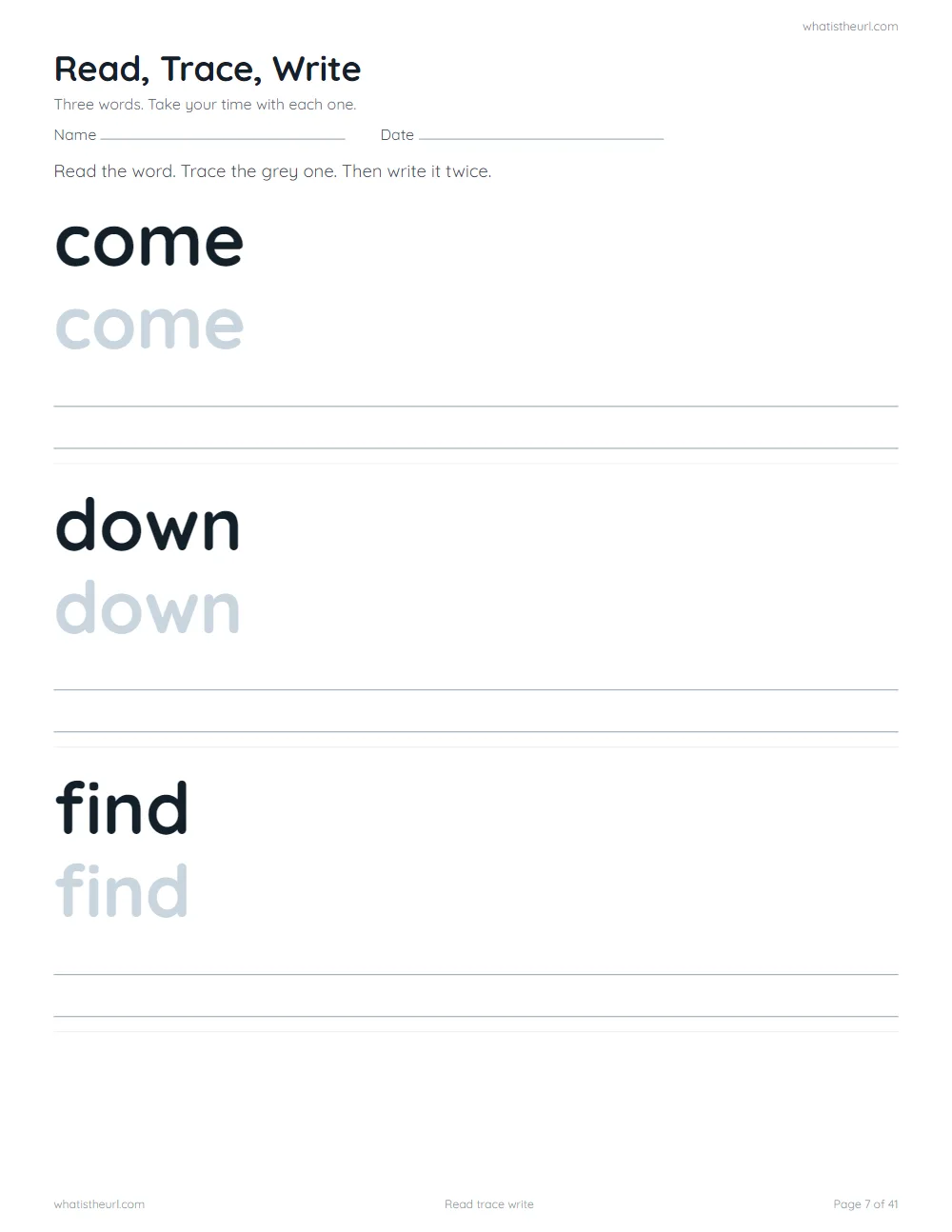
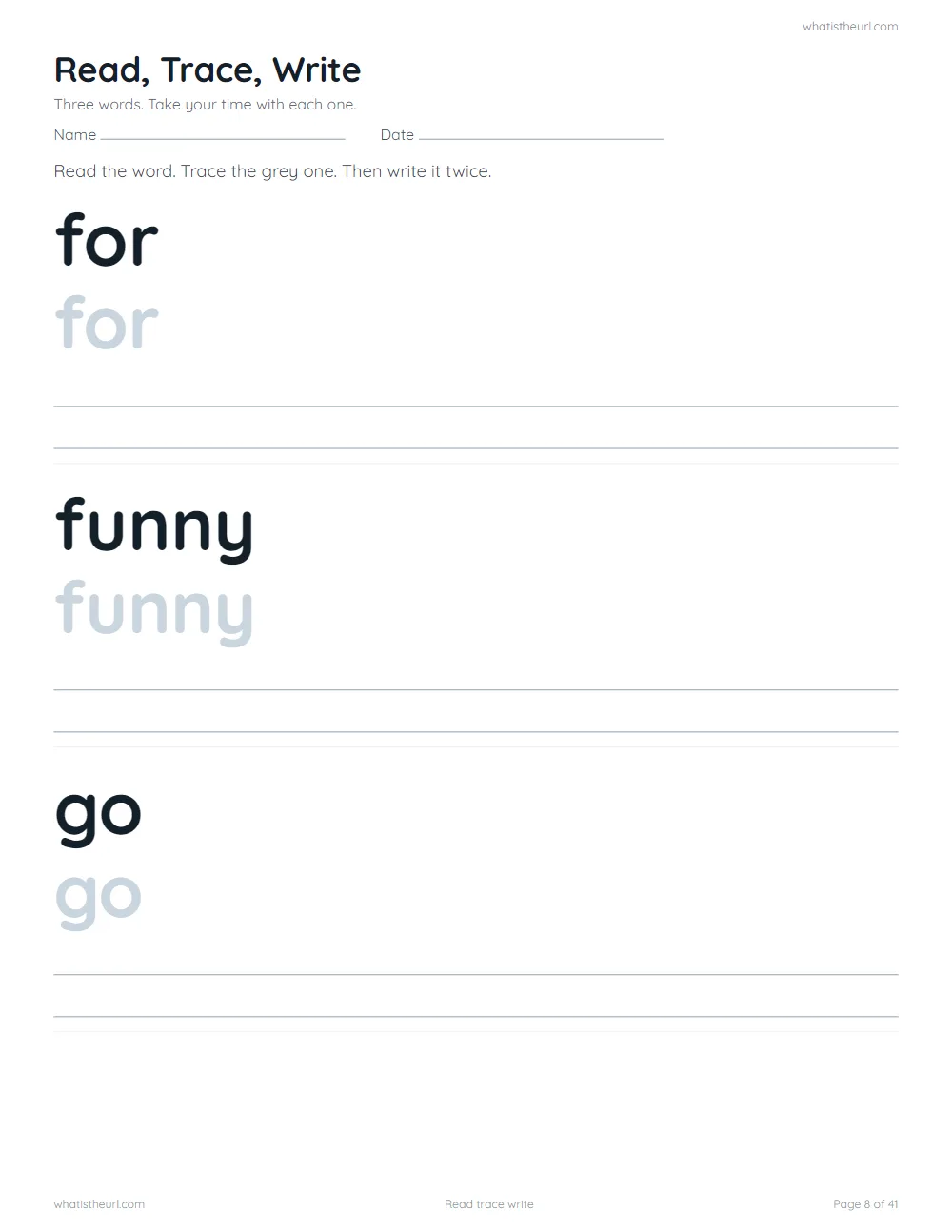
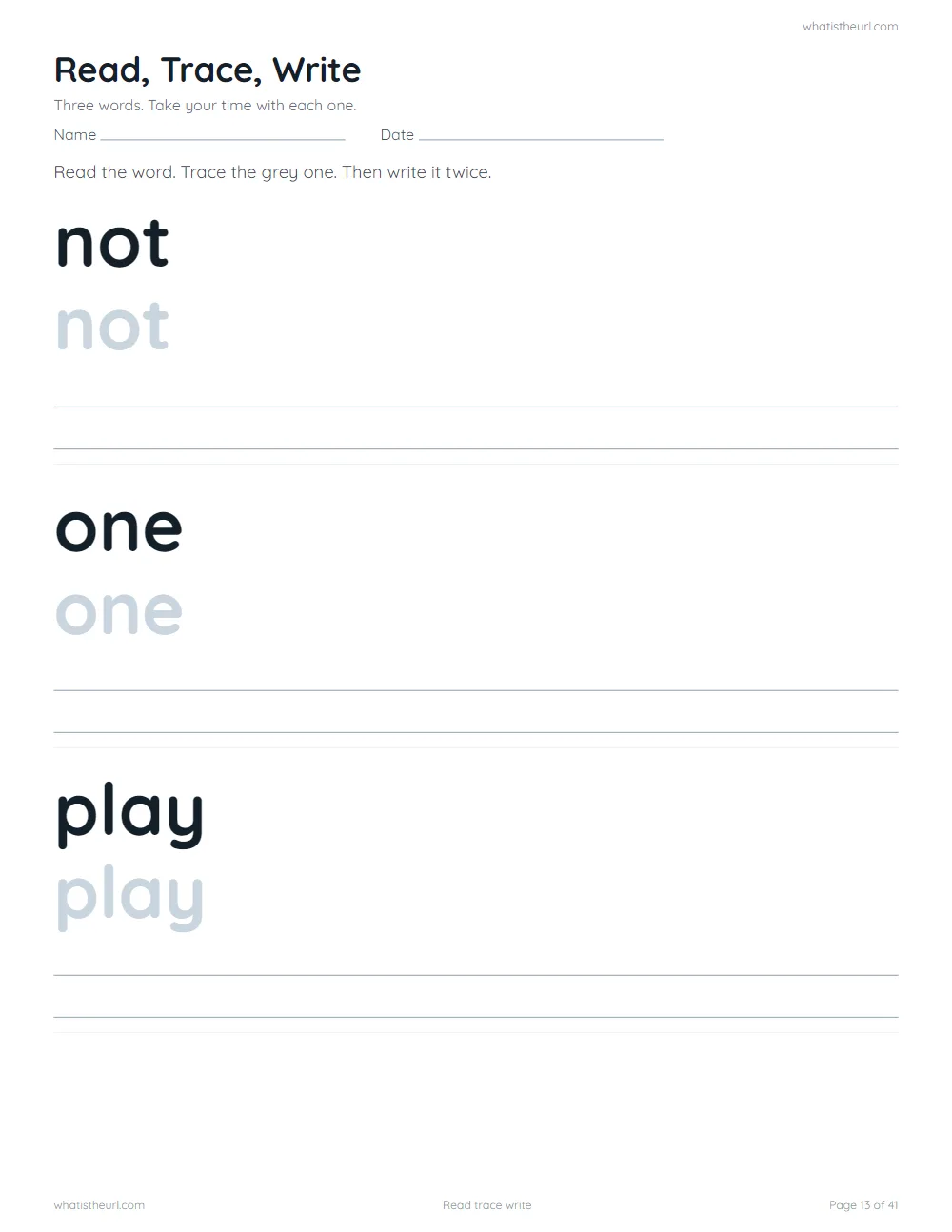
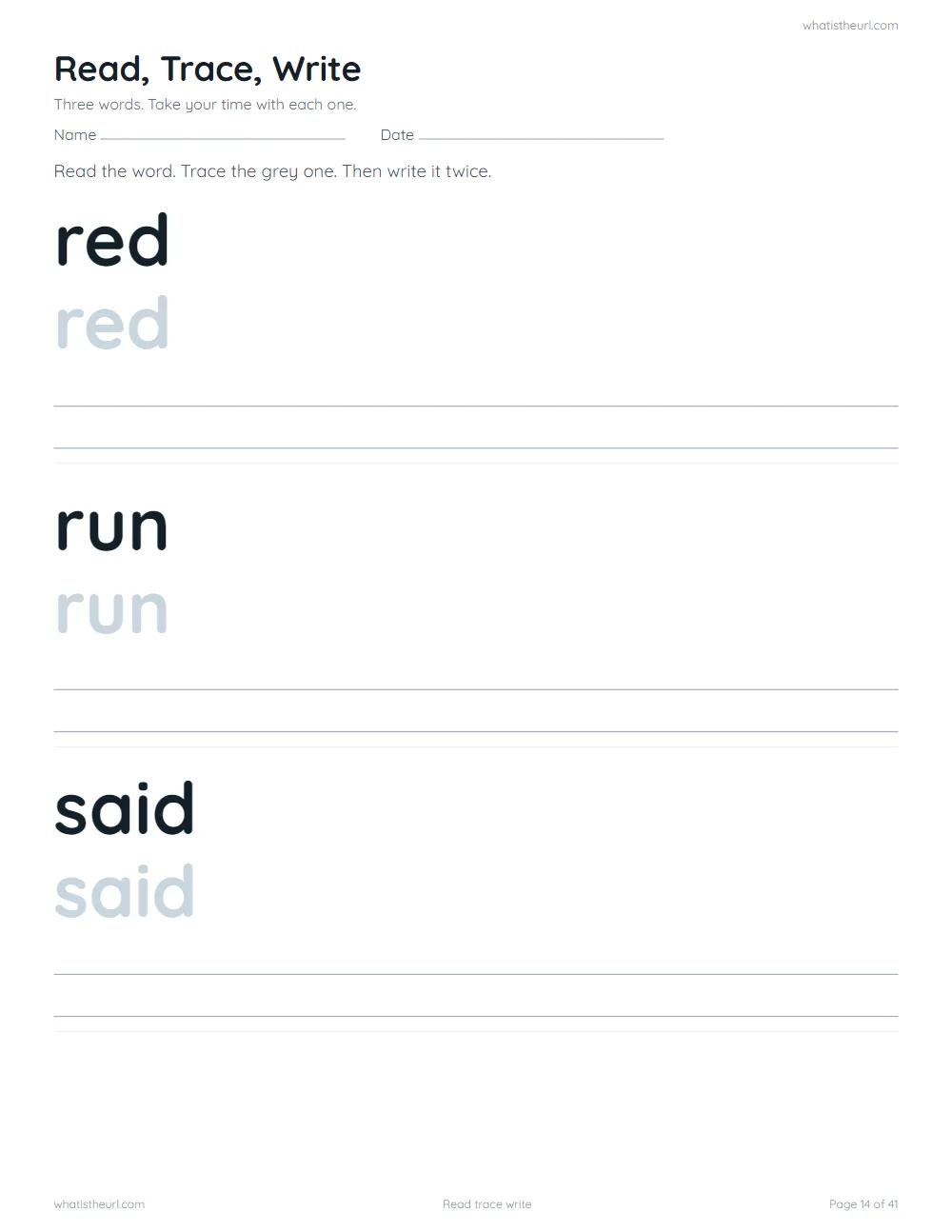
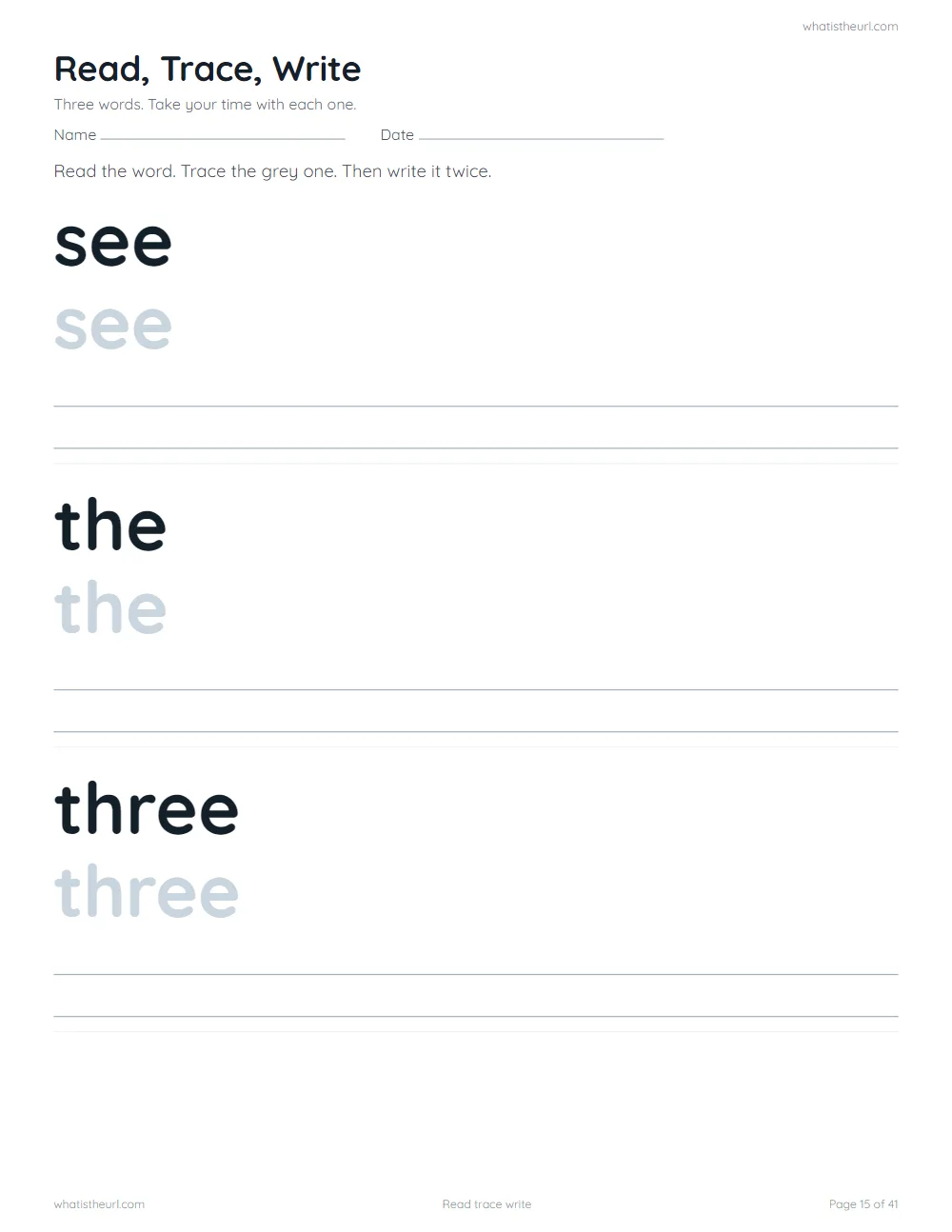
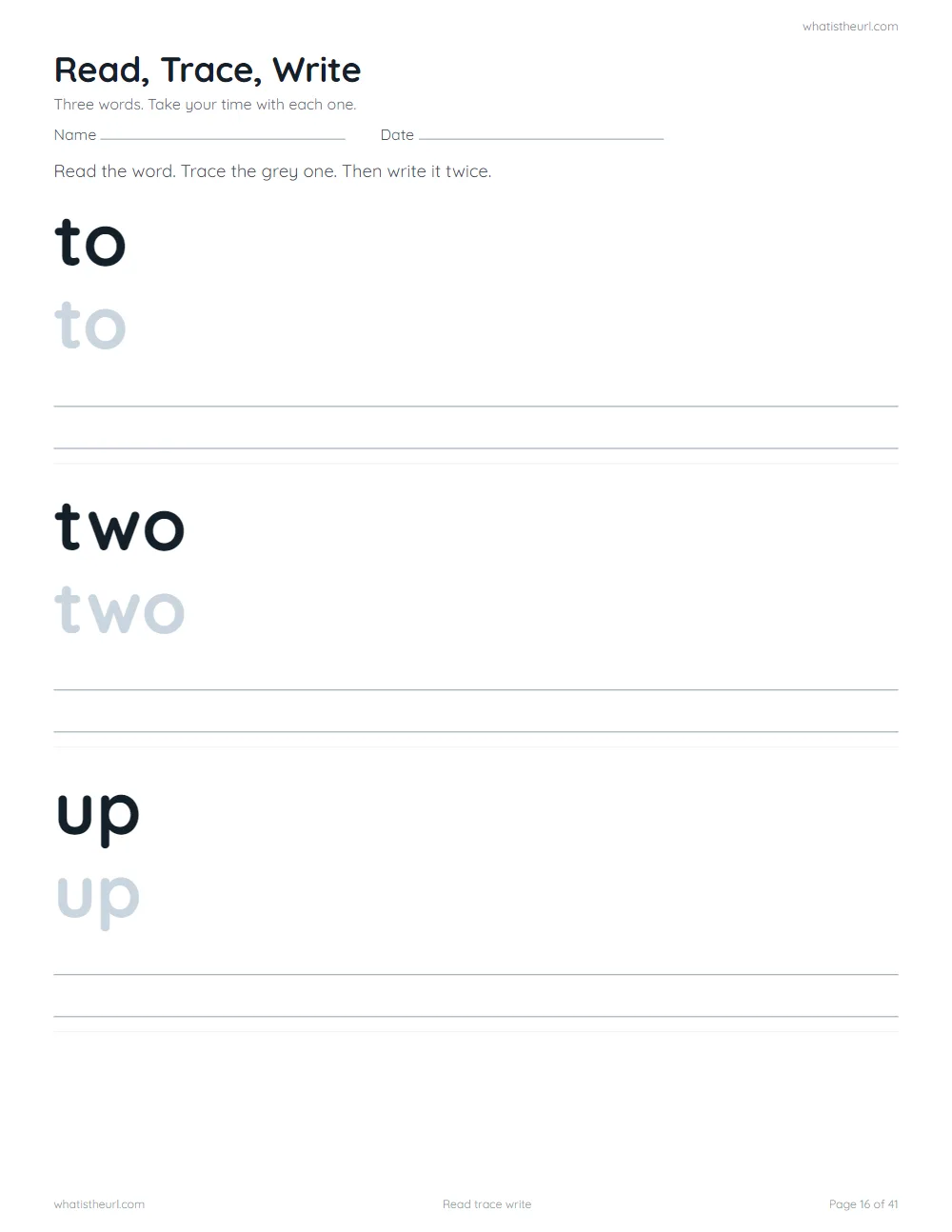
- Read, trace, write — three words a page. A model to read, a grey word to trace, two lines to write on.
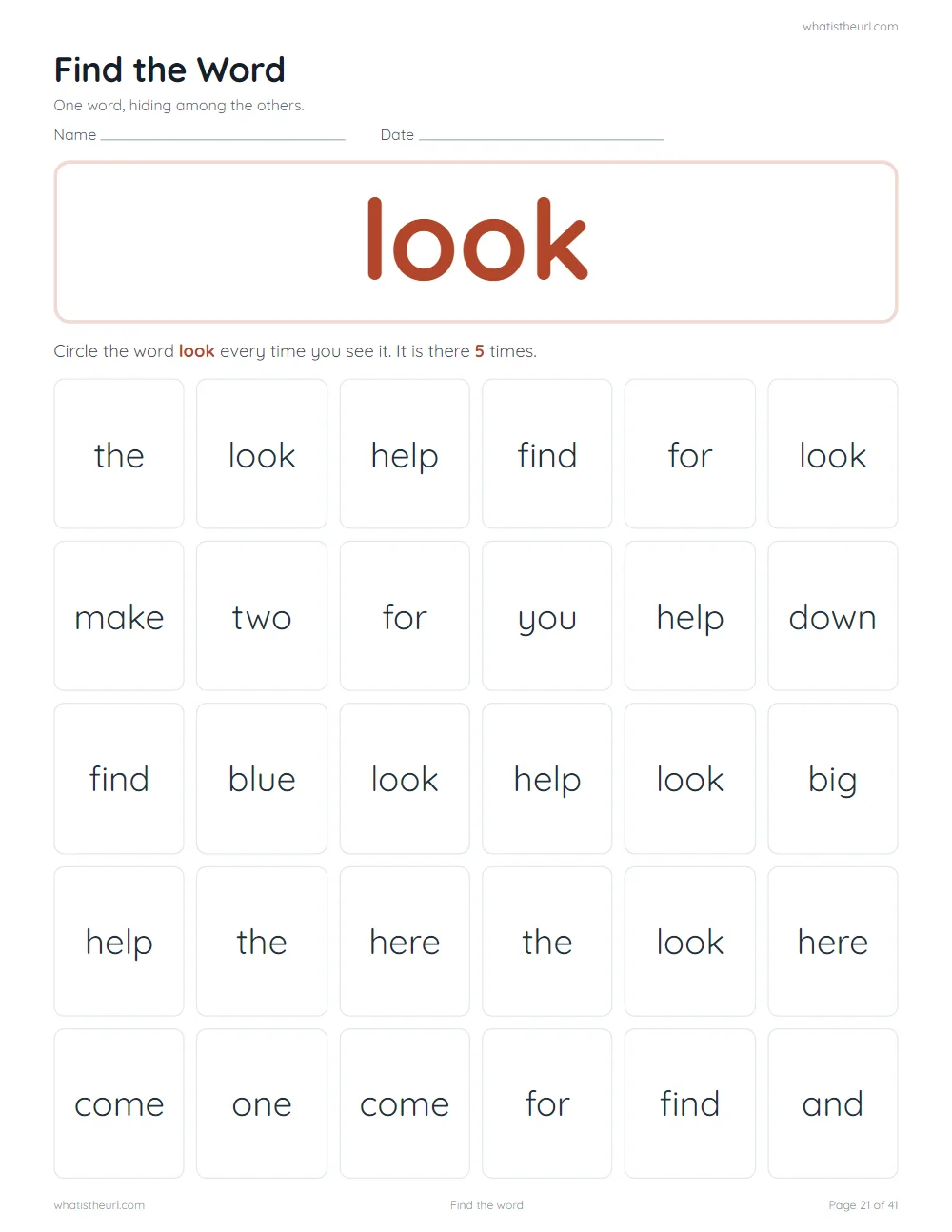
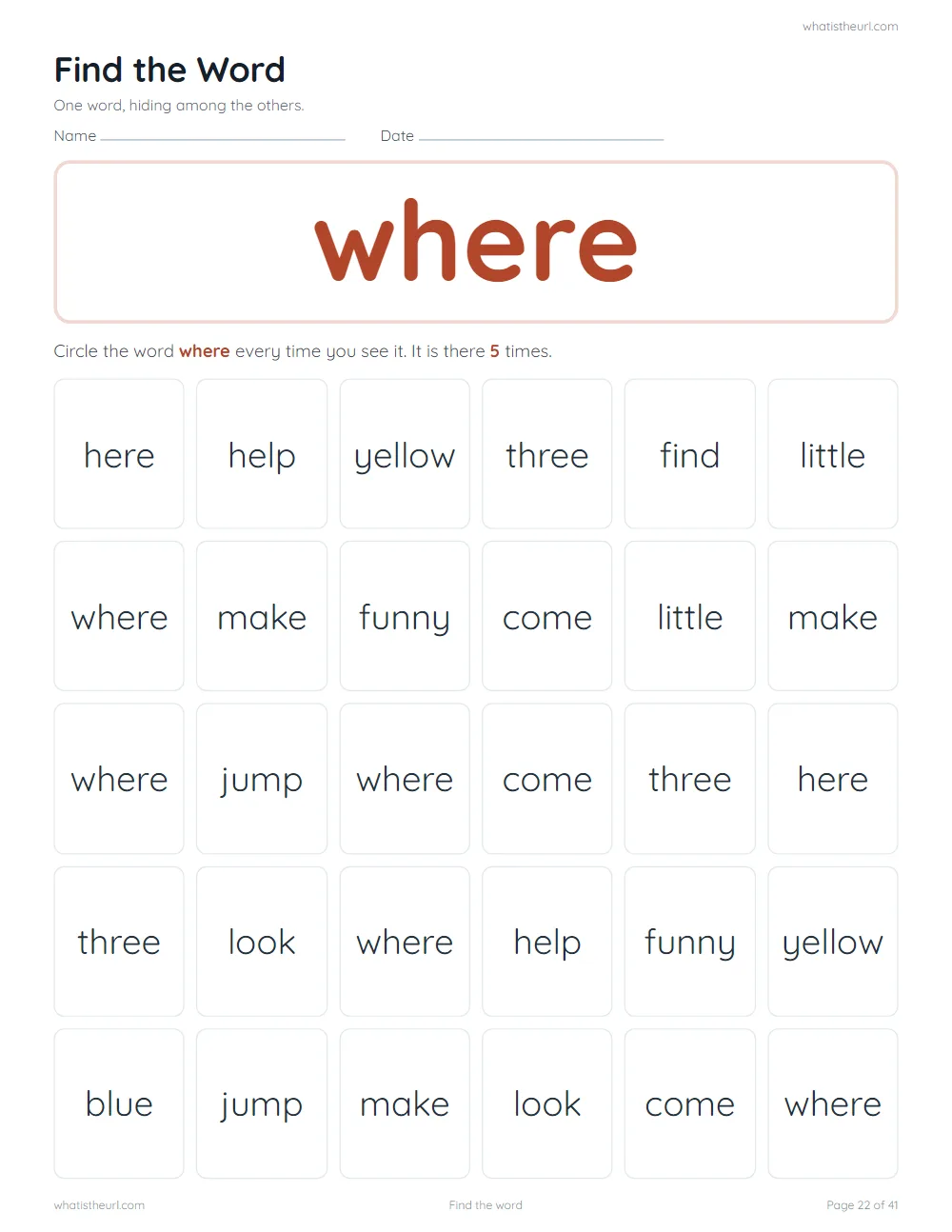
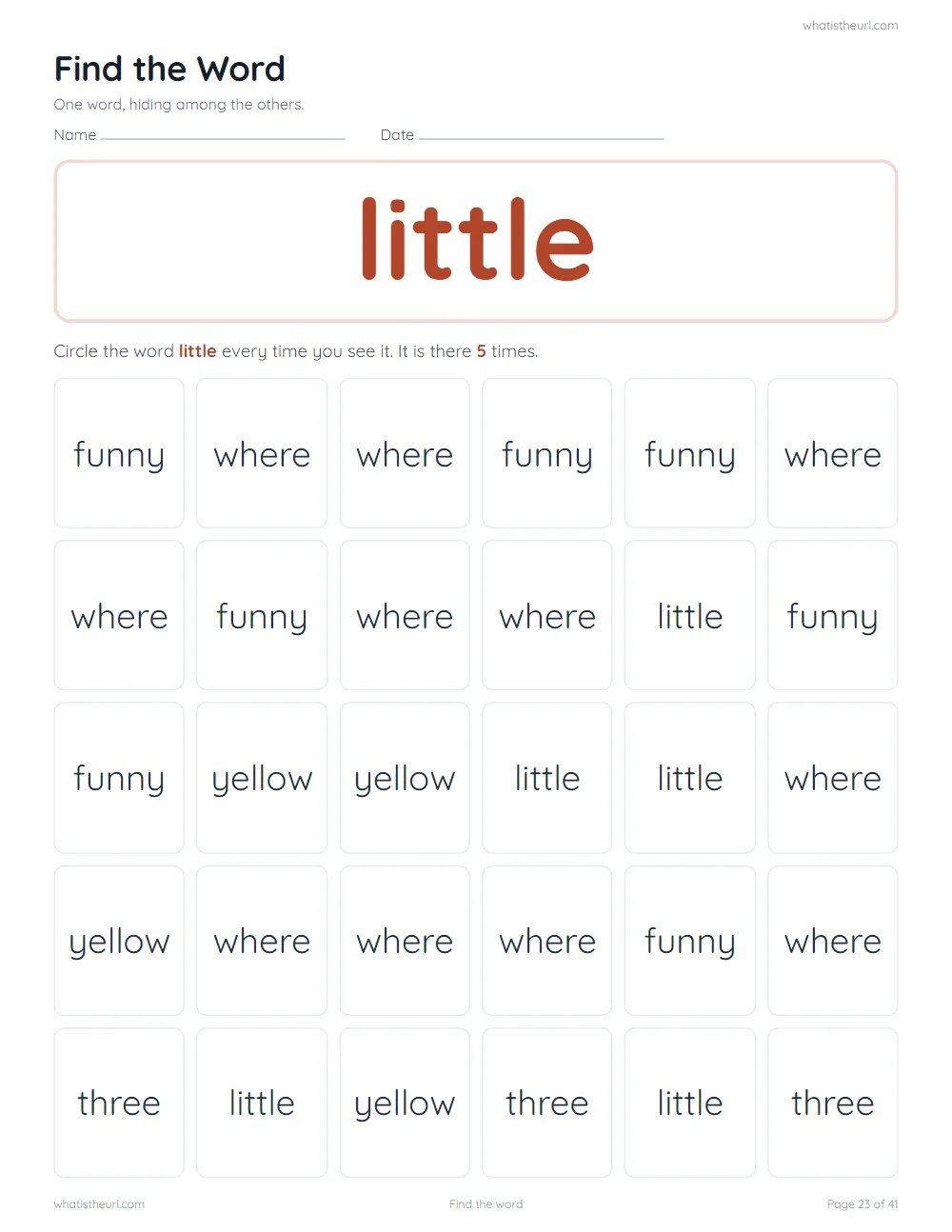
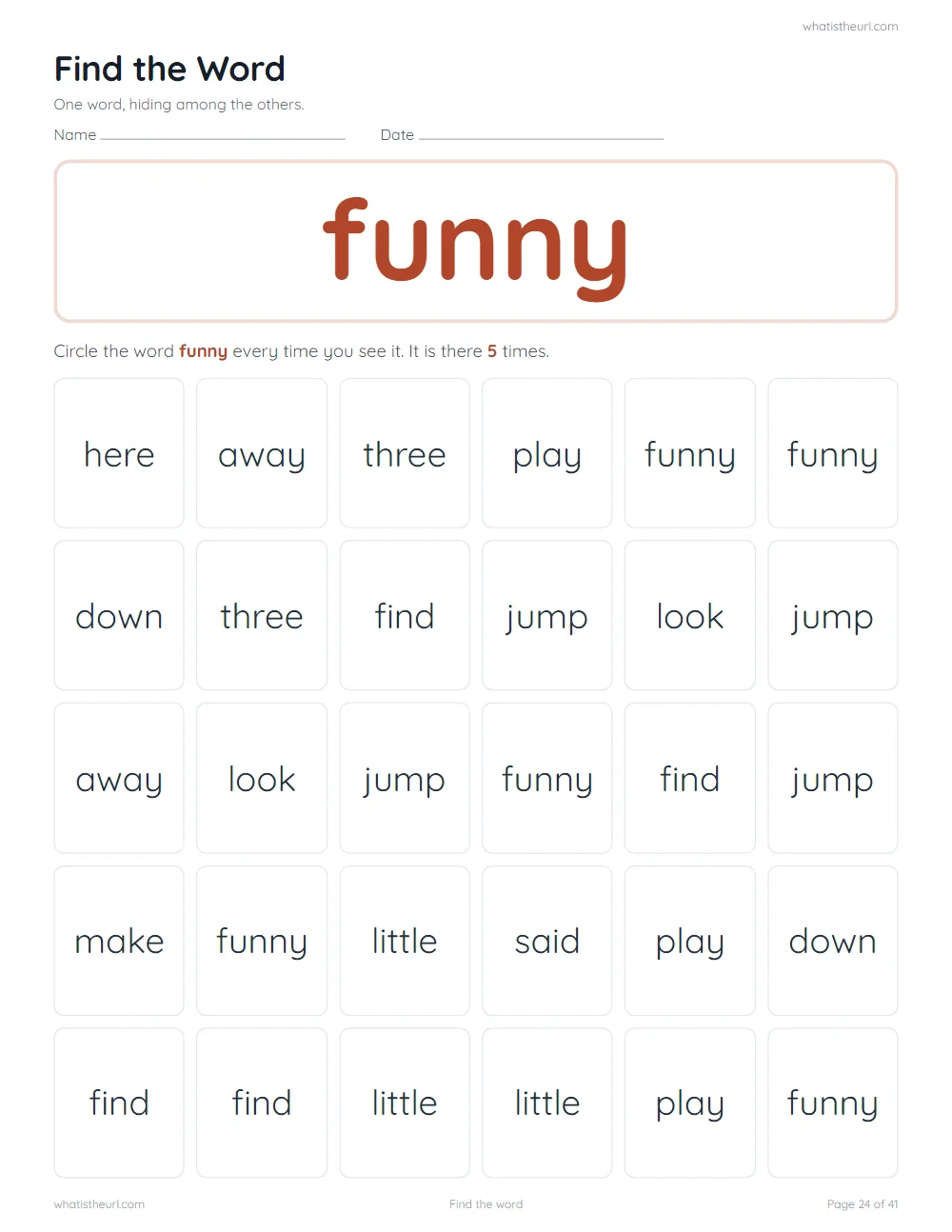
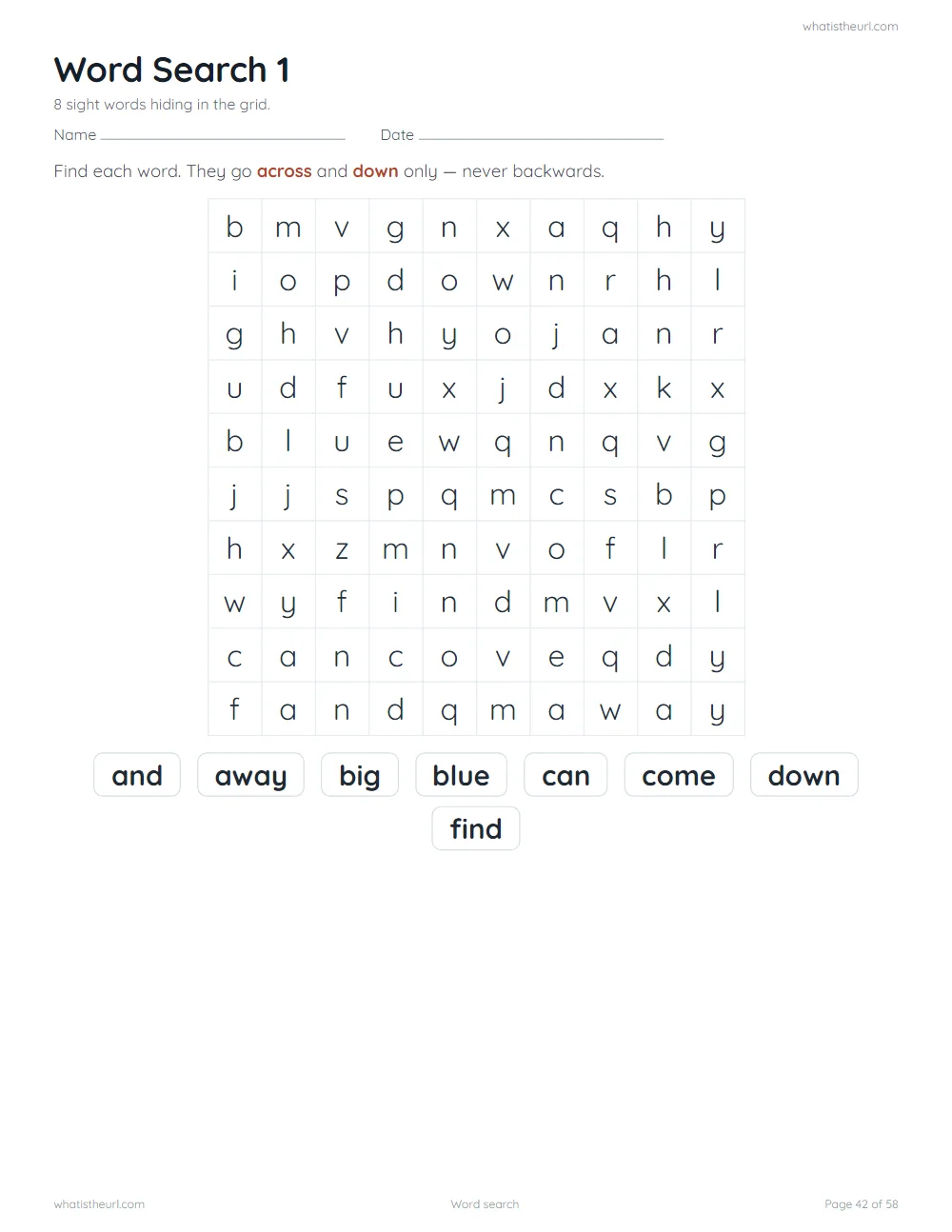
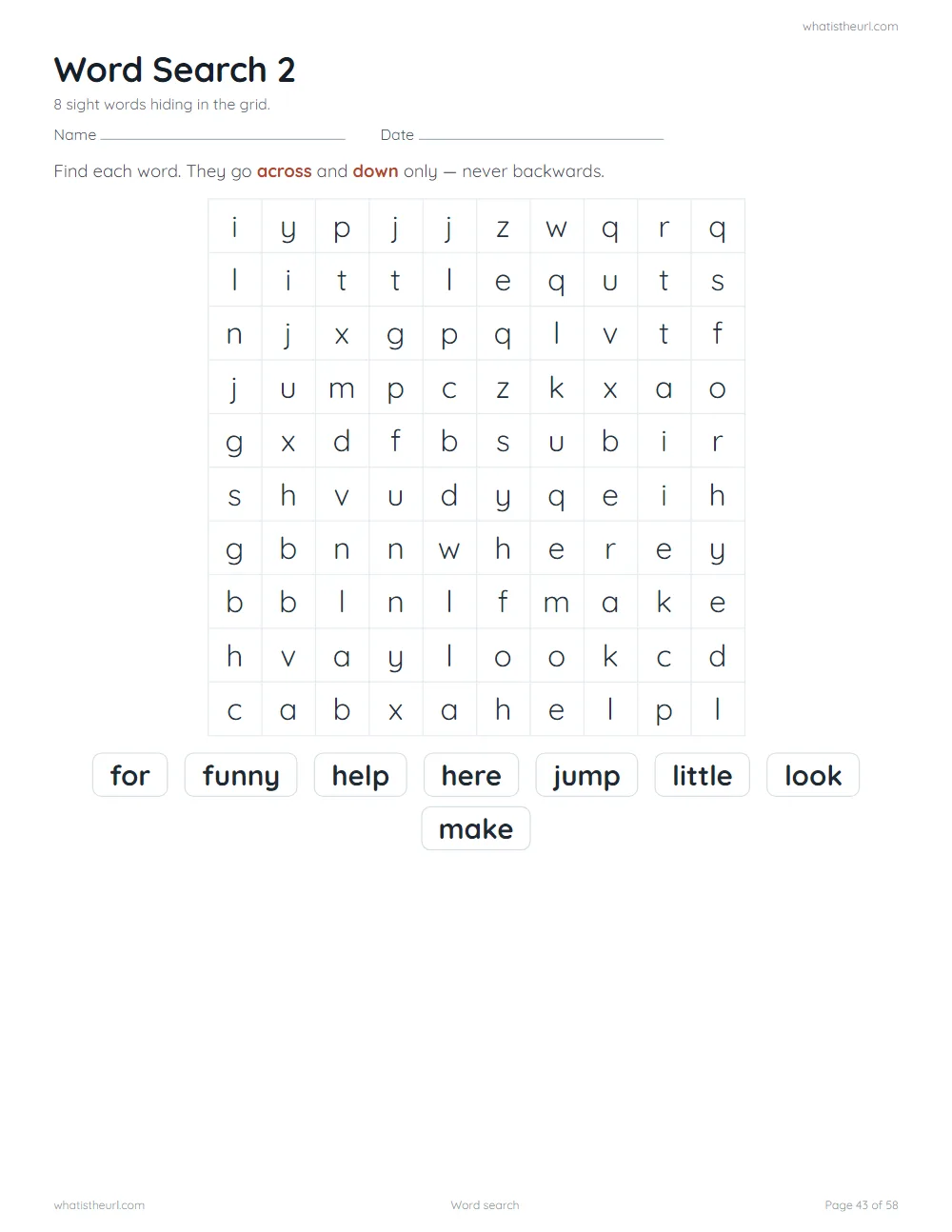
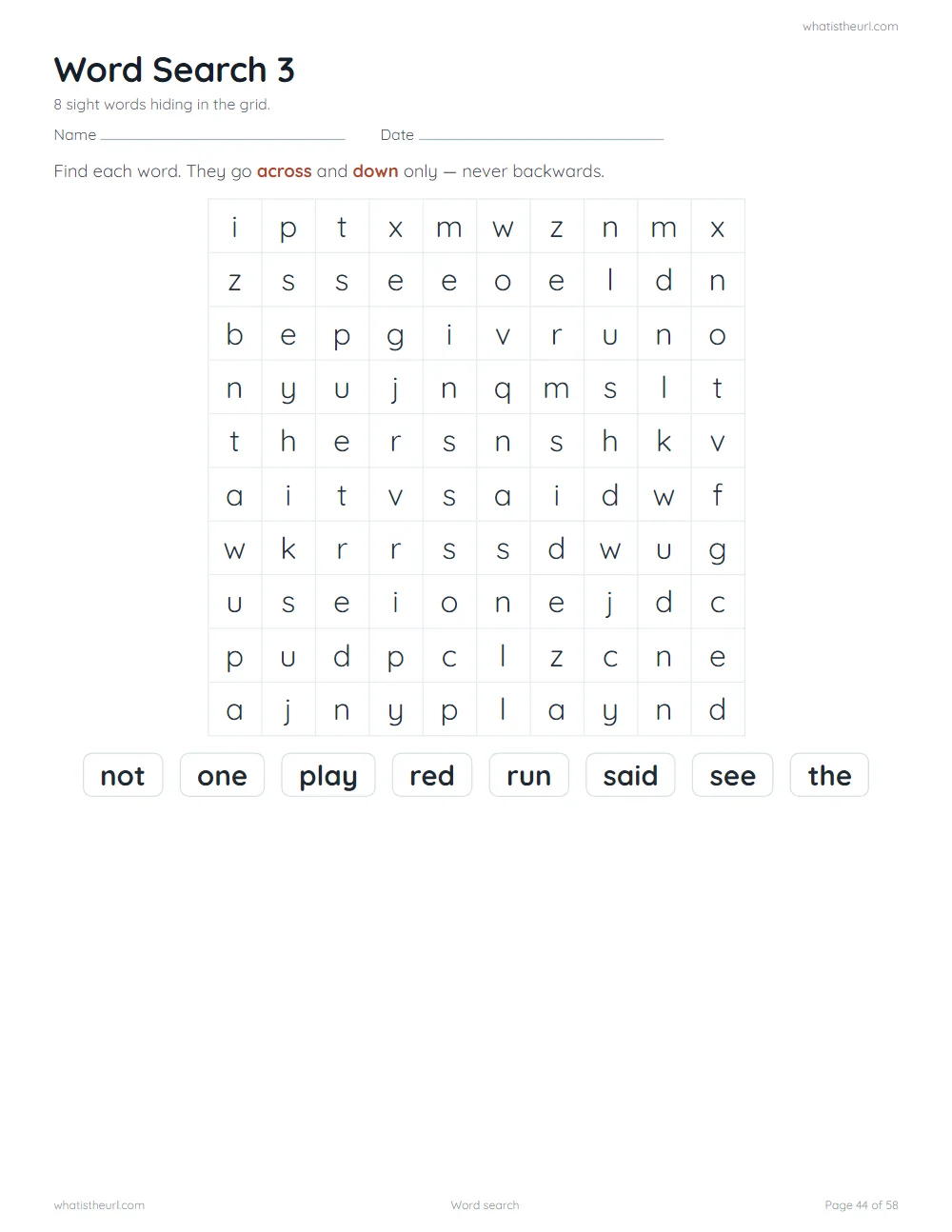
- Find the word — six pages, each hunting one tricky word among the others. The distractors are all real sight words, so a child who circles the wrong one has still read something.
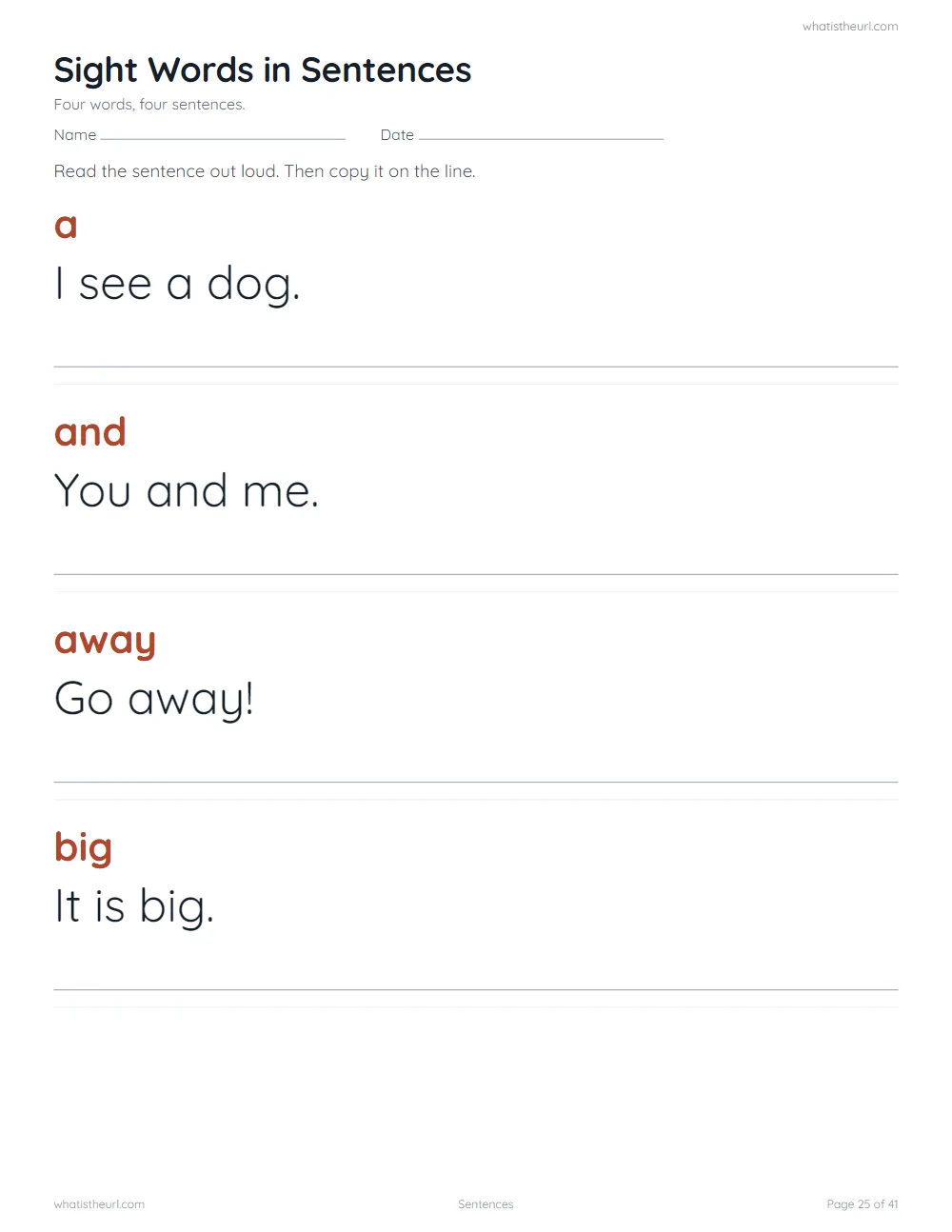
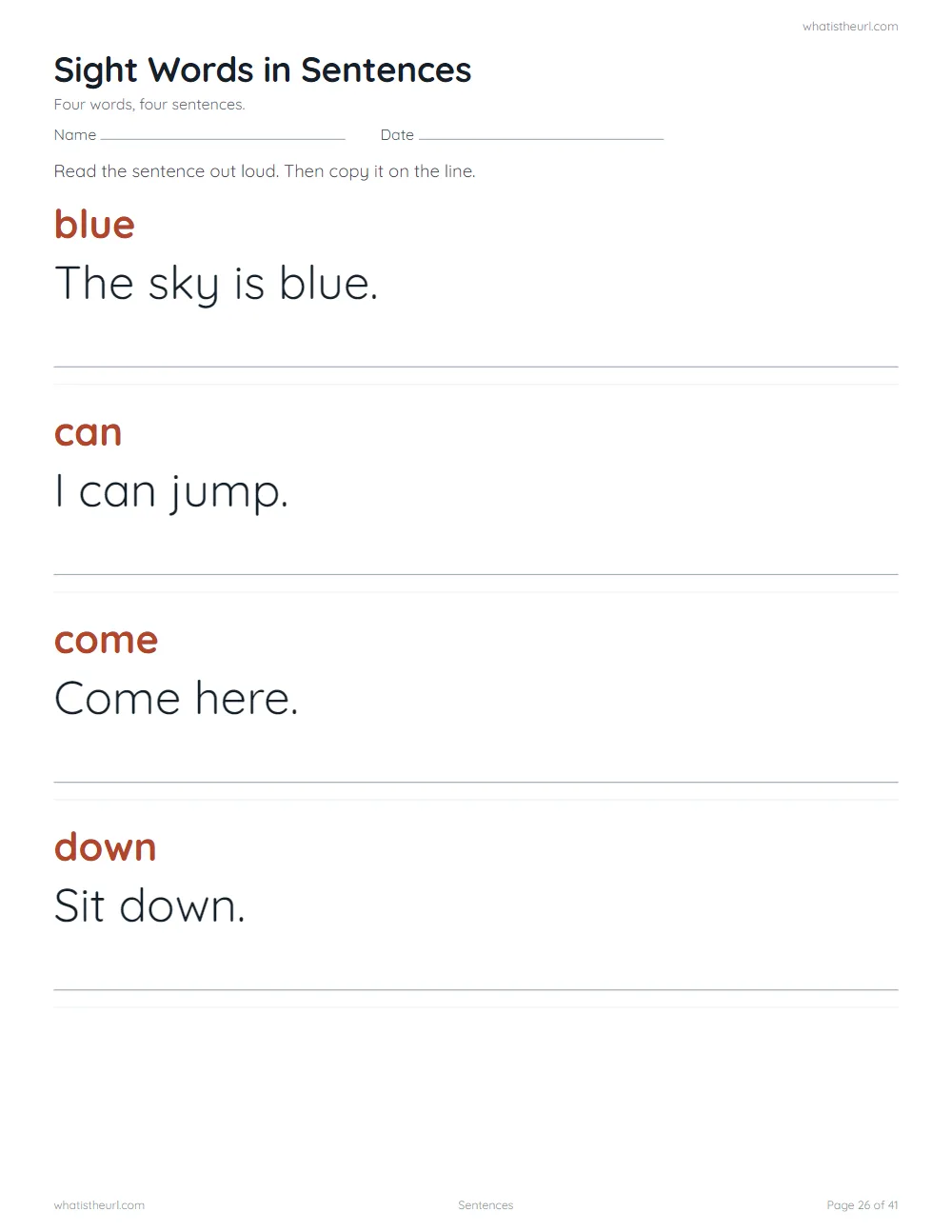
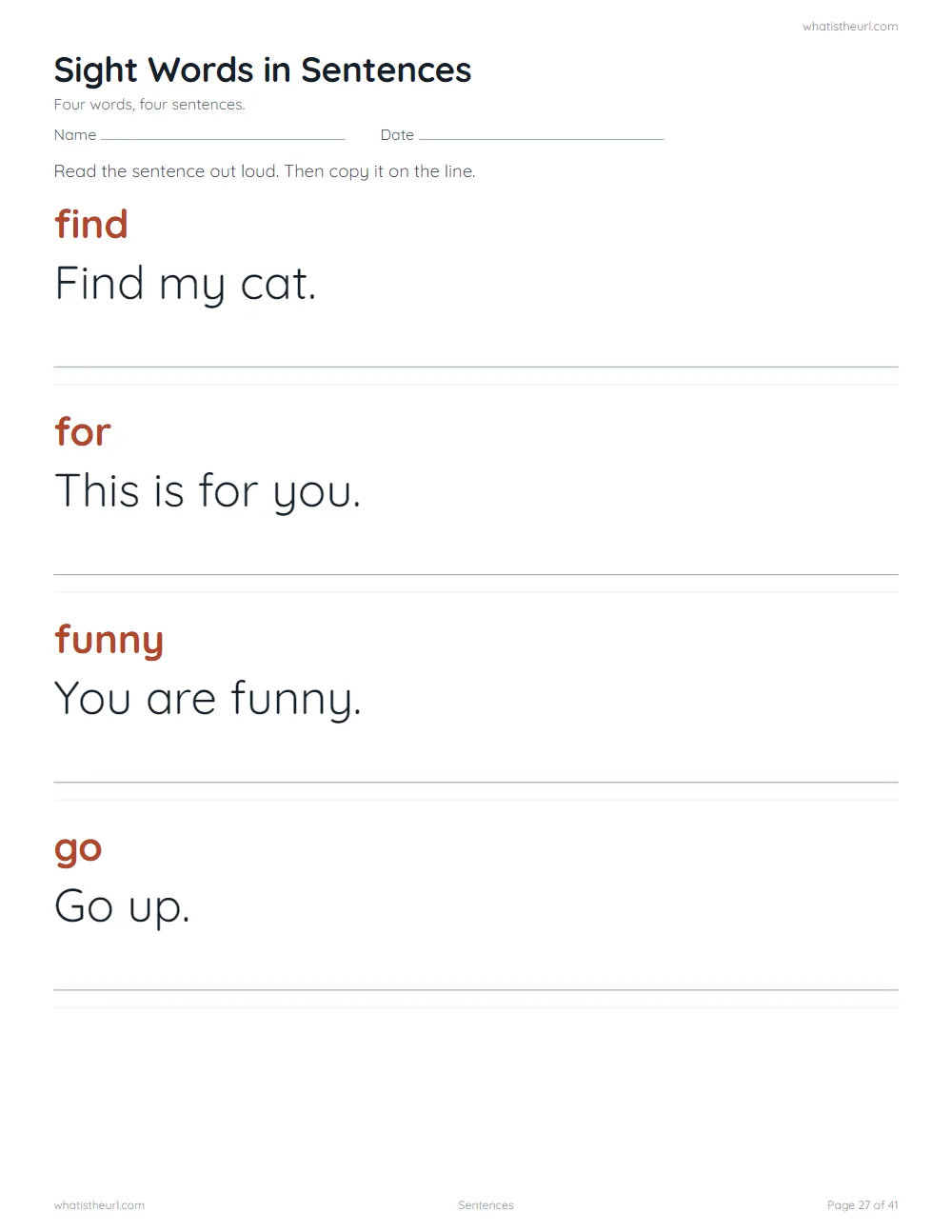
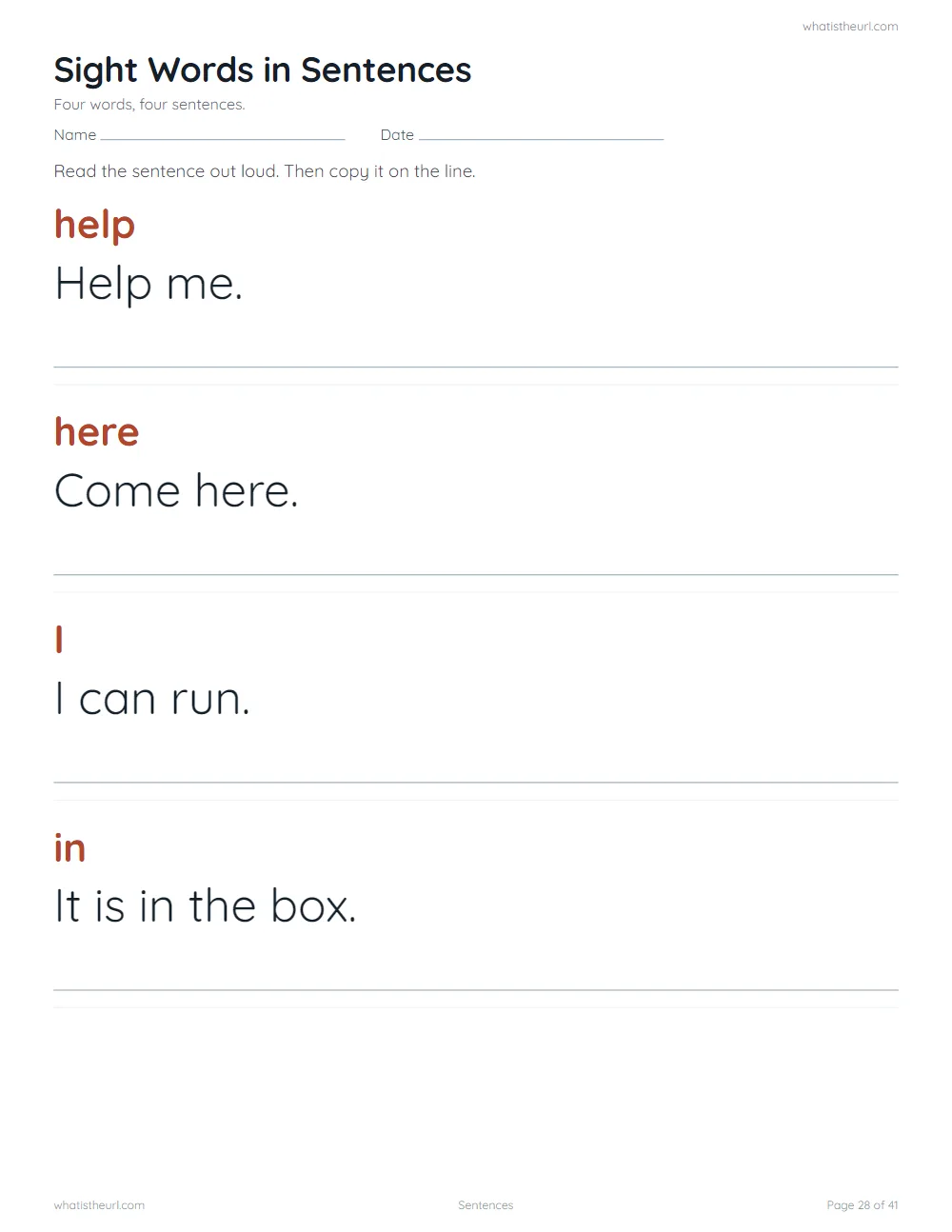
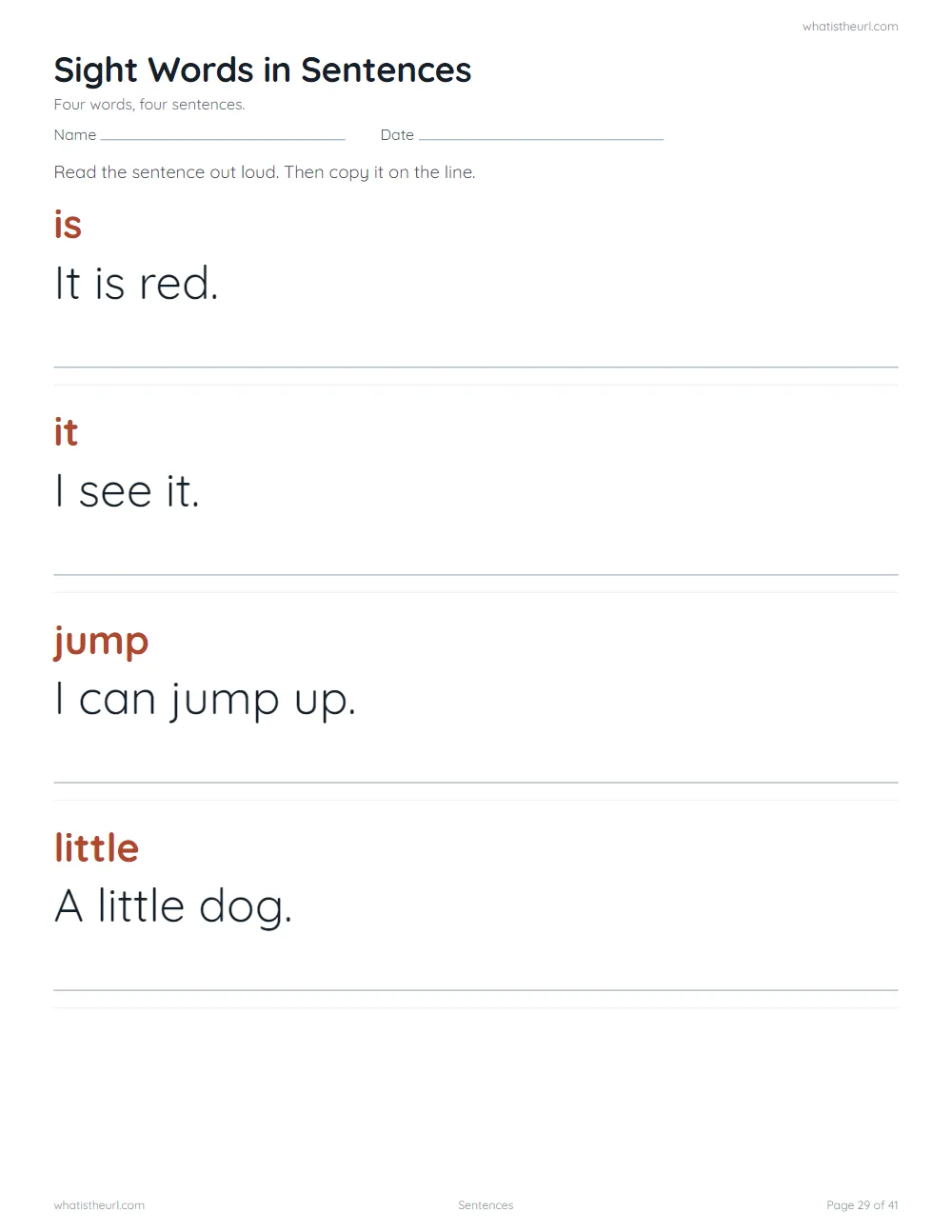
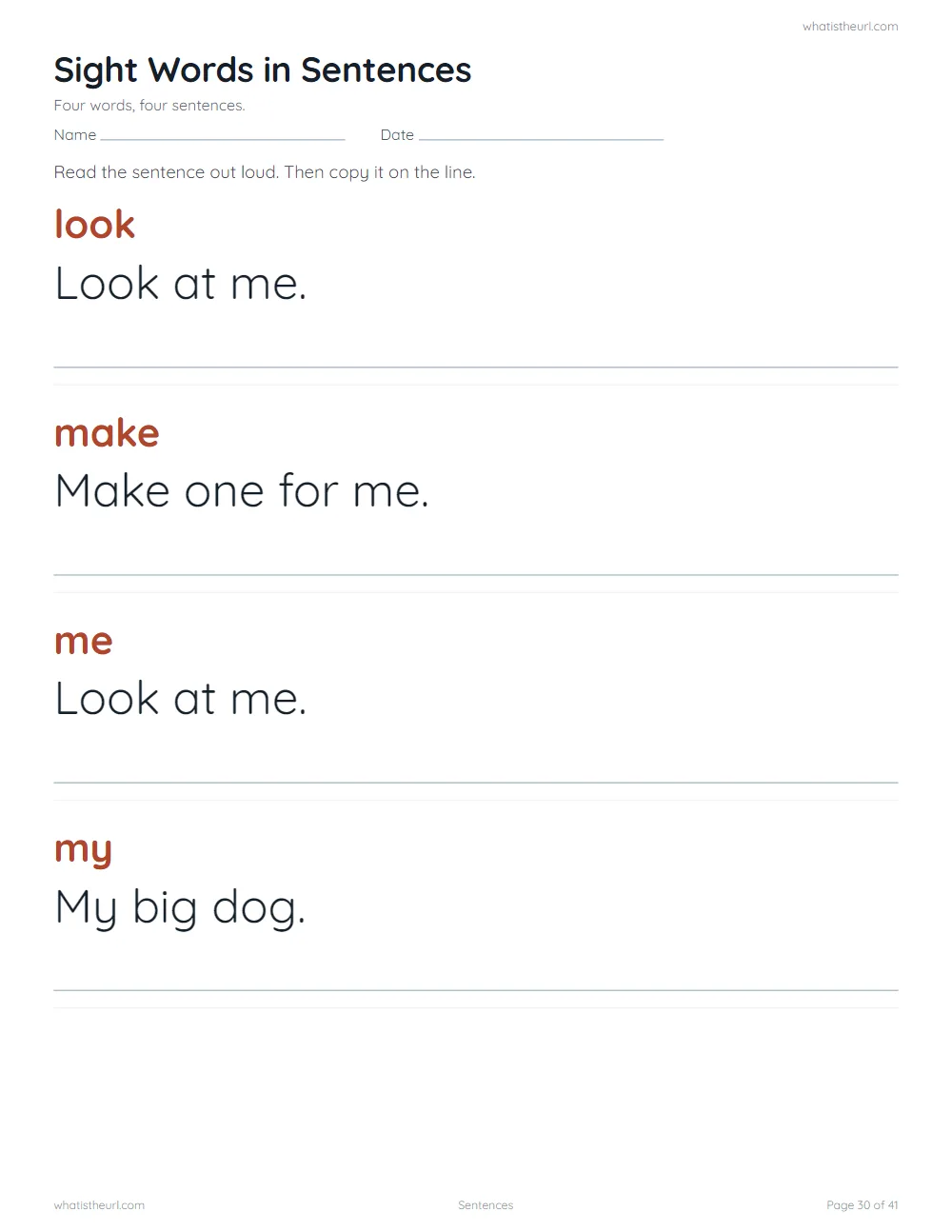
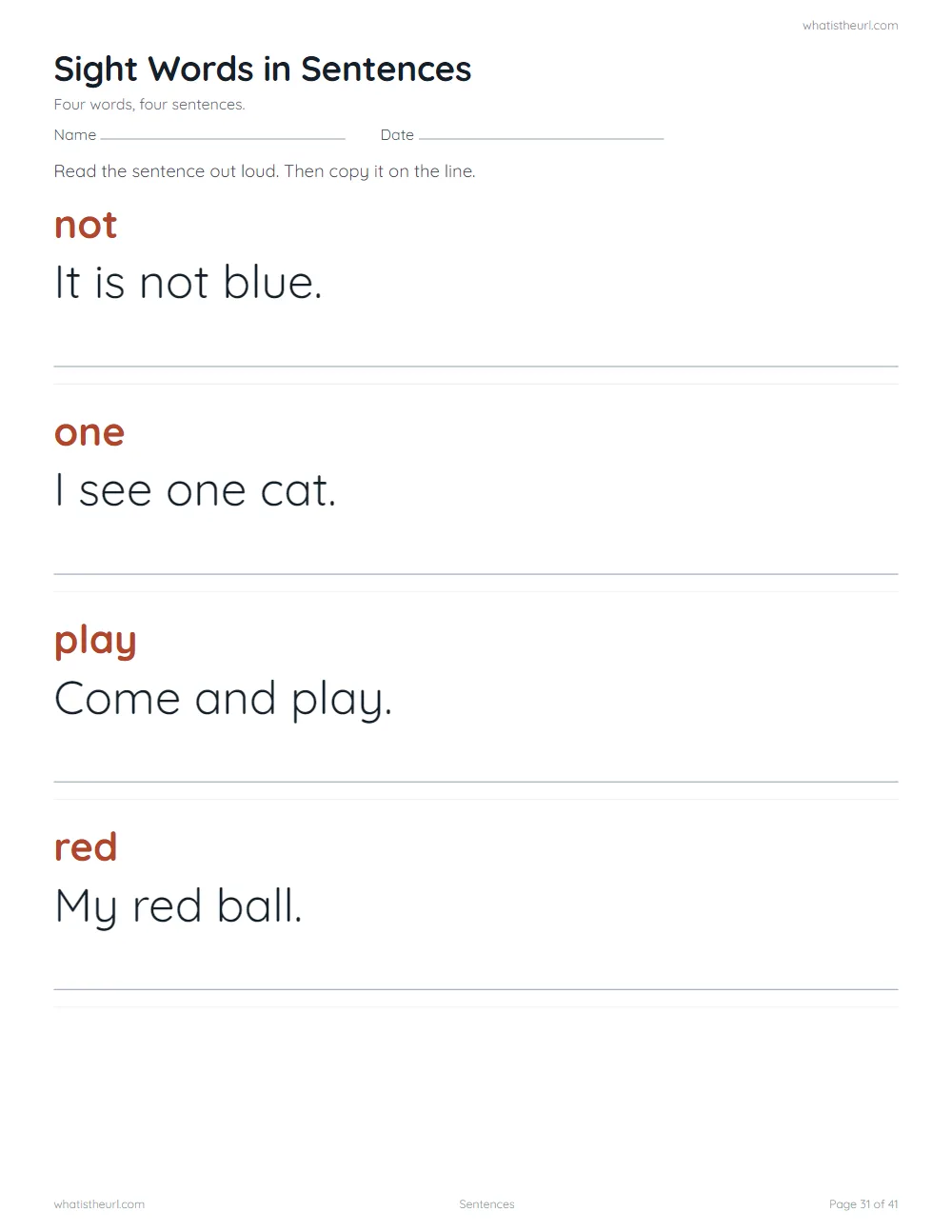
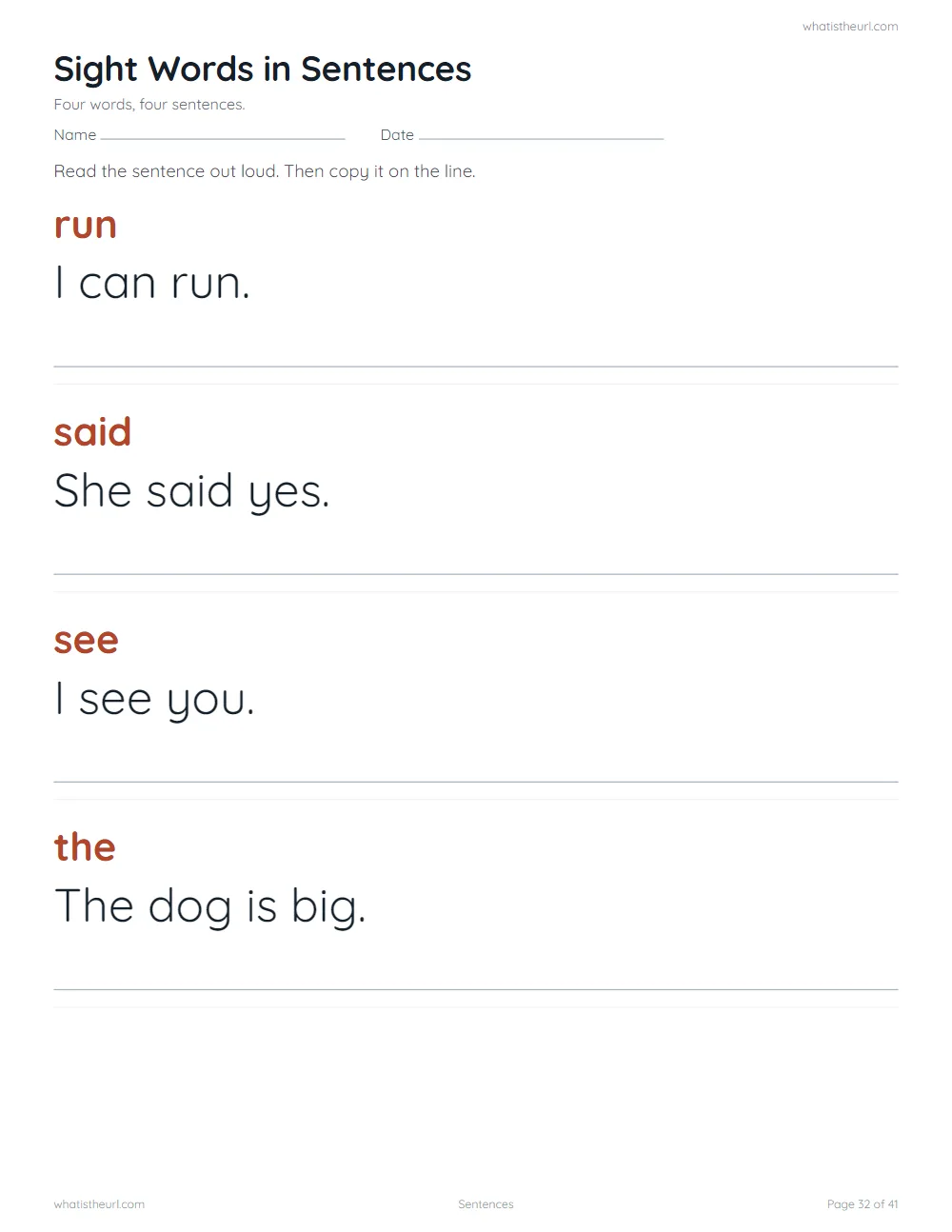
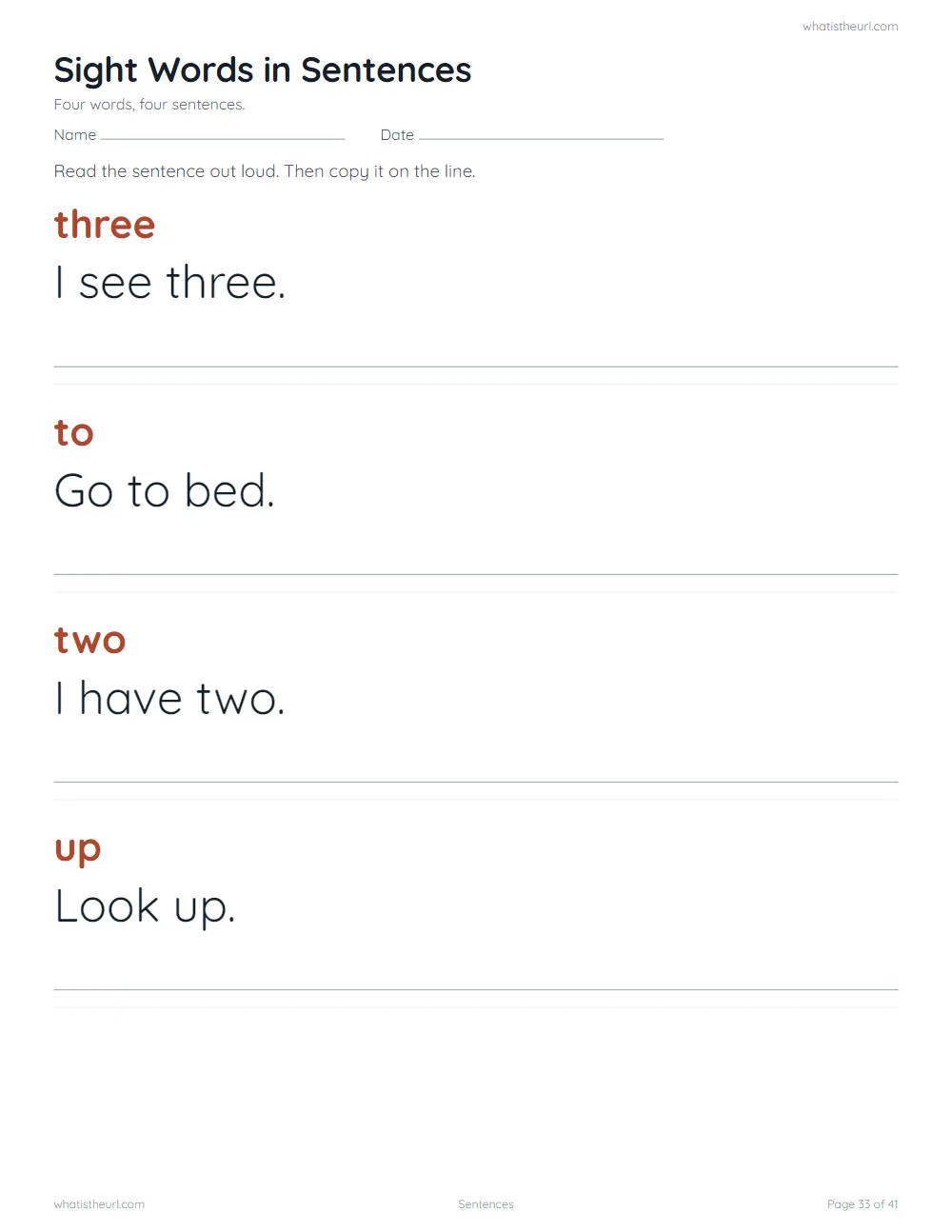
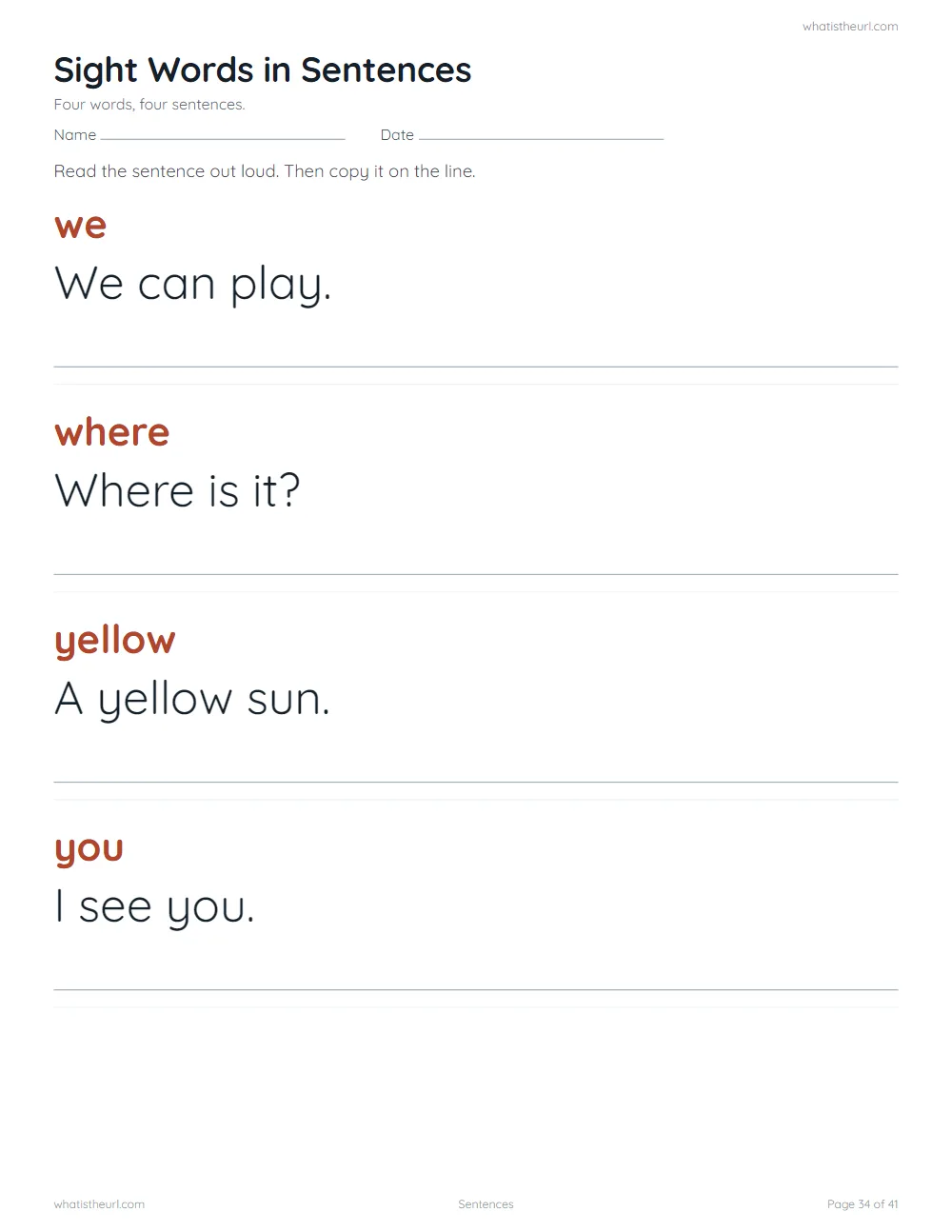
- Sight words in sentences — each word in a short sentence built only from words already on the list.
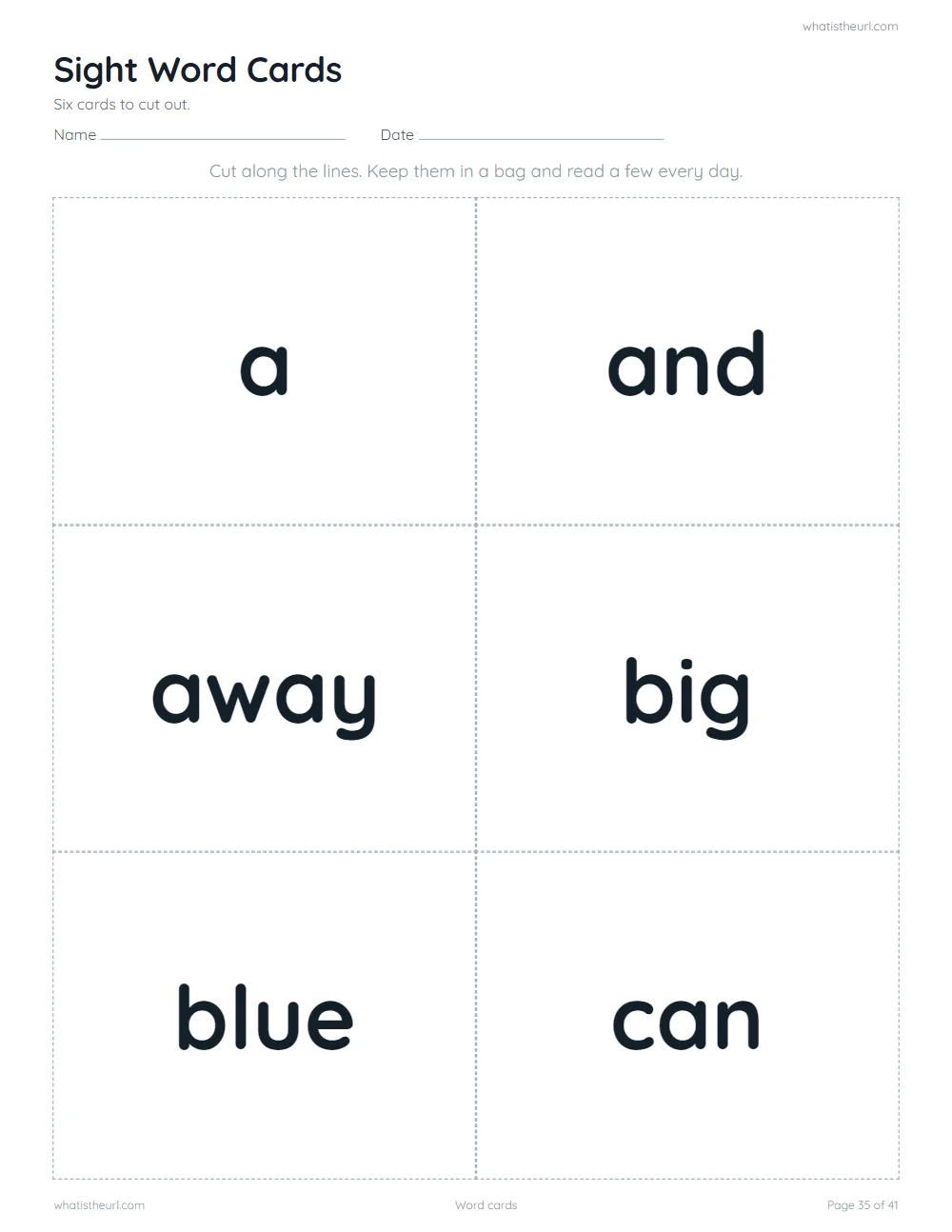
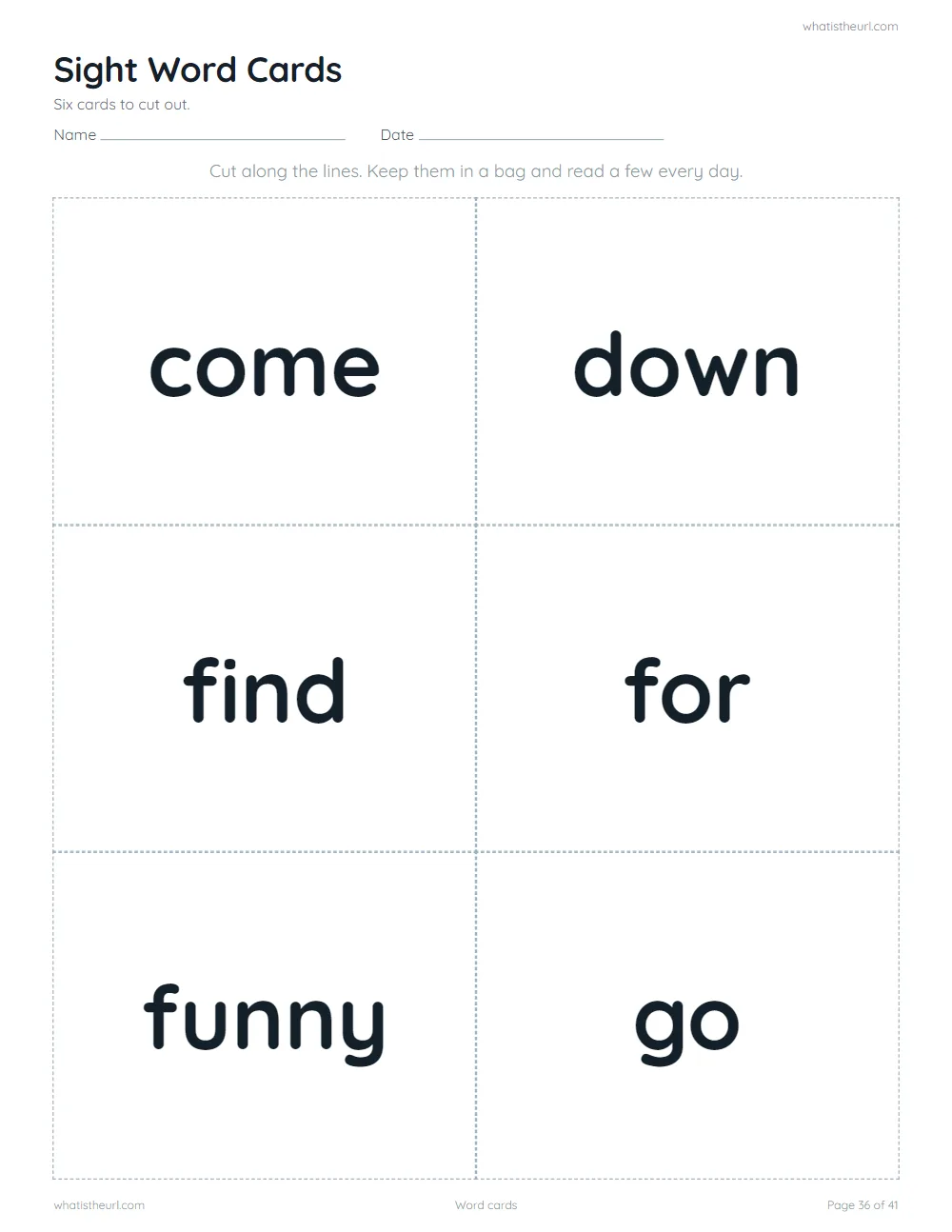
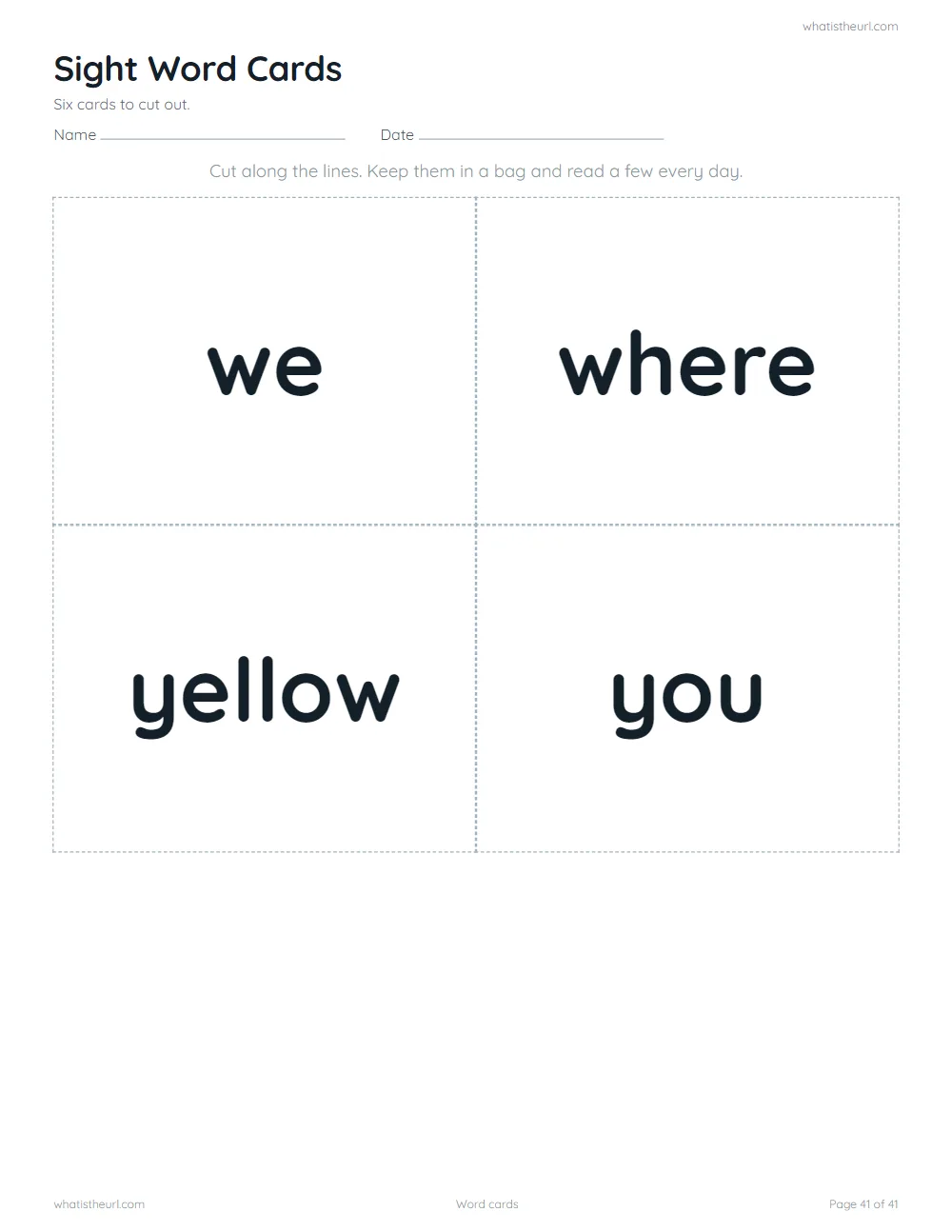
- Cut-out cards — six a page, for a bag or a box.
How to use them
- Five or six words at a time. Not forty. A short list learned properly beats a long one half-remembered.
- Say the word, don't spell it. "Said", not "ess-ay-eye-dee". The goal is instant recognition, and spelling the letters aloud gets in the way of it.
- Little and often. Five minutes a day will beat an hour on Sunday, every time.
- Read them in sentences early. Words recognised on a card and words recognised in a line of text are not quite the same skill, and the second one is the one that matters.
- Come back to the finished ones. Sight words fade without use. Keep the old cards in the bag.
What comes next
After the pre-primer list, the Dolch primer list of 52 words is the natural next step. Alongside it, CVC word families teach the opposite skill — the words that can be sounded out — and a child needs both. Sight words for the exceptions, phonics for the rules.
Kindergarten Sight Words - Dolch Pre-Primer Worksheets