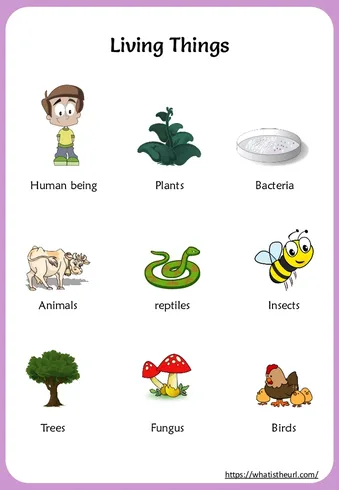
Living and Non-Living Things Worksheets and Chart
Living and non-living things
Everything around us is either living or non-living. A dog is living. A chair is not. That part is easy — and it is where most worksheets stop.
The hard part is what children actually get wrong.
The mistake almost every child makes
Young children decide something is alive because it moves. So a car is alive. So are clouds, a river, and the sun. And a tree, which stands still all day, is not.
This is not carelessness. It is the most studied misconception in primary science, and research finds it survives into the mid-teens — students who sort the pictures correctly are still slower on the ones that move, because the old idea is still there underneath.
So a worksheet that only asks about dogs, cats, chairs and balls does not teach anything. A child can pass it by remembering four examples. The sheets below deliberately include the things that move but are not alive, and the living things that do not move.
Four clues, not four rules
Give children these to work with:
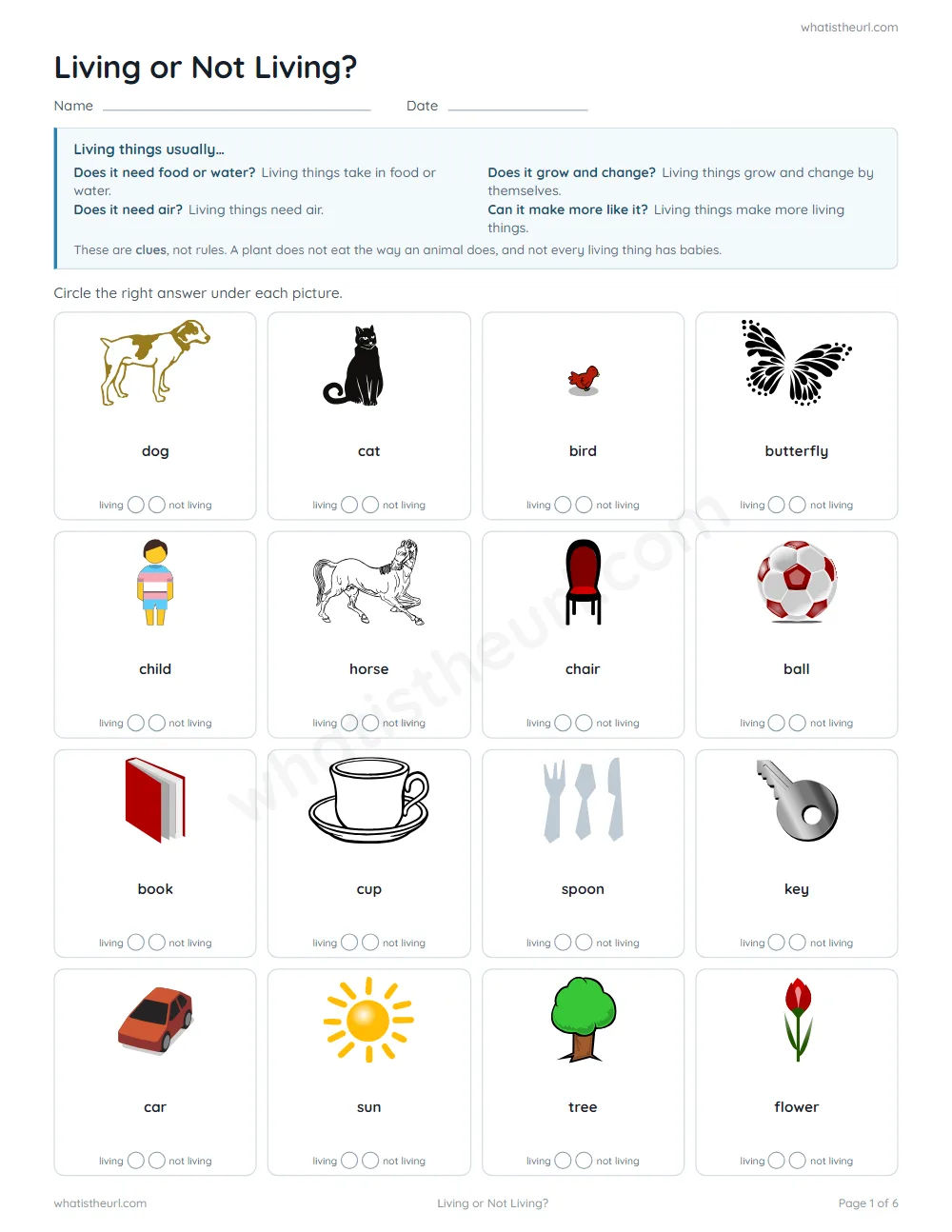
- Does it need food or water? Living things take in food or water.
- Does it grow and change? Living things grow and change by themselves.
- Does it need air? Living things need air.
- Can it make more like it? Living things make more living things.
These are clues, not rules. A plant does not eat the way an animal does, and not every living thing has babies. Teaching them as a checklist that everything must pass just swaps one wrong idea for another.
Things that move but are not alive
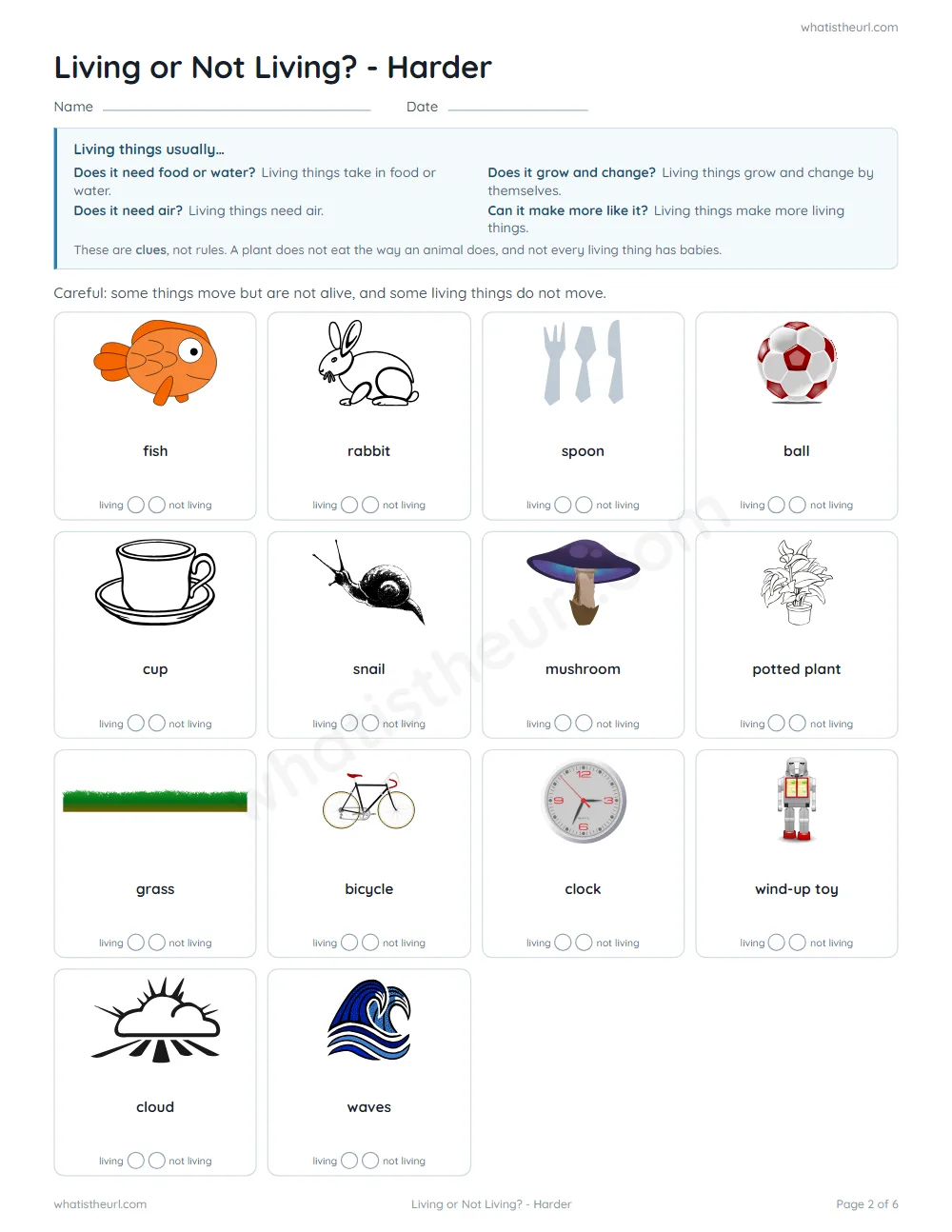
These are the useful ones. Each moves, and none of them is alive:
- A car — it moves, but only because a person drives it. It cannot grow, and there are no baby cars.
- A clock — the hands move, but a battery or a spring moves them.
- A wind-up toy — this one is the best test of all. It moves all by itself for a while. It still does not eat, grow, or have babies.
- A fan — the blades spin, but electricity turns them.
- Clouds — they cross the sky, but the wind pushes them.
- Waves — they move all day, but the wind pushes the water.
- The sun — it gives light and heat, but it does not eat, grow, or have babies.
Living things that do not move
The same mistake, the other way round:
- A tree — it does not walk, but it grows, drinks water and makes seeds.
- Grass — it grows, which is exactly why it has to be cut.
- A potted plant — it grows and needs water and air.
- A mushroom — it grows and makes more mushrooms.
- A snail — it moves so slowly you may not see it, but it eats, grows and has babies.
Once part of something alive
There is a third idea worth teaching once the first two are secure, and it needs care because it is easy to state wrongly.
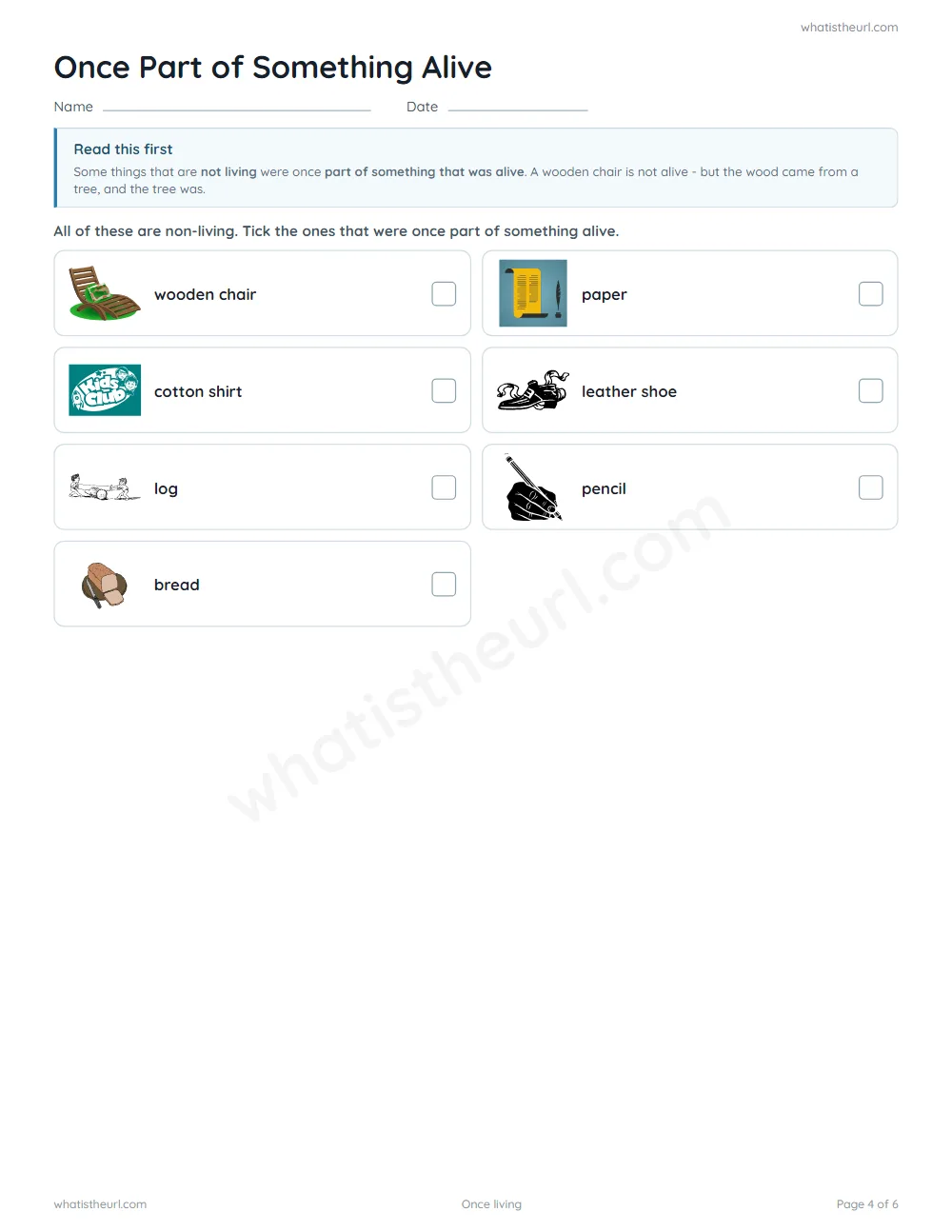
A wooden chair is not living. It is also made from something that was alive — the tree the wood came from. Both are true at once. Once-living is not a rival category to non-living; it is a group inside it.
So the right question is never "living, non-living, or once living?" — that makes "a chair is non-living" look wrong. The question is: which of these non-living things were once part of something alive? Paper, a cotton shirt, a leather shoe, a log, a pencil and bread all were.
Is a flame alive?
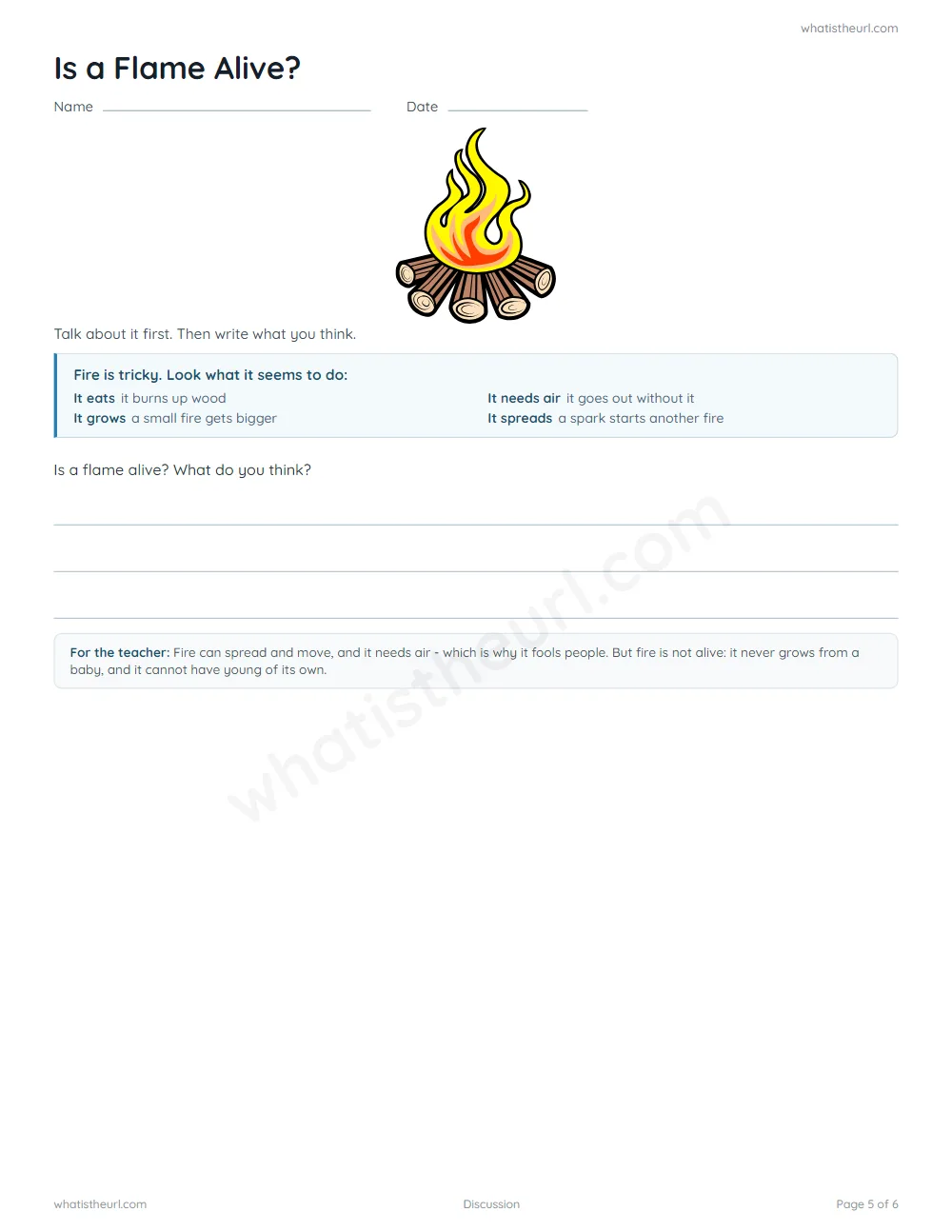
Worth asking out loud, because fire fools almost everyone. It seems to eat — it burns up wood. It seems to breathe — it goes out without air. It grows, and a spark starts another fire, which looks like having young.
Fire is not alive. It never grew from a baby, and it cannot have young of its own. But a child who argues the other way is reasoning well, and that conversation teaches more than any tick box. It is a discussion, not a test.
The free printable worksheets
Five sheets and an answer key, for kindergarten and grade 1:
- Living or not living? — 16 pictures, mostly easy ones, with car, sun, tree and flower mixed in.
- Living or not living? Harder — 14 pictures, mostly traps, both directions.
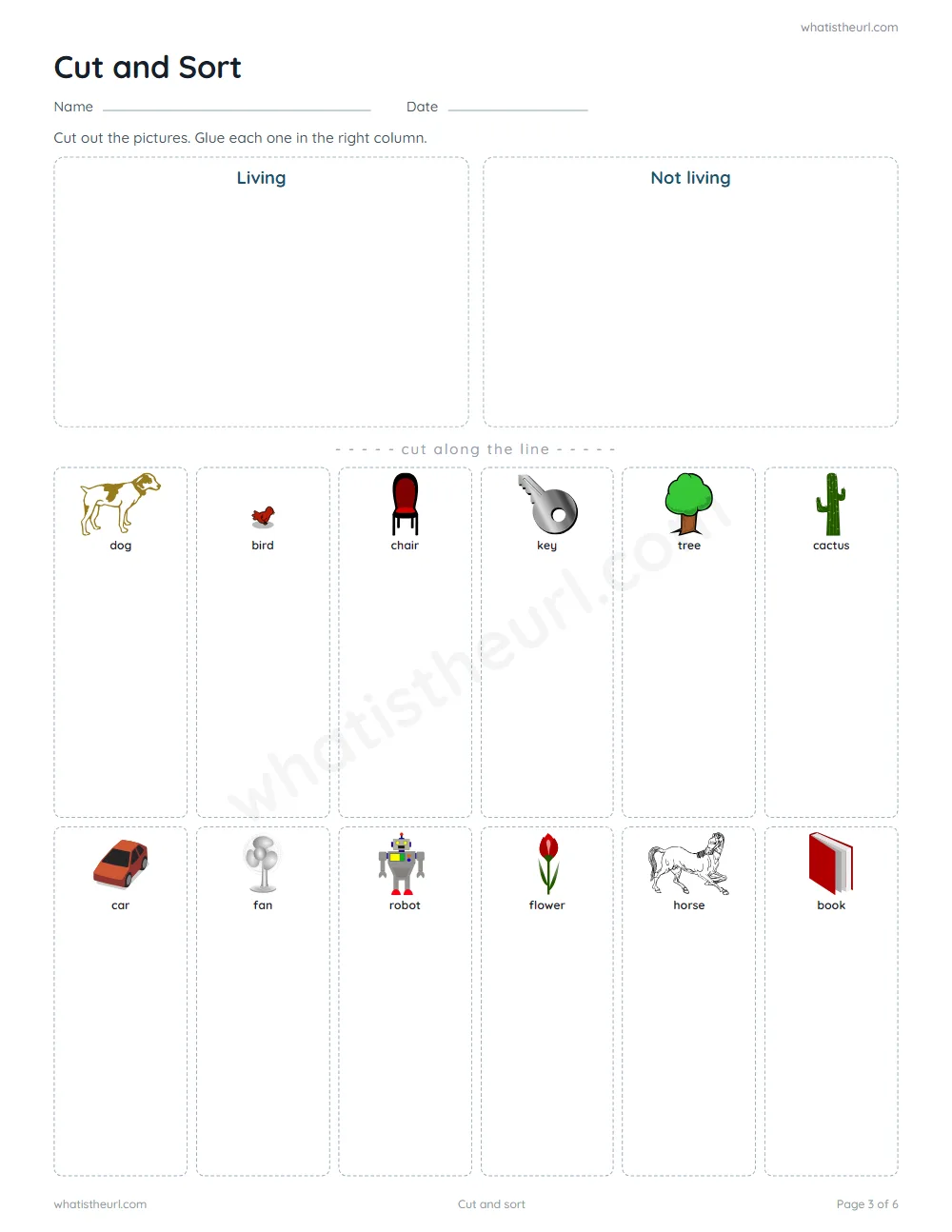
- Cut and sort — cut the pictures out and glue them into two columns.
- Once part of something alive — tick the ones that came from something living.
- Is a flame alive? — one question, for talking about.
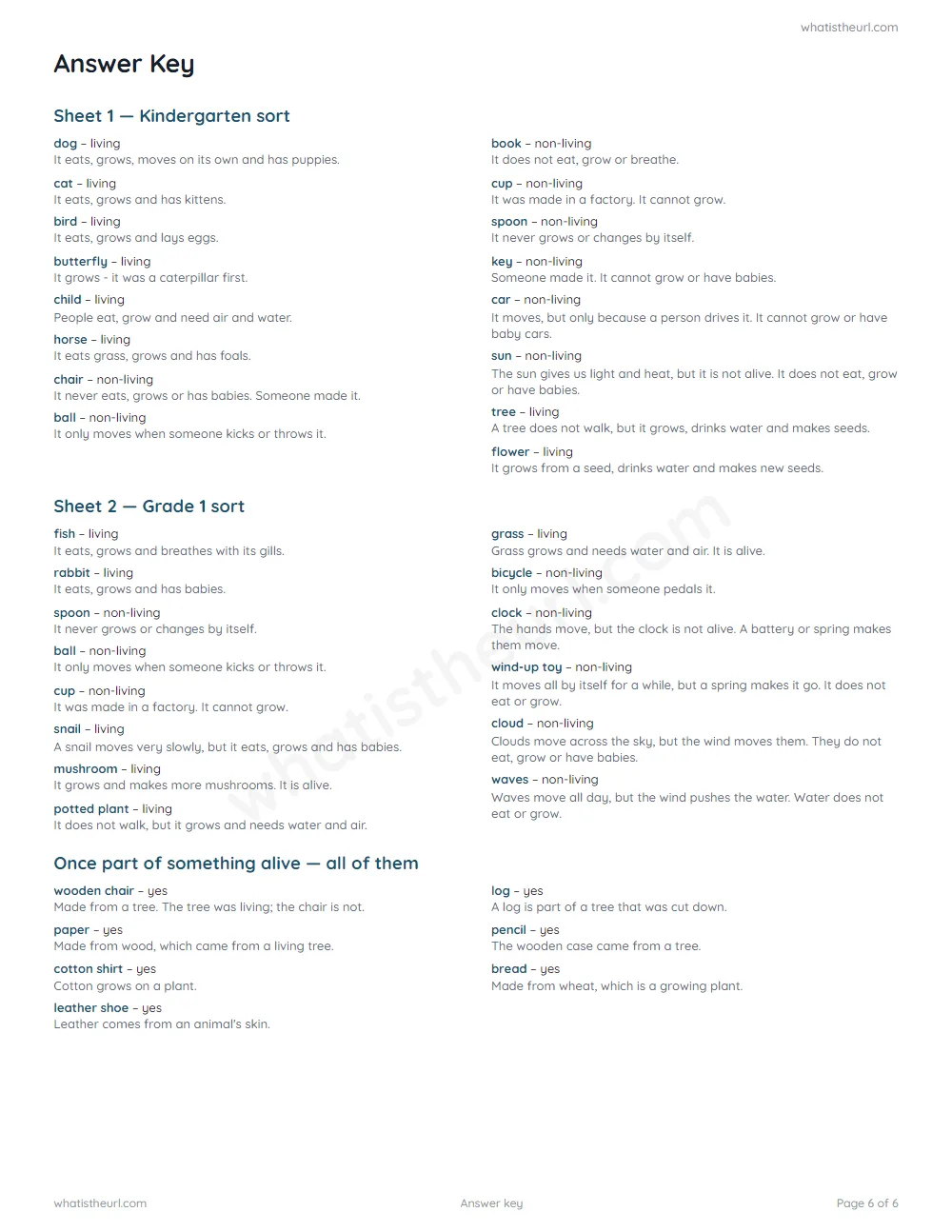
The answer key explains why for every picture, so whoever is marking it can answer the question that always follows.
Living and Non-Living Things Worksheets with Answer Key
Additional screenshots