Grade 2 Reading Passages Worksheets
This large collection of reading passages is designed for second graders to enhance their reading skills. Each worksheet features engaging stories with relatable characters and themes, followed by questions that encourage comprehension and critical thinking. Students will explore topics like aspirations, family, and friendships while practicing important skills such as identifying main ideas and recalling details. These passages are perfect for independent reading, small group sessions, or homework assignments. Consider using them as a fun way to wrap up the week or for quiet reading time, and remind students to look back at the text for clues to help answer the questions.
Five story starters
Most of the passages on this page are complete texts with comprehension questions after them. One set works differently. Five Story Starters gives you the opening of five classic fairy tales, illustrated, one to a page — and then stops, on purpose.
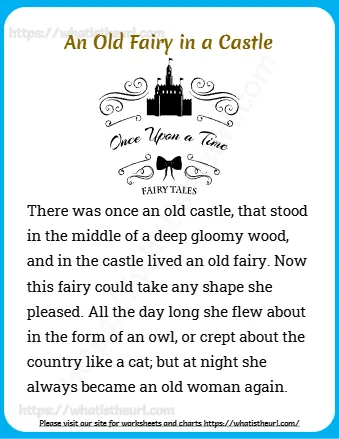
- An Old Fairy in a Castle — a fairy who is an owl by day, a cat about the country, and an old woman again at night.
- A King and a Queen — a king and queen with plenty of money and a coach to ride out in, in a land where there were still fairies.
- A Dog and a Sparrow — a hungry dog on the road, and a sparrow who promises to find him food in the next town.
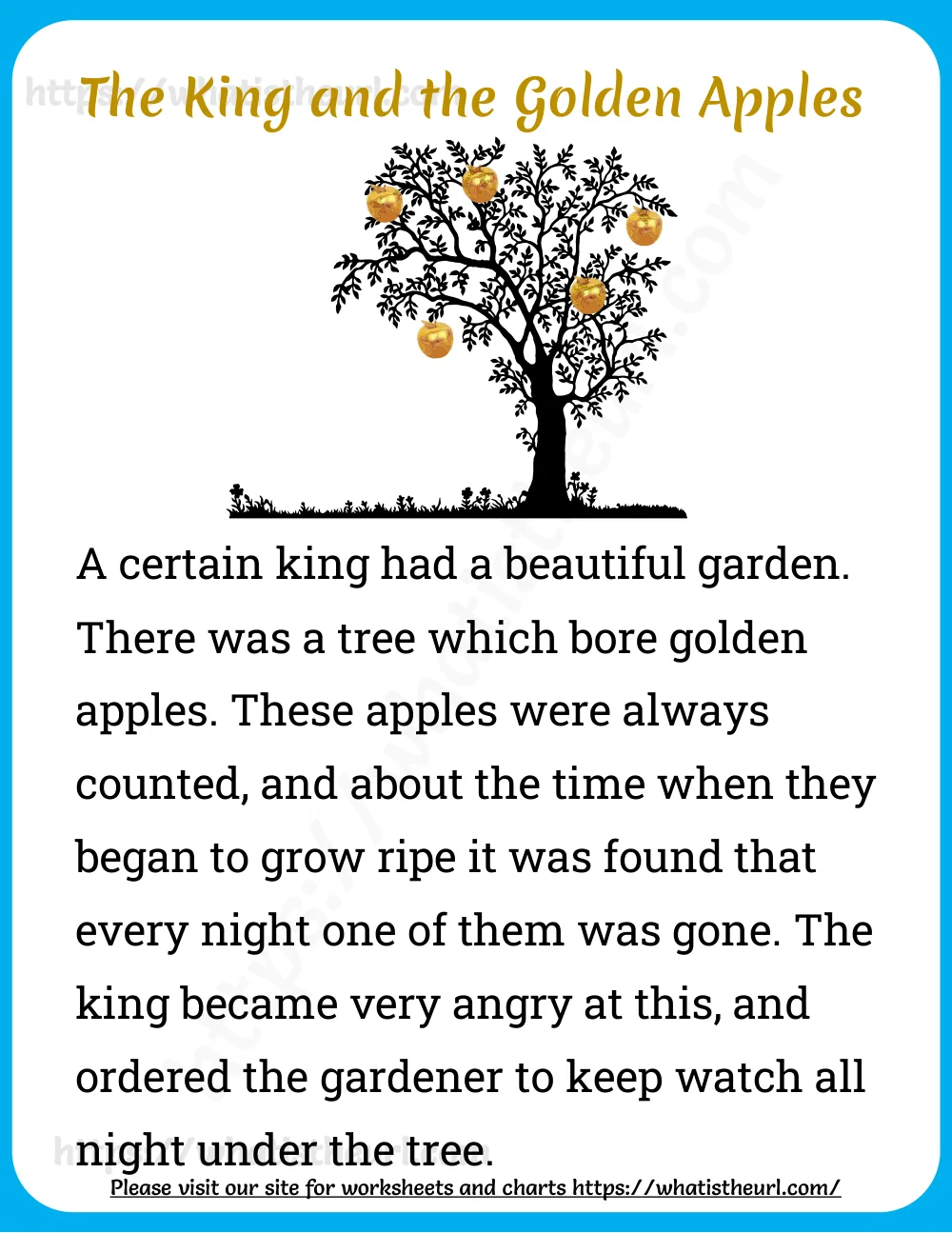
- The King and the Golden Apples — a tree whose golden apples are counted every night, and every night one is gone.
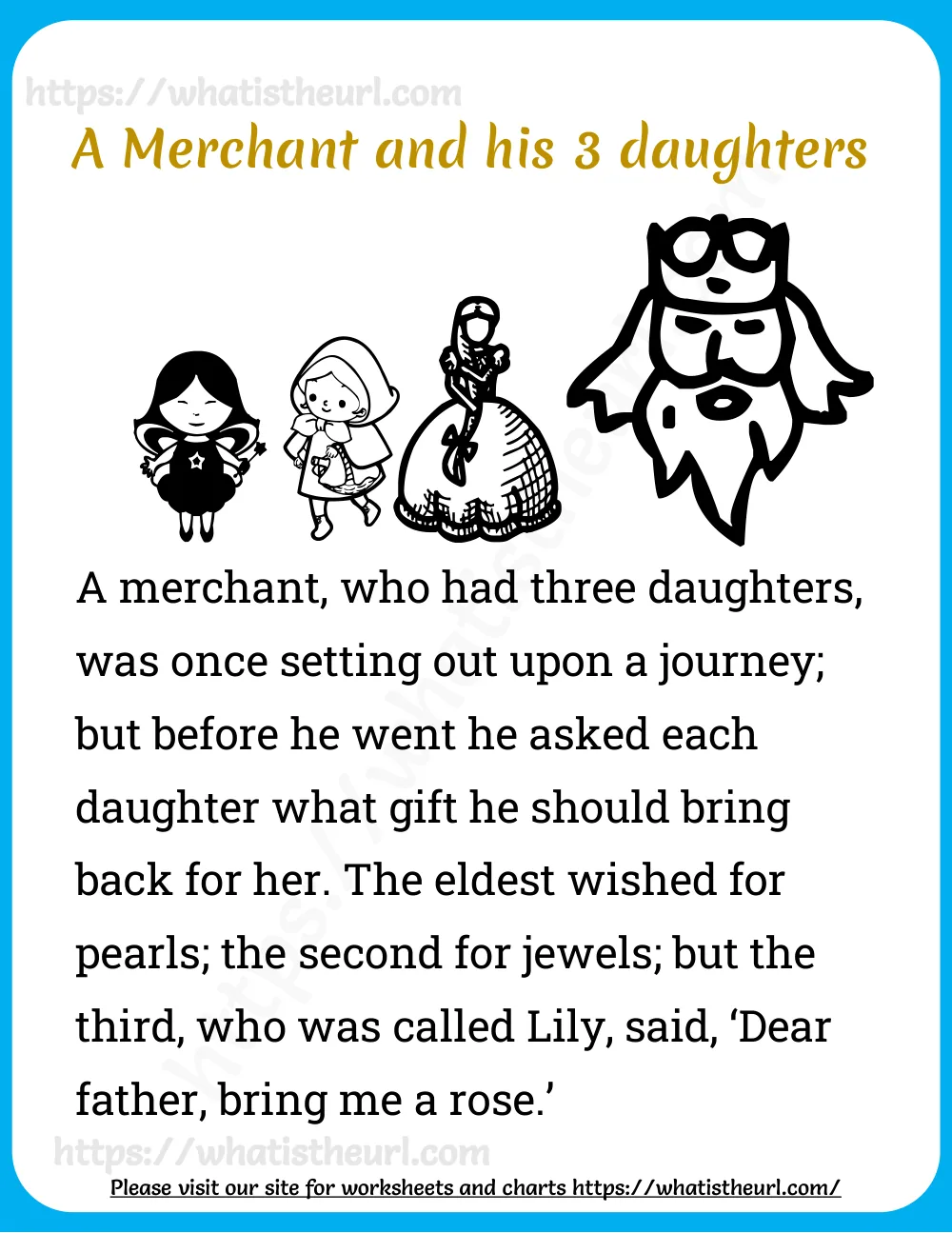
- A Merchant and His 3 Daughters — two daughters ask their father for pearls and for jewels; the third asks only for a rose.
These are the older English translations of tales collected by the Brothers Grimm, so the language is plain and the copyright long expired.
Why an unfinished passage is worth having
A passage that stops mid-story does one thing a finished passage cannot: it leaves the child wanting to know what happens. That is a far better reason to re-read a paragraph than being told to.
Four ways to use them:
- Read and predict. Read the opening together, then ask what happens next and, more usefully, what in the paragraph makes you think so. Predicting from evidence in the text is the comprehension skill here, not guessing.
- Finish the story in writing. Give the child the page and a sheet of lined paper. Because the opening supplies the characters and the setting, a reluctant writer has somewhere to start.
- Read aloud for fluency. Each opening is short enough to read two or three times in a sitting, which is how reading fluency actually improves.
- Collect the new words. Gloomy, reigned, merchant, ripe — these openings carry words a second grader will meet in books but rarely in conversation.
Afterwards, the real ending of each tale is easy to find in any Grimm collection, and comparing it with the child's own version is usually the best part of the whole exercise.
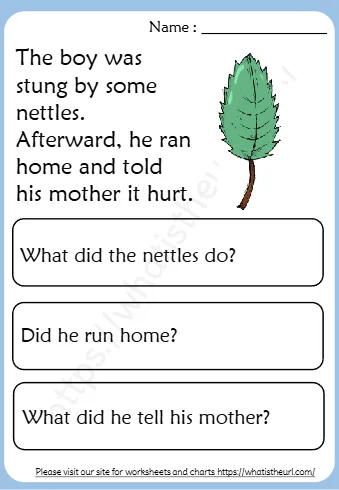
Afterward Heranhomeandtoldhis Motherithurt Grabthenettleswith Bothhands Hewastold Takeall Measurestoavoidgettingstung
Five Story Starters
Additional screenshots